| After months of delays and setbacks, Brazil has finally hit its stride in Covid-19 vaccinations. Relying on a decentralized public health-care system that's known for excelling in mass immunizations for everything from flu to measles, the country regularly administered more than 2 million doses a day in August, double the target the government set — and struggled to meet — earlier this year. Delays in shipments that often caused vaccinations to be halted for days or weeks are now rare. The so-called vaccine sommeliers, Brazilians who delayed the pace of the campaign by choosing which shot they wanted to take, have also seemingly changed tack: Some states like Sao Paulo, the country's most populous, report that more than 97% of adults have received a first dose. The steadier supply and more widespread acceptance have pushed up vaccination rates in Latin America's largest economy. About 64% of its population has now received at least one dose, making Brazil the latest major country to pass the U.S., whose rate is about 62%. 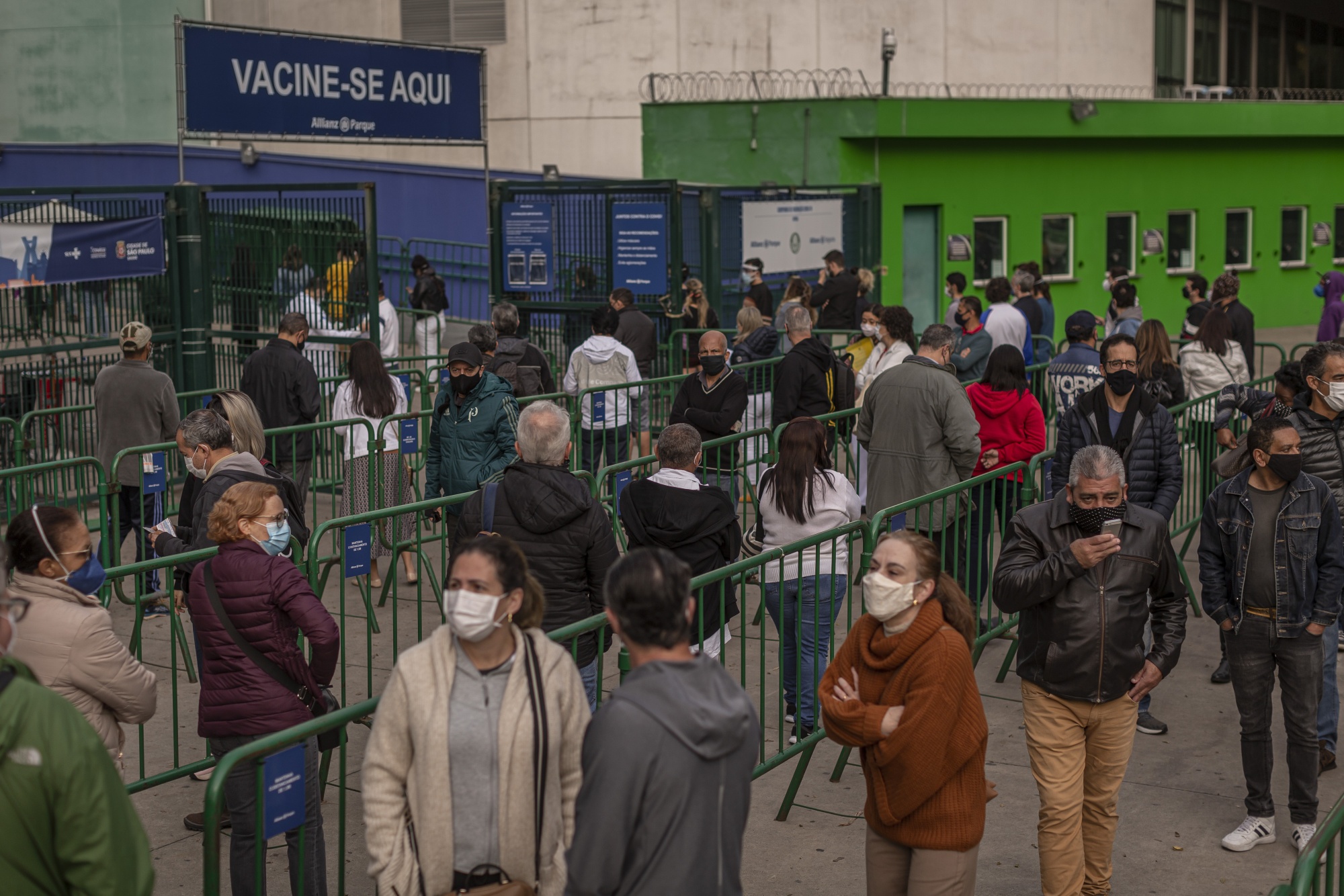 Residents wait in line to receive a dose of the Sinovac vaccine at the Allianz Parque Stadium in Sao Paulo in June. Brazilians no longer appear to be holding out for the Pfizer vaccine, which had delayed the nation's inoculation campaign. Photographer: Rodrigo Capote/Bloomberg But Brazil still lags when it comes to full immunization: Less than 30% of the country has received the two shots needed to keep the virus in check. That's because Brazil spaced out the interval between first and second doses to 12 weeks for AstraZeneca and Pfizer, two of the main vaccines being used, mostly to cope with the low supply. Officials have announced they're shortening the gap to eight weeks, which should help speed up the pace of the campaign. They'll also begin giving third doses to some groups starting in mid-September, joining countries from Chile to Israel in deploying booster shots to halt the spread of the delta variant. The strain, which is estimated to be almost twice as infectious as the original virus from early 2020, has caused fresh flareups across the world. Yet, it's had a muted impact in Brazil so far. It's unclear how much delta has spread — there's far too little testing to know the actual toll — but by most measures the state of the pandemic in Brazil has improved. The number of deaths from the respiratory virus fell to 4,801 last week, a 10th straight drop, to the lowest in about eight months. The widespread decline, also seen in hospitalization and infection numbers, has allowed life to return to normal in most cities. The notable exception is Rio de Janeiro, which scuttled plans for a multiday reopening party in early September amid a rise in cases. —Julia Leite | 


Post a Comment