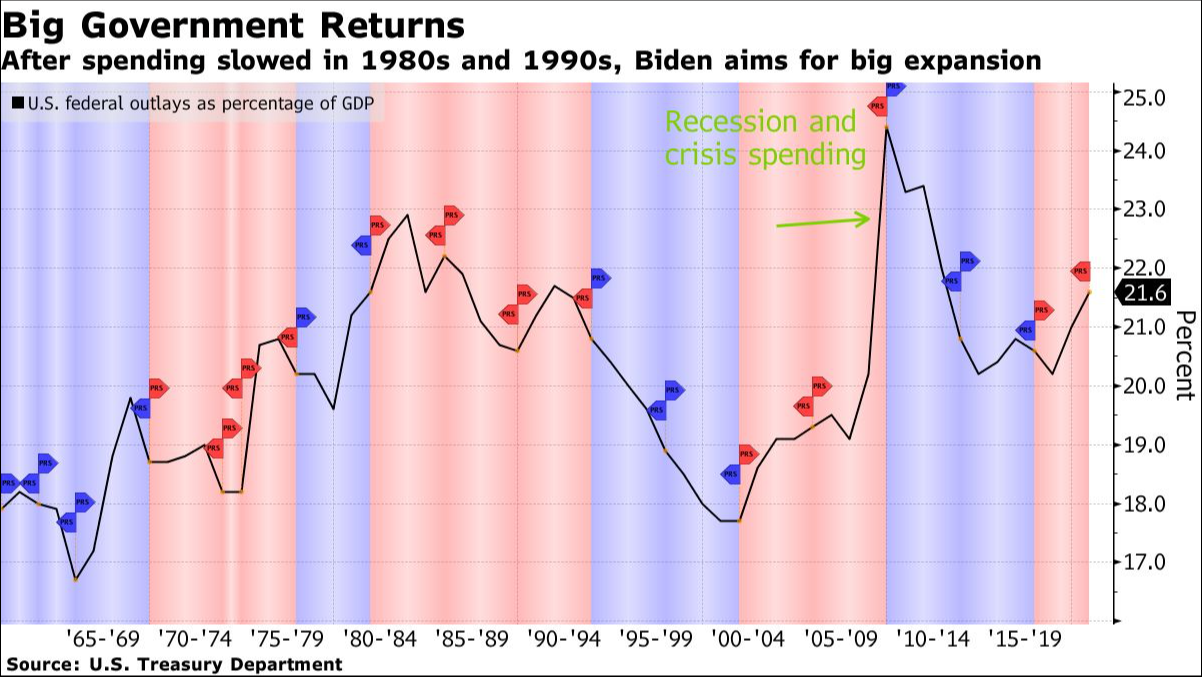
| Hello. Today we look at political threats to U.S. President Joe Biden's spending plans, the glass ceiling in Japan and a VILE scenario for the global economy. President Joe Biden's $4 trillion long-term economic agenda is at risk of falling apart over partisan and internecine political battles in coming days unless negotiators can find some way through to compromise. There are two pieces of legislation, one finished and one quite far from finished, that Biden hopes will get enacted and showcase to China and the rest of the world that Washington's machinery of government isn't broken and that the U.S. is still able to embrace visionary investments in both physical and human infrastructure. - One plan, authorizing $550 billion in net new spending on infrastructure, has won support from not just Democrats but a significant minority of Republicans. It would invest in road, rail, public transit and waterworks among other areas that have suffered from under-investment in recent decades.
- The other is a package of as much as $3.5 trillion and would vastly strengthen the social safety net, boosting spending on health-care, child-care and elder-care, paid for mainly through higher taxes on companies and the highest-income Americans.
If enacted, the White House argues that the bills — together dubbed Build Back Better — will boost economic growth. Expanded social support will encourage more people, especially women, to join the workforce, knowing their kids or elderly parents have the help they need. And stronger transportation networks will lift productivity. Private-sector economists are somewhat divided, but generally agree the packages would prove beneficial. "A game enhancer, not a game changer," is how Bloomberg Economics characterized it in the spring, when Biden's proposals were first released. Trouble is, given the historic opportunity that these biggest-in-decades pieces of legislation are, lawmakers involved are eager to get their priorities in. And many of those are in direct conflict. Progressive Democrats were already unhappy the social package got winnowed from an original $6 trillion. But moderates say $3.5 trillion is still too much. Each group wields power, because of universal Republican opposition to this bill and because of the Democrats' razor-thin margins of control in Congress. Biden's effort to get his party on the same page, with three separate sit-downs of different groups at the White House on Wednesday, has so far failed. Congressional Democratic leaders claimed a framework was agreed Thursday on the tax part, only to concede later that the deal was on a long menu of options. And there's still no deal on the size of the bill. Progressives, meantime, are threatening to torpedo the bipartisan infrastructure bill if moderates don't endorse a robust social package. For good measure, Republicans and Democrats are separately at odds over raising the federal debt ceiling — with the U.S. Treasury warning it won't be able to avert a payments default past some point in October. Bottom line: There are multiple games of chicken under way at the moment in Washington, with little clarity on the outcome — a huge win for Bidenomics, or an economic-policy meltdown to go with the White House's foreign-policy travails. —Chris Anstey 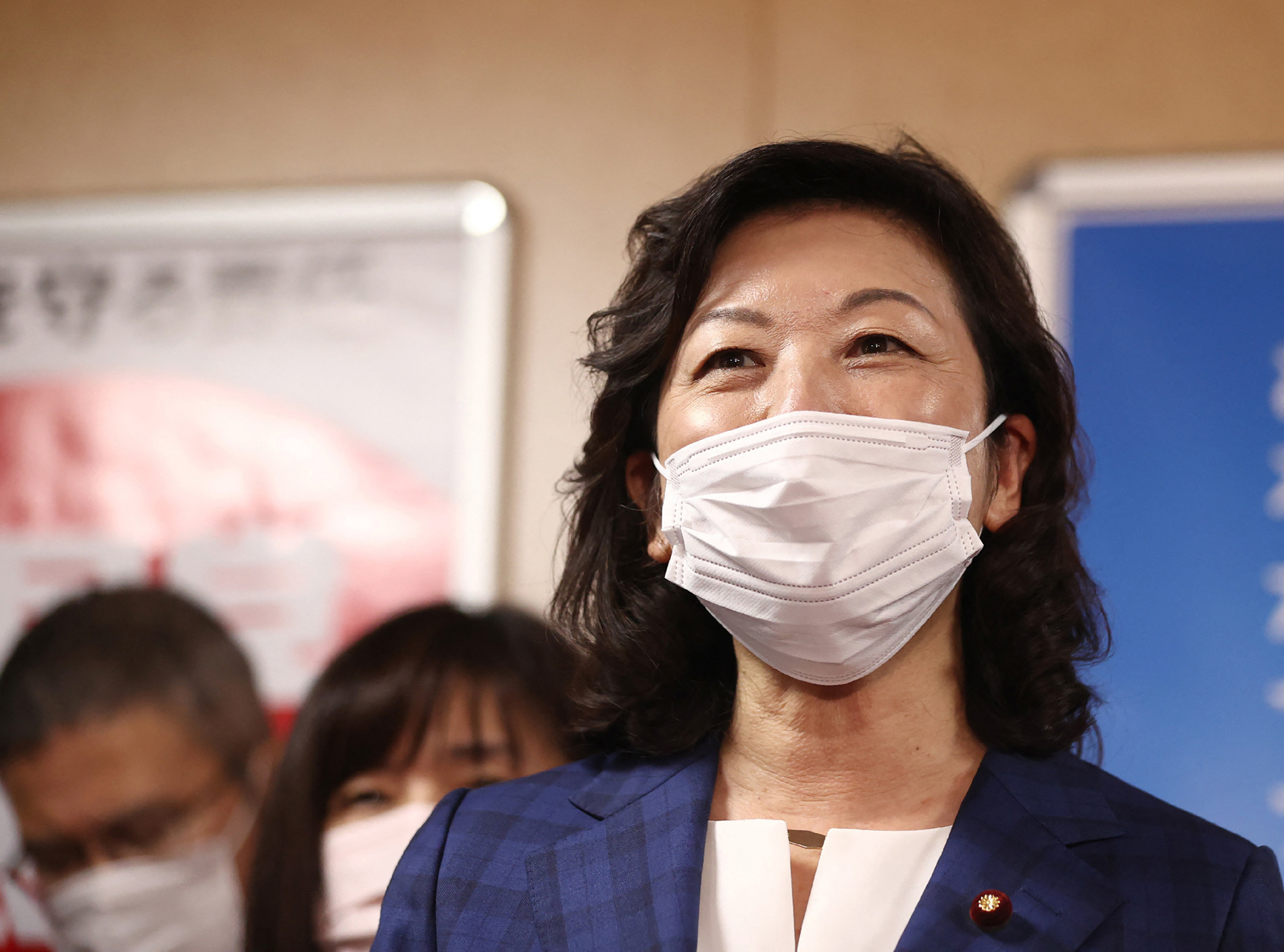 (Photo by STR/JIJI PRESS/AFP via Getty Images) Japan's ruling party is set to choose the country's next prime minister on Sept. 29. Although the leading candidate is a man, in a historic twist of events, two of the four contenders are women. The candidacies of former internal affairs ministers Sanae Takaichi and Seiko Noda are significant because only once before in the Liberal Democratic Party's 66-year history has a woman been able to line up the support of 20 fellow parliamentarians required to contest the leadership. Takaichi and Noda's entry into the race highlights how far the country has to travel to achieve gender equality, particularly in senior ranks of politics and business. Japan has never had a female prime minister and only 10% of legislators in the more powerful lower house are women. Not a single company in the Topix 100 stock index has a female chief executive. The country ranked 120th out of 156 countries in the World Economic Forum's latest Global Gender Gap Report, which weighs criteria such as economic participation and political empowerment. Click here to read the full story. Click on the links to read any of the stories in full: - Policy divergence | With central banks from Washington to London this week signaling more alarm over faster inflation, the ultra-easy path of the euro zone and some of its neighbors appears lonelier than ever.
- Evergrande support | China's central bank continued to add short-term liquidity into the financial system on Friday as policy makers sought to ease concerns surrounding China Evergrande Group's debt crisis.
- Two-tier Mexico | Border states are booming thanks to strong U.S. growth, while the rest of the country stutters with no domestic stimulus. We visit Tijuana in the North and Pachuca in the center of the country
- Positive again | Japan's consumer prices stopped falling in August for the first time in 13 months, ending the country's longest deflationary stretch since 2011.
- Going green | The economic rebound has the potential to "broaden out" with more than $2.5 trillion a year in energy infrastructure opportunities, according to former central banker Mark Carney.
- Merkel legacy | Angela Merkel's run as Germany's first female chancellor leaves some key challenges to her successor.
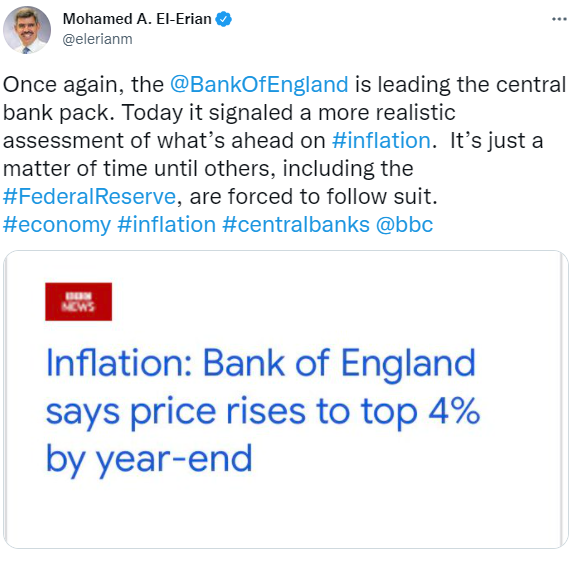
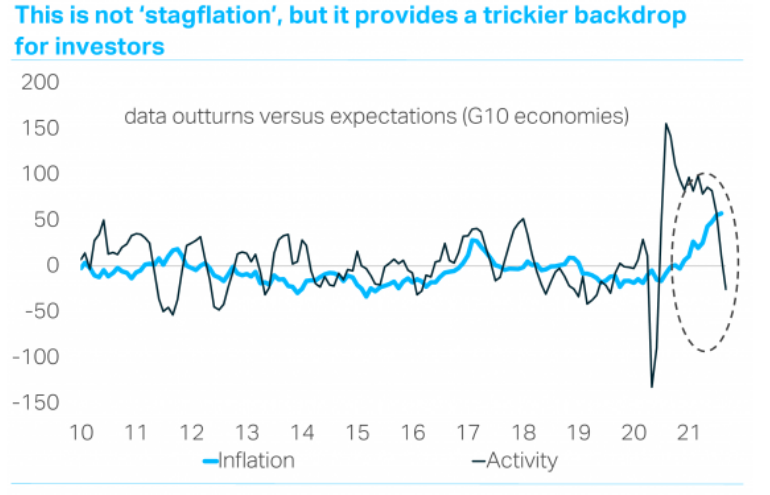 TS Lombard call it the VILE economy — volatile inflation, limited expansion. That's the downside scenario they see as possible if vaccines don't turn out to be the "silver bullet" the global economy needs to put the pandemic behind it. "Though the world is learning to live with the virus, the global recovery could remain more hesitant (and less complete) than the consensus is assuming," economist Dario Perkins warns. In a worst case, the growth inflation-mix deteriorates yet global central banks push on with the exit from quantitative easing, creating turbulence for global markets. Ahead of the pack? Read more reactions on Twitter - Click here for more economic stories
- Tune into the Stephanomics podcast
- Subscribe here for our daily Supply Lines newsletter, here for our weekly Beyond Brexit newsletter
- Follow us @economics
The fourth annual Bloomberg New Economy Forum will convene the world's most influential leaders in Singapore on Nov. 16-19 to mobilize behind the effort to build a sustainable and inclusive global economy. Learn more here. Bloomberg New Economy Conversations — Getting to Net Zero: The cost of scaling up renewable energy has fallen dramatically. Is 2021 the year in which we'll see major investments in areas like green hydrogen, carbon capture and other technologies needed to prevent environmental catastrophe? What are the most promising new areas and who is at the forefront? Join New Economy Editorial Director Andrew Browne on Sept. 28 at 10 a.m. New York Time as he discusses these issues with HSBC Group Chief Executive Noel Quinn, Hyundai Motor Co. Vice President of New Energy Business Development Jae-Hyuk Oh, and others. Register here. | 







Post a Comment