| This is Bloomberg Opinion Today, a vaccine mandate of Bloomberg Opinion's opinions. Sign up here. 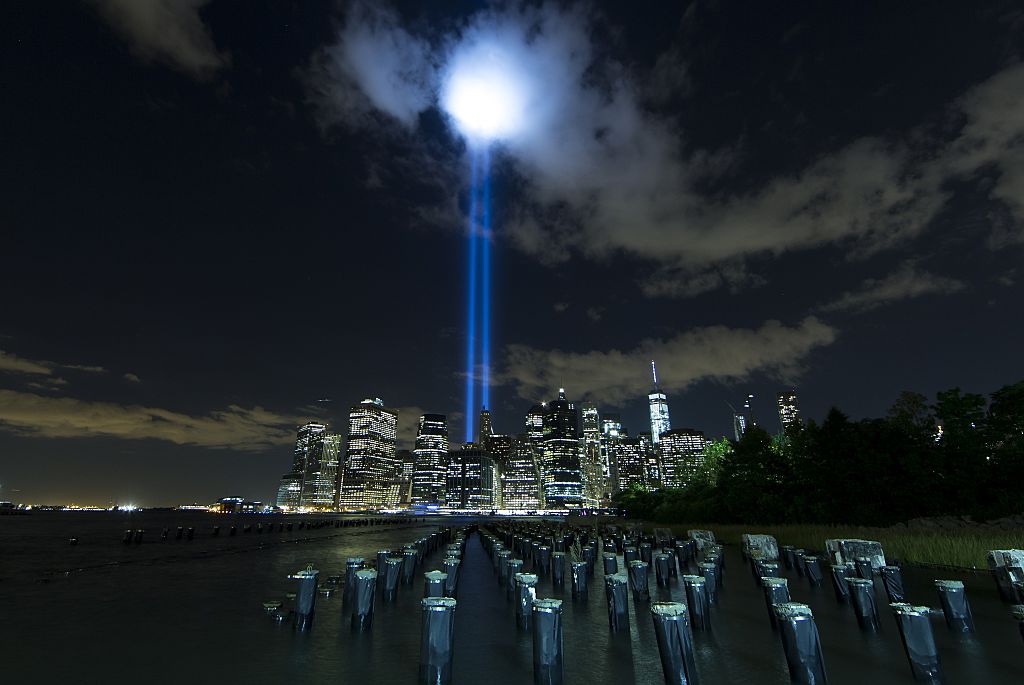 Photographer: Anadolu Agency/Anadolu/Getty Images Photographer: Anadolu Agency/Anadolu/Getty Images Don DeLillo's 9/11-inspired novel "Falling Man" was partly, in Michiko Kakutani's words, about "the hubris of trying to make art out of horror." The book demonstrated this by being, as Kakutani put it, "small and unsatisfying and inadequate." In fact, a lot of 9/11-inspired art has felt that way. Far more durable and moving have been the real stories of the people lost, including the real Falling Man (warning: the photos are still unbearable, 20 years later). Maybe that's partly because these people could have easily been us: people living lives like ours, who just happened to end up in the path of a rift in the fabric of space and time and sanity. In the process, they became more indelible in our memories than almost any art. Those of us who work for Bloomberg don't have to stretch our imaginations to understand Peter Alderman, Bill Kelly and Paul Ortiz, former colleagues who were in Windows on the World when the first plane hit the North Tower. As David Shipley recounts, they were at a financial technology conference on a Tuesday — a forgettable event until, cruelly and unimaginably, it wasn't. Then there were David Alger, Louis Caporicci, Michael D'Esposito, Kristin Irvine-Ryan, Joseph Lenihan and Richard James Stadelberger. They all worked in finance in the Twin Towers and lost their lives that day. Like Peter, Bill and Paul, their colleagues remember them as people who worked hard, inspired others, loved their families and did all those other things that seem so ordinary to us but are revealed as miraculous when they are taken away. There is no silver lining to these losses. There is no way to make them right. But we at least have them among 2,977 sacred testaments inscribed that day, stories about how the way to truly live is to make a kind of performance art out of living, and how we are all artists with an unmatched and precious talent. Further 9/11 Reading: The U.S. needs a smarter strategy for fighting terrorism. — Bloomberg's editorial board Back in July, we wrote that dangling carrots to lure the unvaccinated to their local pharmacy for a Covid shot wasn't working, and that it was probably time to break out some sticks. Nearly two months and one delta-variant surge later, President Joe Biden yesterday finally broke out a decent-sized stick. Right-wing media and politicians responded in calm and measured tones. Ha ha, no; they were apoplectic. Some critics warned Biden's sort-of mandate could only harden resistance to vaccines. Some Democrats worried it would make Biden even more unpopular than he already is. But Jonathan Bernstein points out that vaccines and vaccine mandates are actually fairly popular. And most vaccine holdouts aren't horse-paste-ingesting Proud Boys but just kind of busy or lazy, like most of us are. Biden's move could finally make it easier for many of those people to get shots. This policy's effectiveness depends on its enforcement, writes Bloomberg's editorial board. The goal here is not to make Joe Biden more popular but to finally rein in a pandemic that has drawn tragic new power from the unvaccinated. A federal judge today ordered Apple to release app developers somewhat from the death squeeze of its App Store, a ruling that could cost the company a few billion dollars a year in revenue. That would be a lot of money to you and me, but then again we don't have $200 billion lying around the way Apple does. Still, it's one of the biggest blows to Apple's monolithic market power yet, writes Tae Kim, and it could open the door to other challenges. Who knows; it might soon be left with only like $100 billion. Bonus Tech Reading: Facebook's new glasses are alluring enough to make people use them. Fresh privacy headaches, ahoy! — Parmy Olson Low-skilled wages are rising faster than high-skilled wages, which John Authers writes is good for the economy and maybe Biden's political fortunes, though it also makes inflation more of a threat. 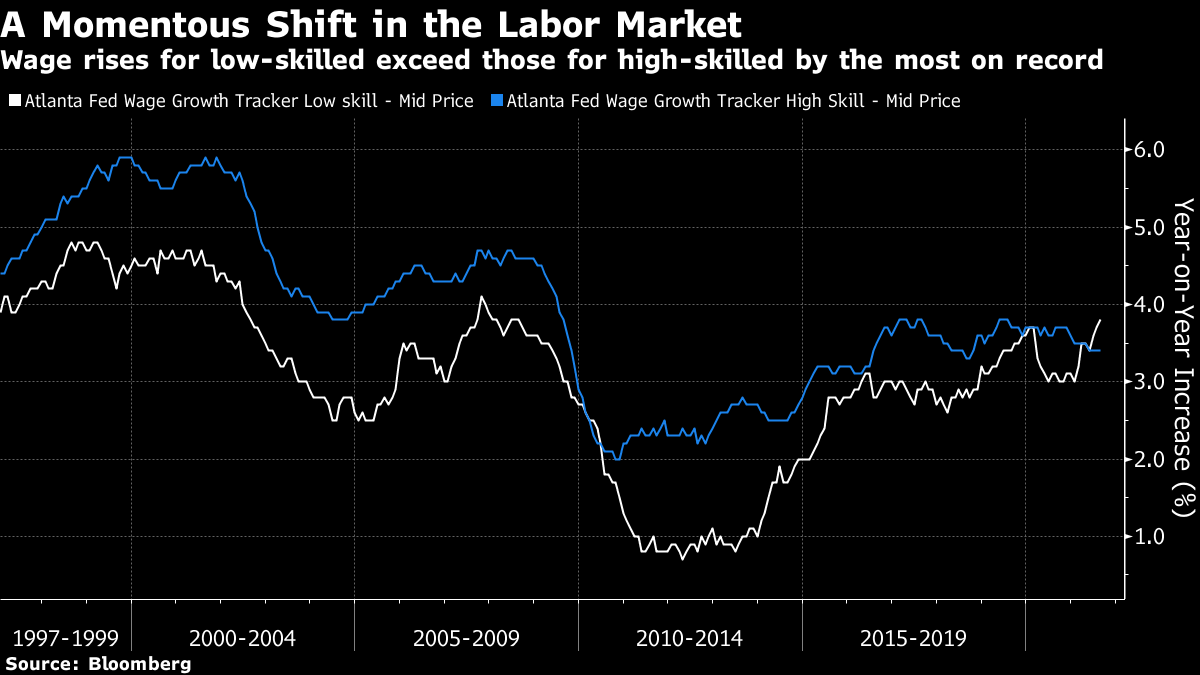 Republicans playing chicken with the debt ceiling put the economy and their own political power at risk. — Michael R. Strain The NFL has fully embraced online gambling, exposing more young fans to the risk of addiction. — Timothy O'Brien Coal and gas lose, solar and bankers win, in Biden's green energy plan. — Liam Denning Supply constraints are finally starting to hit industrial earnings. — Brooke Sutherland George Soros has the winning argument about China investment right now. — Marcus Ashworth PPLI may seem like a good tax-avoidance scheme, but it mainly benefits the very rich. — Alexis Leondis The NYC subway failed because somebody pushed the wrong button. Why America fell out of love with the mall. Children of parents who died on 9/11 are following them to Wall Street. Milkweed butterflies are terrifying monsters, it turns out. (h/t Ellen Kominers) Area congresswoman did not release those zebras. (h/t Scott Kominers) A laser beam through a keyhole can see everything in a room. We're a step closer to fusion energy. Thank ham and cheese for European civilization, and also books. Notes: Please send ham and cheese and complaints to Mark Gongloff at mgongloff1@bloomberg.net. Sign up here and follow us on Twitter and Facebook. | 






Post a Comment