Header Ads

OnlyFans has a new app with a twist: no nudity

The most common question customers ask Tim Stokely, the chief executive officer of OnlyFans, is why he doesn't have an app. Some 130 million people use his service every month to follow fitness instructors, get cooking tips or access nude pictures. But they have to access the service using its website because Apple and Google won't allow OnlyFans in their app stores.

That's all about to change. OnlyFans has created an app, called OFTV, that offers videos featuring many of OnlyFans biggest stars. There is a catch, however. There's no nudity. 

The app offers a library of more than 800 videos, including the original series "Unlocked," which features conversations with creators such as Mia Khalifa, Bella Thorne and Holly Madison. It also includes original videos from pilates instructors, chefs and podcasters. The app is available on all the major devices, including iOS, Roku and Amazon Fire.

"OFTV provides a super convenient way for fans to watch content from favorite creators," Stokely told me this past week. "There's no adult content on OFTV. Because it's not being monetized and there's no direct impact on creators' earnings, we are able to be in the app store."

OnlyFans first released the app in January, but hasn't promoted it at all. Starting this week, the company begins a push to target people who don't already use OnlyFans.

The new app is part of the company's strategy to shed its reputation as a purveyor of pornography and rebrand itself as a vital tool for all online creators. I wrote about this effort last year, at which point the app was still in development.

The company is walking a tricky line. It wants to sell a narrative that its technology and website can be used for far more than titillation.

OnlyFans is one of several companies, alongside Patreon and Substack, offering people a way to directly monetize their most ardent fans. After seeing the popularity of these platforms, the biggest technology companies have tried to jump on the trend. YouTube, Twitter and Instagram have all created ways for their users to charge fans for posts.

We live in a moment when everyone and anyone can be a creator, and many of us want to be paid for everything we say, do or think.

The average person who has heard of OnlyFans still associates it with nudity. But OnlyFans believes the same people who'd use Patreon to charge their fans for exclusive access to a podcast episode should consider using OnlyFans instead.

The more mainstream creators and celebrities it can bring onto its platform, the more accessible the company becomes in the mind of the consumer (and the investors). This is a key part of its message as OnlyFans tries to raise money at a valuation north of $1 billion, and Stokely said he hoped to close a deal by the end of the year.

Yet OnlyFans doesn't want to alienate many of the people who made it popular in the first place. When I last wrote about the company, a few people criticized OnlyFans for trying to distance itself from the women that made it a success.

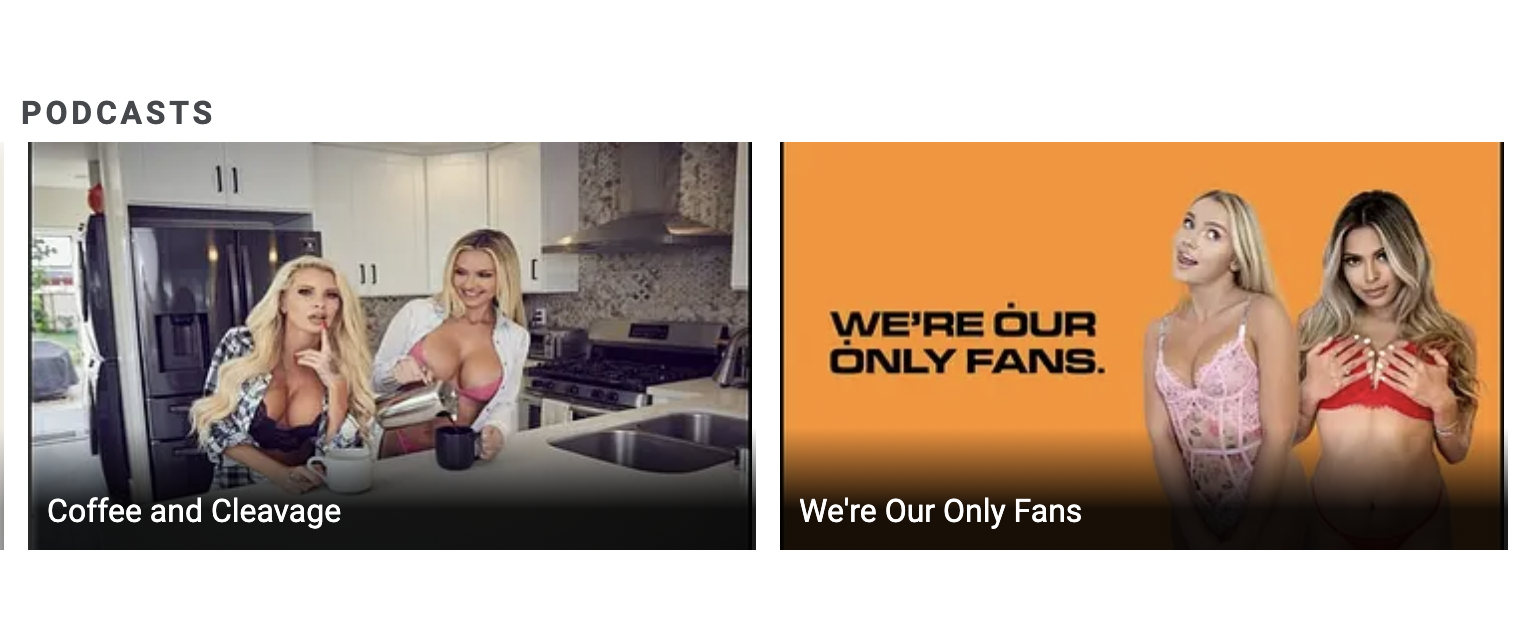
The company doesn't hide what makes it profitable. It still makes all its money from its main service, which is used by a lot of people who take their clothes off. And many of the people on OFTV leave little to the imagination in their videos. This is what you see on OFTV under the podcast category.
Yet this app solves one of OnlyFans' biggest problems: showcasing its other kinds of talent. People who use the OFTV app can more easily discover new creators and shows than on the main website, which is notoriously difficult to use. The app also allows OnlyFans to reach people on more devices, like TV set-top boxes.

The company doesn't plan to make any money from OFTV, at least not right away. The service is free, and doesn't include advertising. Instead, it's a marketing tool for the creators and for the OnlyFans brand. 

"People who have come on to OFTV to watch one video may go on to choose another," Stokely said. "It's a wider audience, and perhaps a slightly different audience." – Lucas Shaw

The best of Screentime (and other stuff)

The Fury and Fantasy of Donald Trump's Florida
Joe Hagan travels to Florida to meet with all of the right-wing politicos and media personalities who've moved closer to Mar-a-Lago.
The Murder Scandalizing Brazil's Evangelical Church
Jon Lee Anderson profiles Flordelis, a Brazilian celebrity and politican accused of playing a part in her husband's murder.
Grief and Conspiracy 20 Years After 9/11
I thought I was done reading about 9/11, but this Jennifer Senior piece proved there's so much more to say.
Google Limits Ad Targeting for Teens, Increases YouTube Privacy
YouTube says it is trying to limit the way ads can reach its teenage users.

Disney already won the streaming wars (kidding)

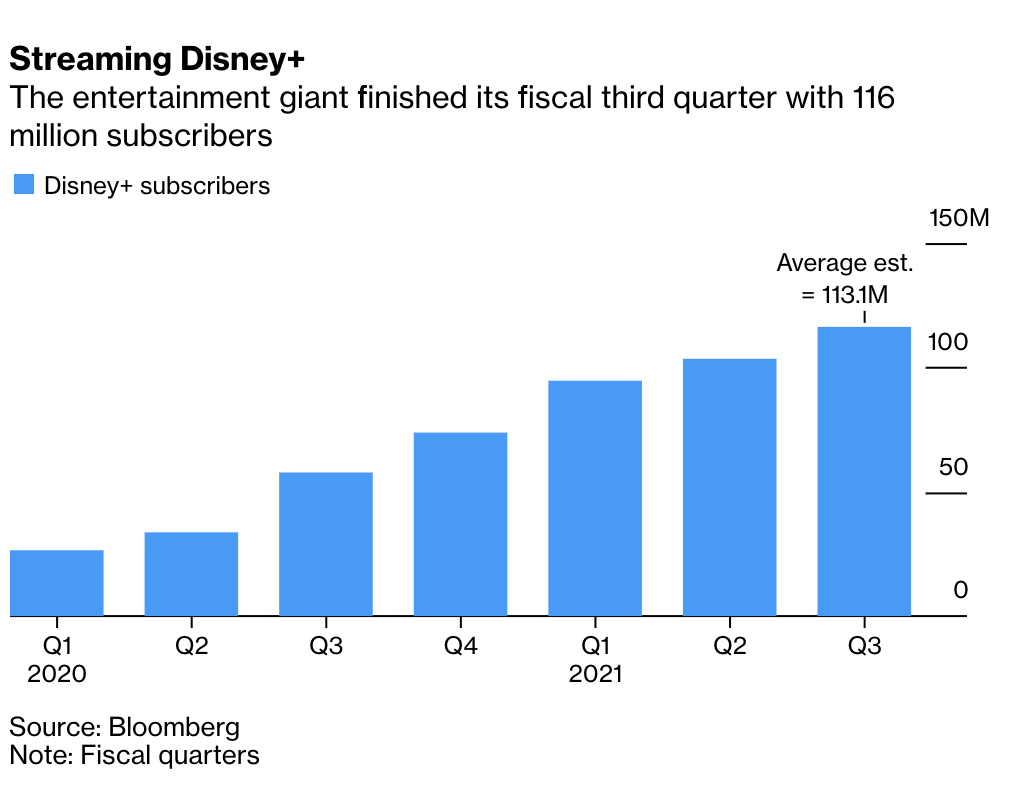
Disney has signed up more than 116 million customers for Disney+ in the last two years, and now has 170 million subscribers across its three services.

The number is slightly misleading because some people pay for Disney+, Hulu and ESPN+ and are thus counted three times. Disney has also benefitted from its strategy in India, where it charges a fraction of the price of Netflix (and has cricket). Almost 40% of Disney+ customers live in India, which is why the average customer pays a shade over $4 for Disney.

And yet, this chart is pretty darn impressive:

  • Here's another way of looking at the competition: Disney made $4.3 billion from streaming last quarter. Netflix made $7.3 billion.
  • And a third way: The three largest paid video businesses in the U.S. are Netflix, followed by HBO Max and Hulu. For all the fuss about Disney+, Hulu has added 7 million customers over the last year in the U.S. alone.

The most popular movie in the world is…

Netflix's "Blood Red Sky." The German movie has been watched by more than 50 million households. About 90% of the people who started the movie watched the whole thing.

This is a vital stat, and one I wish Netflix shared. Journalists and rival executives tease the company for counting just two minutes of watch time as a view. Netflix said more than 80 million households watched "Bridgerton," but did they all watch just two minutes of it? Hardy-har-har.

Yet executives at Netflix have told me that for most movies between 85% and 90% of people who watch at least two minutes stick around, which is why they use that metric. (My answer is always… then tell us how many people finished the movie!)

Some other numbers…

  • Billie Eilish avoided a sophomore slump. Her new album topped the Billboard album charts and earned the fifth-biggest debut of the year. More than half of the songs on the album ranked among Spotify's 100 most-popular songs globally last week.
  • Major League Baseball scored its most-watched regular season game since 2005 thanks to a pop-up game at the league's new Field of Dreams stadium. More than 5.9 million people watched it. The league said it would stage another such game next year.

Copyright pirates reap billions in ads

We often treat movie piracy like it's a thing of the past. But piracy websites aren't just affecting ticket sales. They are making bank. From Kelly Gilblom:

Websites and apps featuring pirated movies and TV shows make about $1.3 billion from advertising each year.

White Bullet determined the scope of ad revenues for pirated content by monitoring the most popular sites and apps active between June 2020 and May 2021. It honed in on about 6,000 sites and 900 apps and monitored the ads that appeared.

Concert promoters mandate vaccines

Live Nation and AEG, the two largest concert promoters in the U.S., said this week that people will need to be vaccinated or have proof of a negative Covid test in order to attend its events. Individual acts such as Jason Isbell have instituted similar rules, and canceled events at venues that wouldn't comply.

The live music business is in a tricky position. Fans want to go to shows, musicians want to play and employees need the work. But how do you gather thousands of people safely? Some acts have canceled their tours, but most will persevere. (At least until we get worse news.)

Deals, deals, deals

  • Rachel Maddow's contract with MSNBC is about to expire, and she's brought in the big guns to help figure out if she wants to stick around. She fired her old agent and hired Ari Emanuel and Mark Shapiro – the CEO and president of Endeavor.
  • AT&T is selling TMZ to Fox in a deal that would value the company at more than $100 million. Though TMZ founder Harry Levin has many business relationships with Fox, he is nervous about maintaining editorial control.
  • Reddit is now worth more than $10 billion. New York Times technology columnist Kevin Roose had the best take on this news: "On one level this is big for Reddit, on another level it's wild that a very popular website that enforces its rules coherently and that people actually enjoy using is worth 1/100th of a Facebook."
  • Sony hired a new host of "Jeopardy" – and fans of the show were not happy.
  • The "South Park" founders bought Casa Bonita, a Mexican restaurant in their home state of Colorado that they've wanted to own for years.

Weekly playlist

British music duo Jungle is out with a new album that the folks at NPR aptly dubbed "yacht funk." Their music makes you want to get on a dance floor, or at least sit outside with a cocktail.

Also, I finally caught up on the Israeli show "Fauda" during the pandemic. My girlfriend and I binged all the episodes in a month or two.

Lior Raz, one of that show's creators, has a new series out on Netflix called "Hit & Run." It's got Raz back in a starring role – a former Israeli agent turned protective dad -- only this time it's mostly set in New York.

No comments