
In 1996, NBC's longtime Olympic host Bob Costas remarked that the Atlanta Games should be called Title IX Games because they included the first generation of athletes to come up under the law that outlawed gender discrimination in education, including school sports. But the coverage itself didn't quite look like the Equality Olympics. Sure, women's gymnastics, which that year included Kerri Strug's famous one-legged vault, got breathless coverage. But that was about it. The U.S. softball and women's soccer teams both won gold, but only each got a few minutes of primo airtime.
Twenty-five years later, NBC's primetime coverage looks markedly different. According to Andrew Billings, co-author of "Olympic Media: Inside the Biggest Show on Television," 59% of NBC's primetime coverage of the 2020 Tokyo Olympic Games has been dedicated to women's sports. In fact, the network's coverage has repeatedly skewed female since the London games in 2012, the first year that the U.S. sent more women to the Olympics than men. The ratings agency Nielson, in a recent report, called the games "the biggest platform for gender parity in global sports" to ever exist. NBC's attention to women is partly due to their athletic dominance: women won two thirds of the U.S. medals in the first week of competition, skewing some nightly broadcasts even more. On August 2, for example, 72% of NBC's primetime coverage featured women. 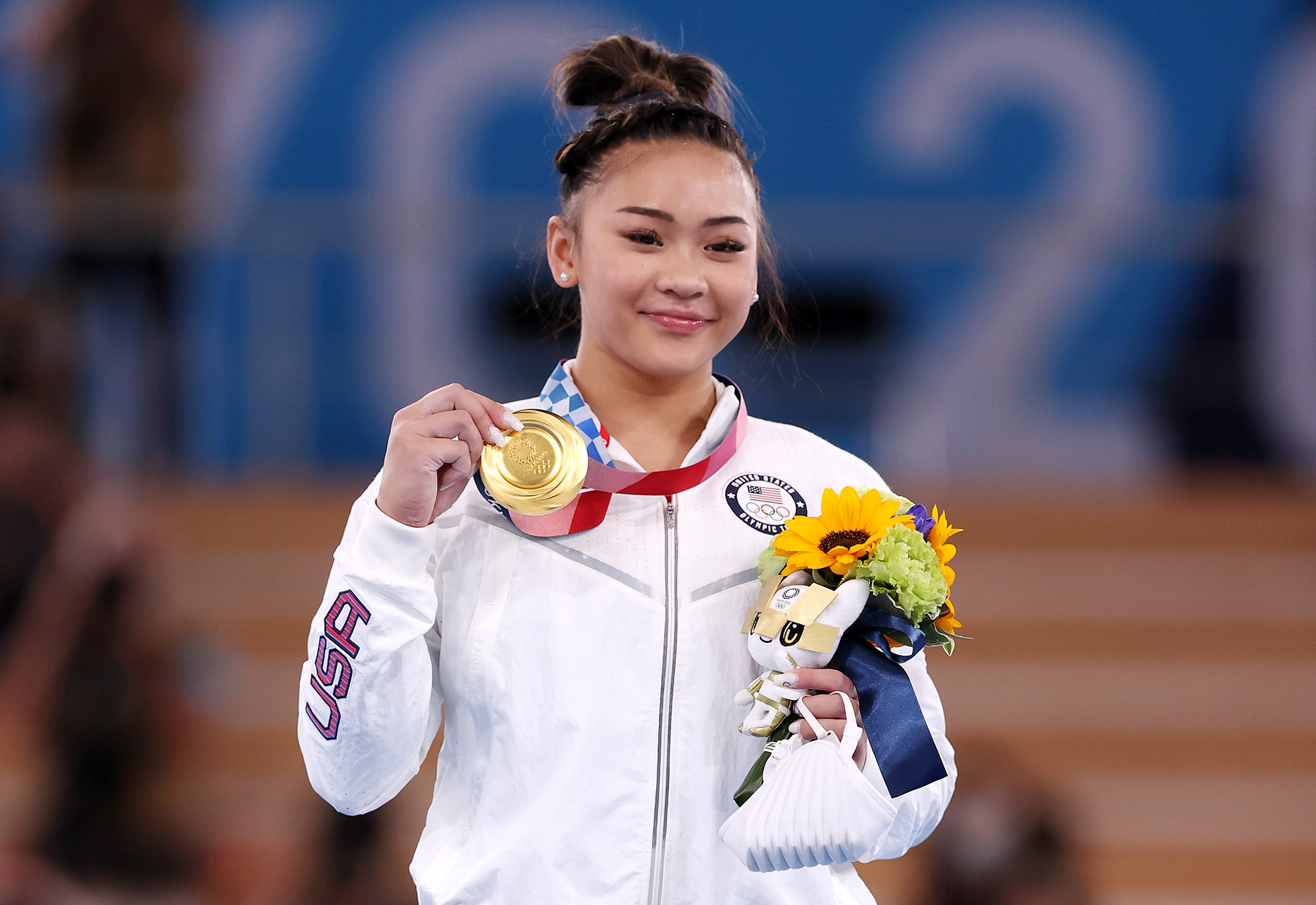 Photographer: Jamie Squire/Getty Images AsiaPac Photographer: Jamie Squire/Getty Images AsiaPac "If Bob Costas' argument 25 years ago was that the Atlanta Games were what allowing women to compete under Title IX looked like" says Billings, the Reagan Chair of broadcasting at the University of Alabama. "Then this is what two generations out from Title IX looks like. It's incredibly positive." Primetime metrics may not mean much in the streaming era. By the time the Olympics are over on August 8, NBC will have aired a total of 8,000 hours worth of coverage across its various television channels, Peacock streaming service, and NBCOlympics.com, essentially giving men and women an equal airtime by virtue of showing every event somewhere. Plus, TV ratings for the games are way down this year. But primetime coverage is the TL;DR version of the Olympics. It's when NBC selects the events it thinks most viewers want to see. And what NBC thinks people want to see is women. That doesn't mean the coverage is entirely free of sexism. The Representation Project, an organization that tracks sexism in film and media, issued a report on the first week of coverage from the Tokyo Games found that while no female athletes were verbally objectified by reporters or commentators, they were still frequently referred to as "girls" or "ladies." (Twice they were even called "chicks.") And a 2012 study from the University of North Carolina at Chapel Hill found that 97% of NBC's primetime coverage of female Olympic athletes was for events that required women to compete in a leotard or bathing suit. Unfortunately, none of this has equated to equal pay. Corporate sponsors still greatly favor men. Forbes recently estimated that superstars Simone Biles and Katie Ledecky earn $5 million and $3 million a year from endorsements, respectively, just a fraction of the estimated $32.5 million Usain Bolt made in 2016. In 2019 Olympic runner Allyson Felix, who has won six gold medals, revealed in an op-ed that after she underwent an emergency c-section to deliver her daughter Nike wanted to cut her pay by 70%. (Nike has since revised its maternity policy for athletes.) Felix has since jumped to Gap Inc.'s Athleta brand. This year, Biles did the same. —Claire Suddath
| 




Post a Comment