| For the head of a hospital facing yet another wave of Covid, a vaccine mandate might seem like the only way to keep staff and patients safe. The reality is more complicated, though. Right now nearly 1 in 8 nurses are neither vaccinated nor planning to get a shot. And in some parts of the country, hospital administrators say only about half of their nursing staff are vaccinated. That's the dilemma. Do you lose more nurses by mandating vaccines and having some quit, or by not requiring shots and facing staff shortages from quarantines and absences when they get sick?
"It's a cynical question, but what gets us to losing the higher amount of staff?" says Alan Levine, chief executive officer of Ballad Health, which has 21 hospitals and other centers serving patients in Kentucky, North Carolina, Tennessee and Virginia. Levine chose not to require vaccinations for his health-care workers after modeling suggested he could see 15% of nurses, or as many as 900, leave if he did. That's more than he anticipates losing to Covid-19 quarantines and illness, even with the most recent surge filling up the network's intensive-care units and 130 staffers quarantining on a single mid-August day. At Ballad, 97% of doctors are vaccinated. Among front-line nurses, he estimates vaccination rates hover around 50%. 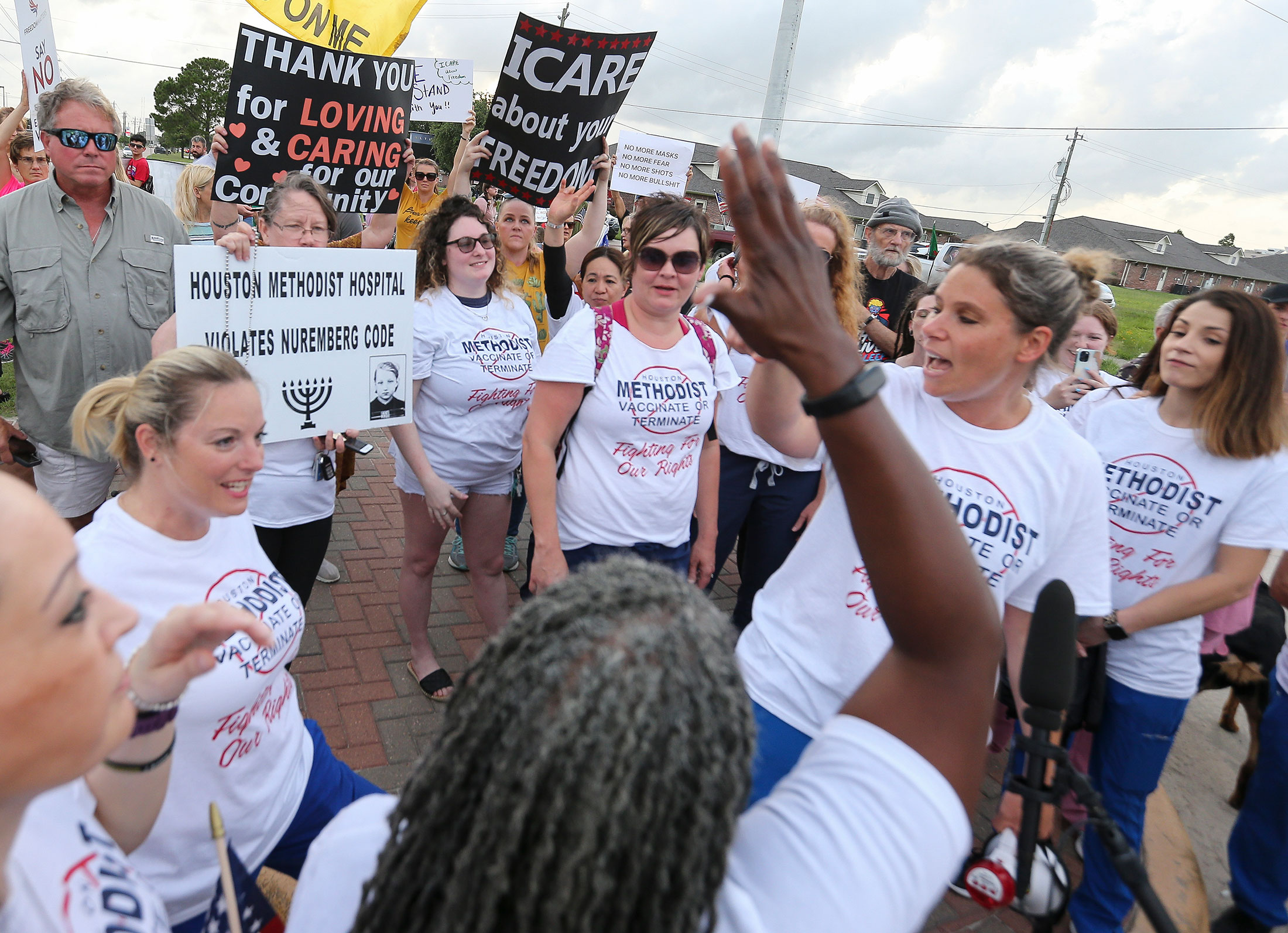 A protest against Houston Methodist Hospital system's vaccine mandate. Photographer: Yi-Chin Lee/Houston Chronicle/AP Photo It's hard to fathom how nurses, who see firsthand how Covid can kill people, could oppose getting a vaccine that's been shown in numerous studies to provide extraordinary protection against severe illness and death. But it's a problem hospital administrators all over the country find themselves facing. The American Nurses Association has formed a broader coalition of nursing groups to combat vaccine hesitancy in its ranks by publishing facts to help demystify the shots. Nationally, only 35% of hospitals had mandated that staffers get vaccinated as of Aug. 19, according to the American Hospital Association. With the U.S. Food and Drug Administration fully approving the Pfizer vaccine on Aug. 23, that percentage could rise over the next few months. About 22 states now require Covid vaccinations for at least some health-care workers, according to data from the National Academy for State Health Policy. Not all states are moving in that direction. Four so far—Arkansas, Georgia, Montana and Tennessee—established bans before the FDA's Pfizer vaccine approval that could prevent mandates being imposed on some workers. A number of others have yet to weigh in, leaving hospital administrators balancing their staffing concerns with their desire to protect workers and patients.—Cynthia Koons | 


Post a Comment