| Fake news fight | Facebook's counterattack against Biden's accusation that it's "killing people" by spreading disinformation about vaccines underscores just how limited the government's tools are to address online content. As Anna Edgerton reports, the president's broadside followed months of talks with the social-media giant that grew increasingly unproductive, and the company's response indicates Facebook is already doing everything it's willing to do. New outpost | Taiwan will set up its first office in Europe using the name "Taiwan," a decision the U.S. hailed as a way for the island democracy to strengthen its global presence in the face of pressure from China. Beijing criticized Lithuania's move to host the office, saying it should follow the "One China" principle when it comes to Taiwan. - China's Foreign Ministry also fired back at accusations linking it to the hack of Microsoft Exchange, calling it a smear campaign by the U.S. that lacked evidence.
Tech decline | When Tokyo hosted the Olympics in 1964, the unveiling of a bullet train capable of the improbable speed of 210 kilometres an hour (130 mph) heralded the dawn of a high-tech era in Japan. But, as Tokyo again prepares to host the Games, Isabel Reynolds and Pavel Alpeyev report that Japan's heyday of setting the pace is now far behind it, prompting the government to try and recapture some of that hi-tech verve. Best of Bloomberg Opinion 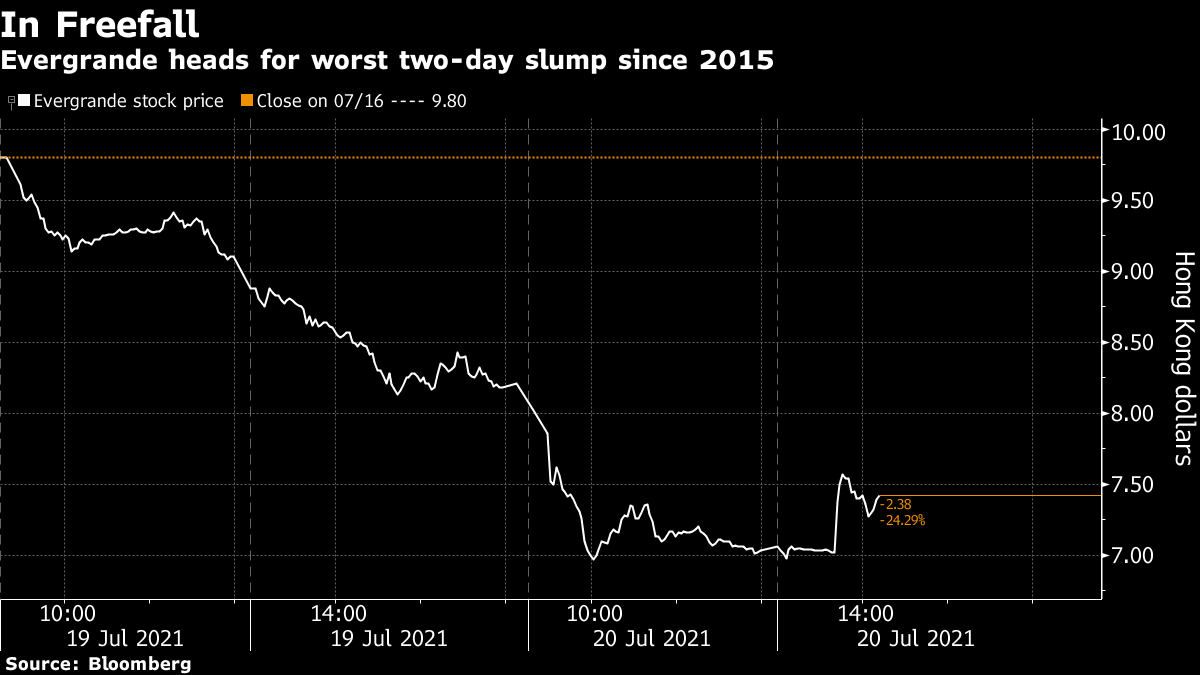 Confidence in China Evergrande Group is plunging amid signs the world's most indebted developer faces a cash crunch. While it has faced previous liquidity crises, some investors bet this time will be different as Beijing becomes more tolerant of defaults. The risk is that a major payment failure may ripple through China's financial system, eroding confidence in other highly leveraged property companies, shadow lenders and even some banks. Cargo slowdown | Trucks are lining up for hours at the border between Saudi Arabia and the United Arab Emirates as some international manufacturers find their goods snarled in a growing economic rivalry. New rules from Saudi Arabia, the UAE's fifth-largest trading partner, exclude items made in free zones from preferential tariff arrangements. That's hitting companies operating out of the UAE hard. Virus secrets | As public health experts warn India is ill-prepared for a possible third wave of Covid-19, a secretive institution is drawing criticism over its role as an adviser to Prime Minister Narendra Modi's government. As Muneeza Naqvi and Chris Kay write, the ICMR has been accused of hamstringing doctors by withholding data about Covid and its variants, promoting a homegrown vaccine before it passed key tests and recommending controversial drugs to treat the virus. - Peruvian rural union activist Pedro Castillo will take the reins of a deeply divided country after being declared president-elect following weeks of vote recounts, lawsuits and fraud claims.
- Singapore will tighten curbs on dining-in and social gatherings again and halt indoor exercise amid a record daily Covid-19 caseload.
- President Recep Tayyip Erdogan said Turkey is keen to take over security at Kabul airport as long as it has the support of the U.S., which is in the process of withdrawing its troops from Afghanistan.
- Iran's Supreme National Security Council said a draft agreement with world powers over how to restore the 2015 nuclear deal is incompatible with Iranian law.
And finally ... Israel warned the makers of Cherry Garcia and Chunky Monkey would face "serious repercussions" for a decision to stop selling the ice cream in Jewish West Bank settlements and Jewish areas of east Jerusalem. Prime Minister Naftali Bennett told Unilever, the owner of Ben & Jerry's, that his government would act aggressively after the company said it was "inconsistent with our values for Ben & Jerry's ice cream to be sold in the Occupied Palestinian Territory." 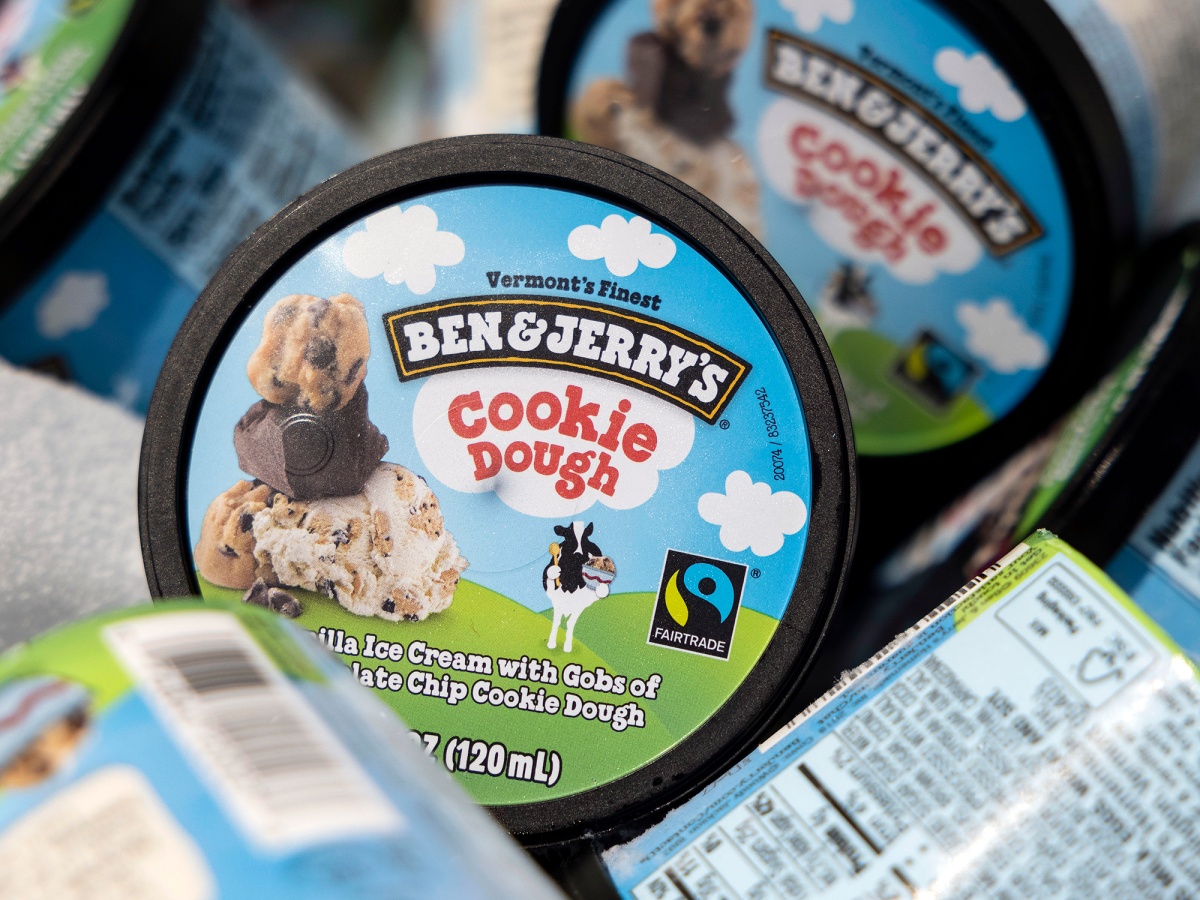 Photographer: Kevin Dietsch/Getty Images North America
| 



Post a Comment