| It's an abrupt reversal. After months of watching with a mix of smugness and horror at case numbers in the U.S. and Europe, content in the knowledge that life in Singapore was all but back to normal, the tables have turned. As London gets back to dining out again and holidaymakers in America head to the Caribbean, it feels like Singapore has regressed. Cases may still be at a fraction of what they are elsewhere, but it's a frightening flareup by the city's standards—especially since most people are still not vaccinated, and the new B.1.617 variant, first identified in India, has been circulating locally. Local news sites are refreshed endlessly for any details about new virus cases. Masks, which had begun to slip around chins, are right back up again, and restaurant thoroughfares that a few short days ago were packed lie eerily silent. 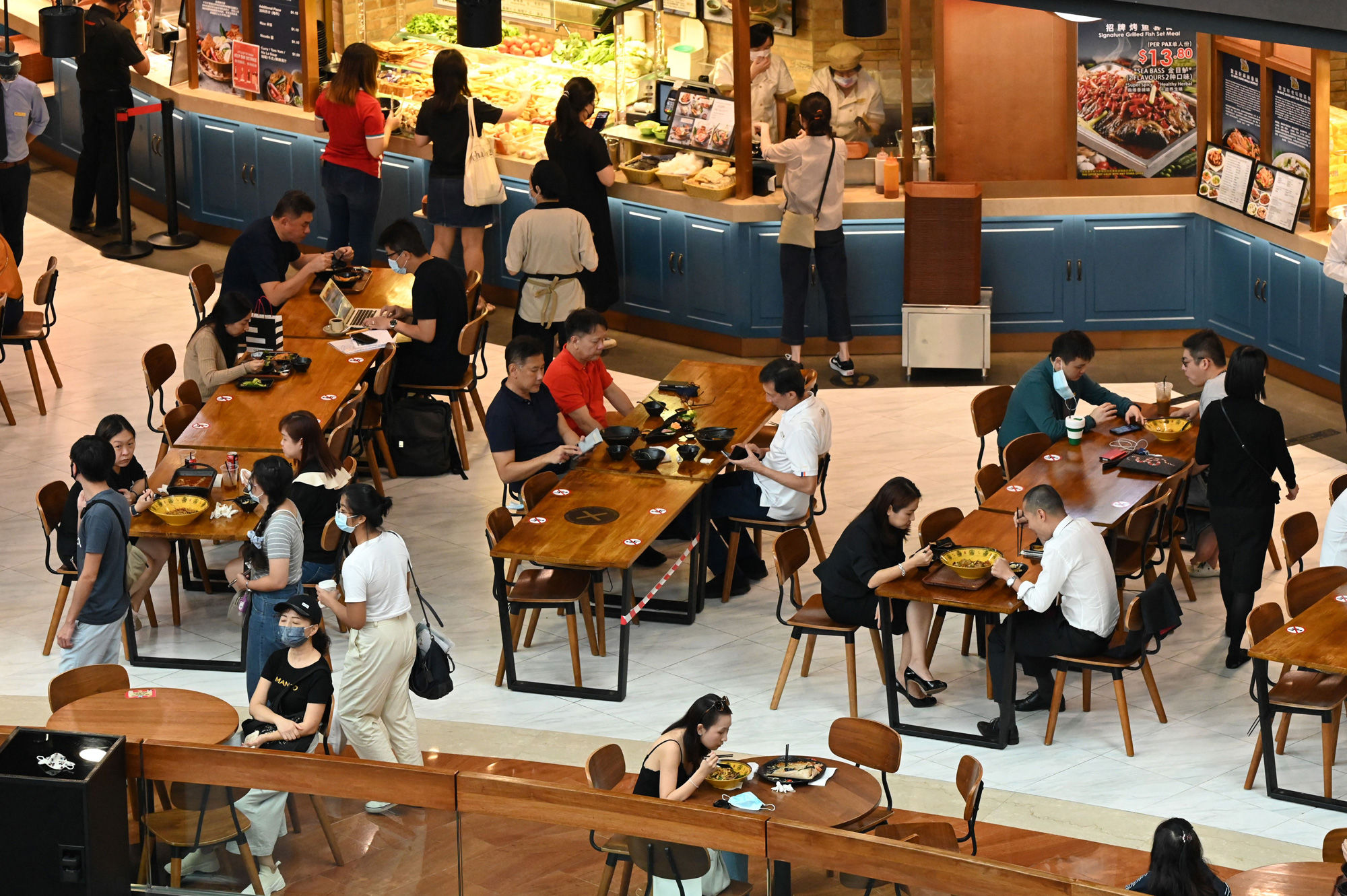 People dine at a restaurant in a shopping mall in Singapore ahead of tightening restrictions. Photographer: Roslan Rahman/AFP The question many are asking is how did we get here? Wasn't it only recently that Singapore was being held up as a shining example of how to manage through the pandemic? Now the World Economic Forum doesn't want to come, and even Hong Kong, Singapore's Asian financial twin, has labeled the island high-risk. The exasperation stems in part from a sense that there isn't any clear road map out for Covid havens like Singapore. Australia, New Zealand and Taiwan are in the same boat. Lulled into a false sense of security, vaccination rates have been low, either because governments haven't procured sufficient supplies or the public simply doesn't see any sense of urgency in getting a jab.
Singapore has done better than others on that front, but vaccination rates are well behind China, parts of Europe and the U.S. Now there's talk of giving people just one Pfizer shot to stretch out the number of doses available. Meanwhile, places like Australia, where public opinion would have borders shut ad infinitum, risk becoming more and more disconnected from the rest of the world. Australia has a big domestic economy, so perhaps that will be manageable, for a few years.
But Singapore is highly reliant on international trade and used to be a major travel hub. It may need to better learn how to live with the virus, rather than trying to stamp it out completely.—Katrina Nicholas | 


Post a Comment