| Biden Budget Request Revives Big Government With Higher Taxes
Biden issued his first full budget proposal Friday, detailing ambitions to dramatically expand the size and scope of the federal government with vast new spending paired with significant tax increases on corporations and the wealthy, Justin Sink reports.
Big Business and the GOP Remain at Odds Even With Trump Gone
It seemed as if corporate America and the Republican party might mend their frayed ties once Donald Trump left the White House. But as Peter Coy writes, relations are even worse now. First U.S. City to Back Reparations Meets Hard Reality
Evanston, Illinois is the first U.S. city to agree to pay reparations to Black residents for harm they suffered under structural racism. Susan Berfield and Jordyn Holman look at the hard questions that have surfaced.
Fear of Variant Poses Deadly New Dilemma for Boris Johnson
After Johnson's former chief adviser declared he was unfit to lead the U.K. out of the pandemic, his ministers fear he'll face a bigger battle with his party if the coronavirus variant first detected in India derails his plan to lift restrictions next month, Tim Ross and Kitty Donaldson write. 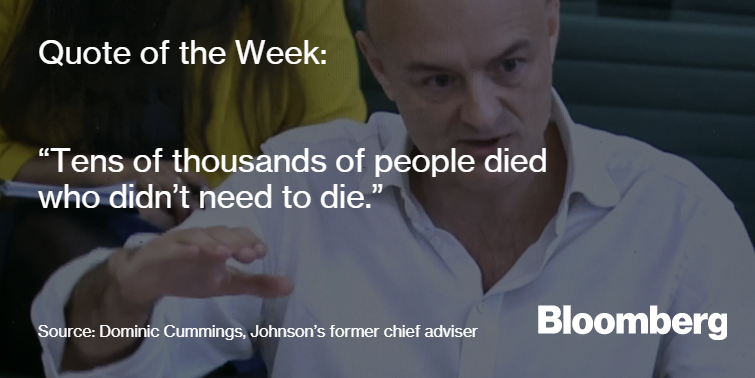 Brazen Ryanair Kidnapping Signals to Dissidents EU Isn't Safe
Exiled critics of Alexander Lukashenko have realized their adopted European homes aren't safe after the Belarusian strongman forced a commercial jet to land for the arrest of a dissident this week. Milda Seputyte, Aliaksandr Kudrytski, and Piotr Skolimowski report. Pipelines Balked When 'Blinking Red' Hack Alert Went Off in 2012
U.S. authorities are preparing to ditch voluntary rules that failed to stop the Colonial Pipeline ransomware attack. As Ari Natter and Jennifer Dlouhy explain, that would be a defeat for energy companies that for decades stymied legislation aimed at thwarting cyberattacks. Brazil Let 70 Million Shots Get Away and Sealed Its Covid Fate
The severity of Covid-19 in Brazil, with 450,000 lives lost, has often been attributed to President Jair Bolsonaro. But as Julia Leite, Andrew Rosati and Simone Iglesias report, a congressional probe is making clear that incompetence at nearly every level of government is also at fault. After Truce, Israel Confronts Aftermath of Arab-Jewish Violence
Deadly attacks from Arab and Jewish mobs that spilled over from fighting in Jerusalem and the Gaza Strip shook an uneasy coexistence in Israel. Now the country is facing up to uncomfortable truths about its treatment of its Arab citizens, Gwen Ackerman and Fadwa Hodali report. Cuba Readies Homegrown Covid Vaccines in Big Bet as Cases Surge
Cuba is taking a high-risk gamble that it can solve a worsening Covid-19 crisis on its own. Jim Wyss looks into how the communist nation is inoculating hundreds of thousands of people with locally made shots even as they're still being tested. 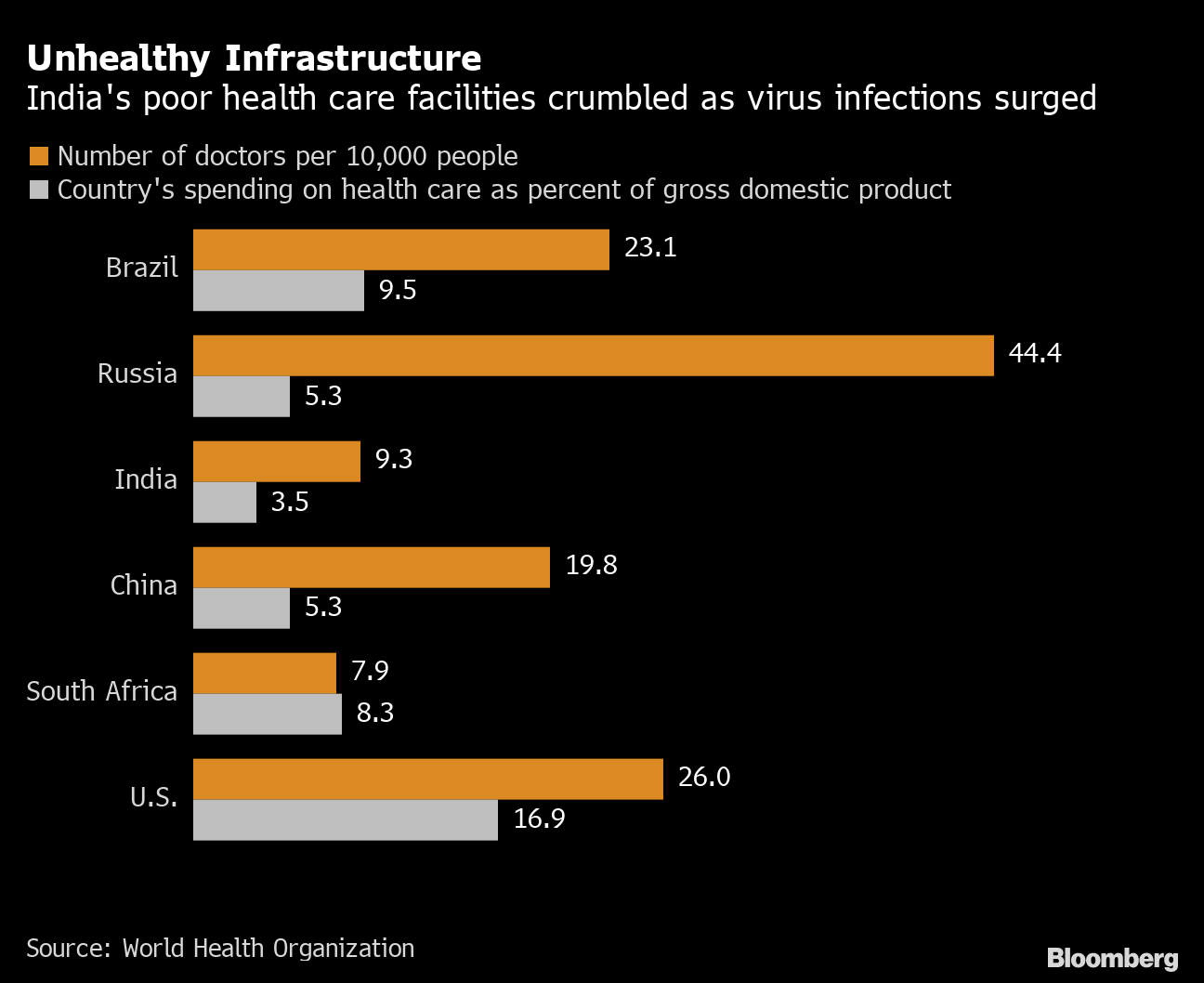 After a terrifying month that saw Covid-19 overwhelm India's health system, doctors and nurses say they were pushed to exhaustion as they fought to keep their patients alive. Upmanyu Trivedi looks at the silent toll of the country's deadly second wave. German Redress For Namibian Genocide Opens Door to Other Claims
Germany admitted that a colonial-era massacre more than a century ago in Namibia constituted genocide and agreed to pay compensation. As Kaula Nhongo and Mike Cohen explain, that may open a Pandora's box of claims for redress from other formerly occupied nations. And finally … With shortcomings in Japan's fight against the pandemic becoming clear, few Japanese want to host the Olympics in July. Isabel Reynolds and Marika Katanuma look at the tough choice facing Prime Minister Yoshihide Suga over whether to hold or cancel the Games.  The Olympic rings on the Odaiba waterfront in Tokyo. Photographer: Charly Triballeu/AFP Getty Images | 




Post a Comment