| Global banks grapple with yet more Archegos fallout. Secrecy and abuse claims haunt Xinjiang's solar factories. South Korea wants its citizens to learn to live with robots. Here's what people in markets are talking about today. Global banks are overhauling a lucrative, decades-old part of their business following the collapse of Archegos Management. Nomura and Credit Suisse, the two lenders hit hardest, have started to curb financing in the business with hedge funds and family offices. European regulators are looking at risks banks are taking when lending to such clients, while U.S. authorities started a preliminary probe into the debacle. Together, these steps could portend some of the biggest changes since the financial crisis to prime brokerage — businesses that lend to hedge funds and execute their trades. Meanwhile Credit Suisse has slashed the amount of money set aside for employee bonuses, using the savings to limit the Archegos financial hit. Asian stocks look set to climb following gains in U.S. equities and bonds, as investors shrugged off a higher-than-forecast rise in U.S. inflation to focus on the path of the global recovery. Johnson & Johnson shares fell as a vaccine investigation kicked off into concerns about blood clotting, while rivals Moderna and Pfizer advanced. Treasuries extended gains on a successful sale of 30-year bonds and the U.S. dollar fell. Bitcoin jumped to an all-time high and the Nasdaq set a reference price of $250 for the direct listing of cryptocurrency exchange Coinbase. Covid-19 is crippling hospitals in India's richest state. The country has overtaken Brazil as home to the second-most cases in the world. Until the end of April, Maharashtra — where Mumbai is located — will allow only ultra-essential businesses to stay open. India will also fast-track approvals for Covid-19 shots approved overseas: At the current pace of vaccinations, India would need 1.3 years to give 75% of its population two doses. Elsewhere, Hong Kong plans to only allow vaccinated travelers to fly in from Singapore once the cities finalize a travel bubble; rare clotting side effects from vaccines put an uncommon immune reaction in the spotlight; J&J is delaying its European vaccine rollout, and experts are sizing up Sinovac. Millions of homeowners buying solar panels everywhere face a moral dilemma. Nearly half the world's supply of polysilicon, the raw material in billions of solar panels all over the world, comes from factories in Xinjiang — the center of the nation's crackdown on its Muslim minorities. Three owners of Xinjiang's polysilicon refineries have been linked to a state-run employment program that, some foreign governments and academics say, may at times amount to forced labor. China denies such accusations and recently insisted that journalists and diplomats are free to go see for themselves. That's why two Bloomberg reporters went to Xinjiang in March. Read about their trip here. South Koreans must learn how to work alongside robots and AI if they want to thrive in a post-pandemic world, the country's labor minister says. "Automation and AI will change South Korea faster than other countries," Minister of Employment and Labor Lee Jae-kap said Tuesday, adding that "not all jobs may be replaced by machines." Capitalizing on the expertise of global technology giants such as Samsung Electronics, Korea is accelerating efforts to become a resilient, tech-centric economy that can keep punching above its weight in global supply chains. What We've Been ReadingThis is what's caught our eye over the past 24 hours: And finally, here's what Tracy's interested in todayThe debt woes of Huarong are shaping up to be the ultimate test for China's credit market. One of the biggest questions there has always been is to what degree authorities will allow state-owned enterprises (SOEs) to default so as to effectively wean debt investors off a long history of implicit guarantees. Not only is Huarong the ultimate SOE — a company created to sweep up the country's bad debt and majority-owned by China's finance ministry — but its debt also comes with the keepwell arrangements so characteristic of China's offshore bond market. (China Huarong Asset Management has pledged credit enhancement for bonds issued by Huarong International, and these are the ones which have plunged in recent days). 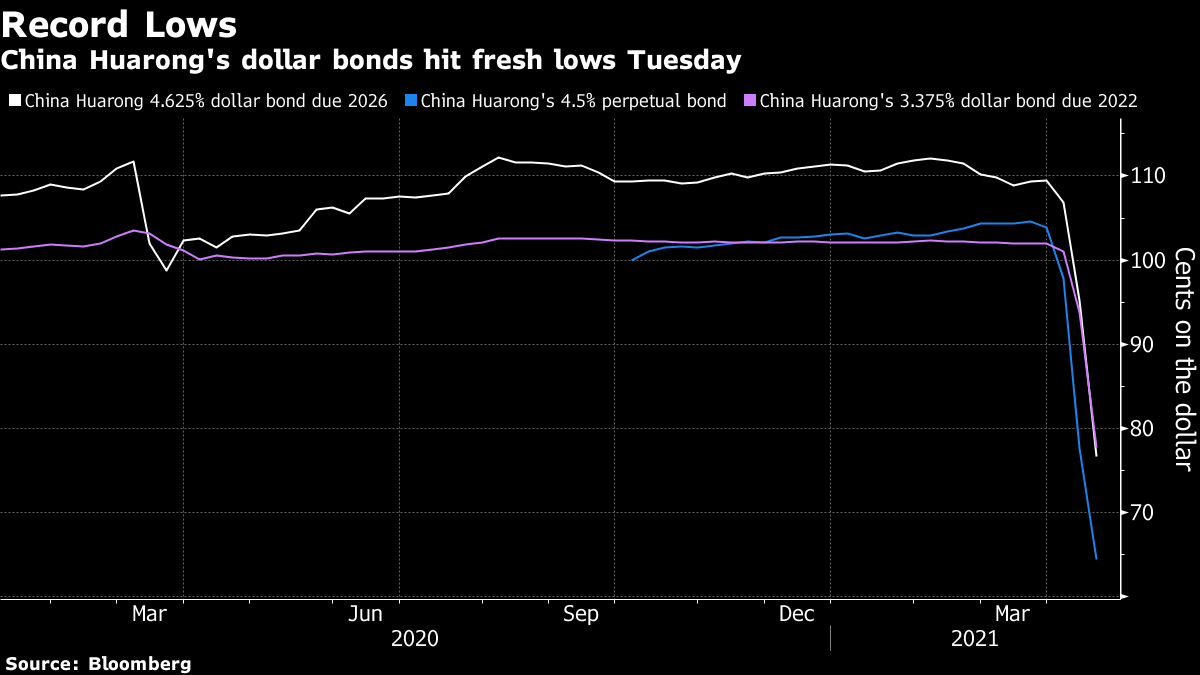 In that sense, not only will Huarong test the authorities' commitment to allowing defaults in its nascent debt market, it could also offer another thorny legal test for keepwell arrangements, which have long been the subject of doubt for some investors and lawyers. The high stakes involved in the Huarong drama is one of the reasons opinions now seem so divided regarding the fate of of the company and its debts. On the one hand, analysts such as those at CreditSights argue that "ultimately, Huarong is a systemically important institution and any default on its obligations will lead to contagion in the Chinese financials space and likely spreading to other Chinese dollar bond issuers." On the other hand, you have the recent price action in the bonds itself suggesting some investors are positioning for a restructuring. You can follow Tracy Alloway on Twitter at @tracyalloway. | 


Post a Comment