| Momentum grows for U.S. legislation confronting China. Wall Street starts to spot Bitcoin weakness. How to travel safely once you've been vaccinated. Here's what you need to know to start your day. Momentum is growing in Congress for bipartisan legislation to confront China and bolster U.S. competitiveness in technology and critical manufacturing. The Senate Foreign Relations Committee, on a 21-1 vote Wednesday, approved a bill aimed at China on a number of fronts, including closer of scrutiny of foreign donations to U.S. colleges and universities. Meanwhile Australia has canceled agreements between China's Belt and Road Initiative and the Victoria state government. Earlier this week, Chinese President Xi Jinping called for greater global economic integration while calling on the U.S. and its allies to avoid "bossing others around." Asia stocks are poised to bounce after U.S. equities snapped a two-day drop on a rally in companies that stand to benefit the most from an economic revival. The dollar fell, while Treasuries stabilized. Futures pointed higher in Japan, Australia and Hong Kong. Most major groups in the S&P 500 rose, with raw-material, energy and financial shares leading the charge. Blighted by rising cases from Japan to India, here's how Asian markets have underperformed their global peers since the start of March. Australia's slow vaccine rollout could leave the country isolated into 2022. While much of the world contends with another wave of Covid-19 cases, Australia is in a group of countries including neighboring New Zealand, South Korea and Taiwan that were successful in controlling the spread of Covid-19. But they've fallen short of the massive vaccination pushes seen in the U.S., U.K. and Europe. With just 3.2% of its citizens vaccinated, Australia is ranked 93rd on Bloomberg's Global Vaccine Tracker. Here's the latest virus news from around he world, and here's how to travel safely after you've had your vaccine. Bitcoin has yet to recover from its unexplained weekend swoon, and now the investing public is on edge about the notoriously volatile token's next move. Enter the chart watchers. Weighing in on crypto for virtually the first time, Tallbacken Capital Advisors' Michael Purves sent a note Wednesday with a technical analysis of the coin's trading patterns. Bitcoin's recent highs weren't confirmed by its relative strength index, among other things, and upward momentum is fading, he said. Earlier, JPMorgan strategists wrote that if the largest cryptocurrency isn't able to move above $60,000 soon, momentum signals will collapse. Meanwhile, here's how Tyler Cowen sees crypto billionaires changing philanthropy. The SPAC boom may be deflating after more than a year of frenzy, but it's still creating vast riches for the right deals. Ride-hailing giant Grab Holdings' transaction will give the Singapore-based company a market value of $39.6 billion, up from a valuation of $16 billion earlier this year. Co-founder and CEO Anthony Tan, who'll hold 2.2% of Grab after the deal, will see his fortune surge to $829 million, based on the stock he'll own. Co-founder Hooi Ling Tan and President Ming Maa will own shares worth $256 million and $144 million, respectively, according to the Bloomberg Billionaires Index. Meanwhile hedge fund giant Marshall Wace is ringing alarm bells about the booming SPAC market. What We've Been ReadingThis is what's caught our eye over the past 24 hours: And finally, here's what Tracy's interested in todayThere's a tendency to dismiss the retail trading phenomenon as a bit of harmless entertainment that affects just a handful of meme stocks. Sure, some latecomers to the party might lose money, but for the most part piling into stocks can be fun and lucrative. But already there's evidence that it's impacting markets in some important ways. There's some evidence of short-sellers going underground to place their bets, for instance by using credit default swaps to express negative opinions on a stock. In an Odd Lots episode published this week, hedge fund manager John Hempton also described having to calculate potential gamma squeezes on any short positions. The concern is that publicly available short positions might be targeted for a squeeze similar to what we saw with GameStop. 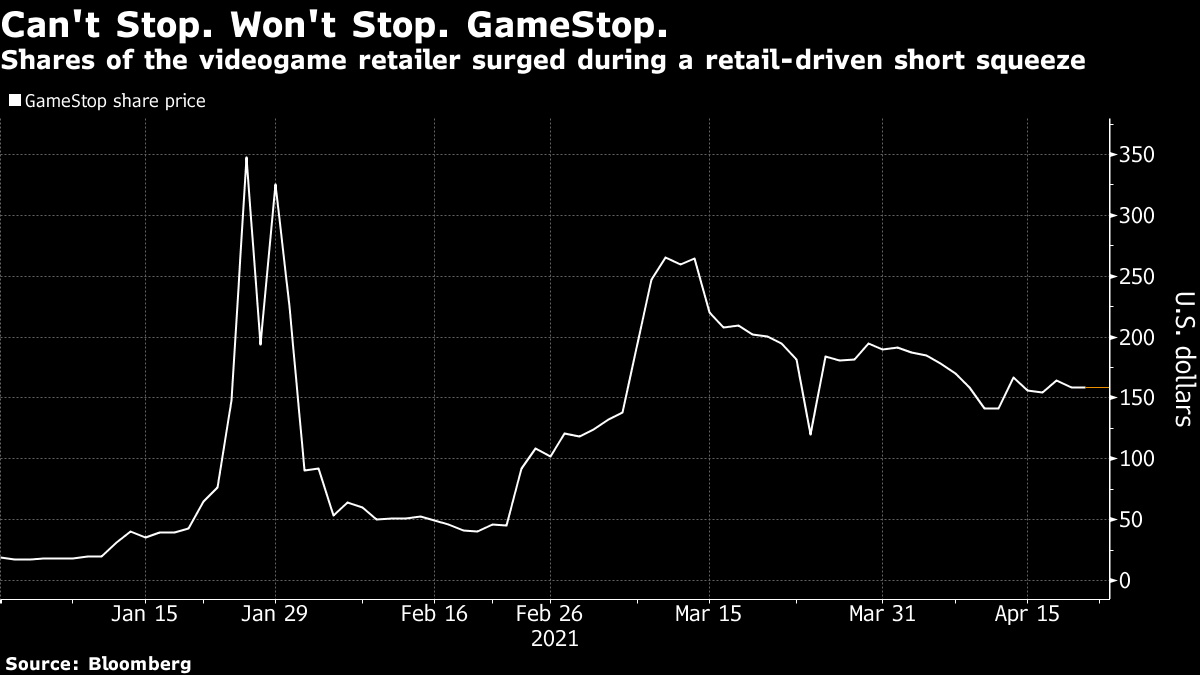 But there are other ways the trend of social network-enabled "swarm trading" is impacting markets. In a new paper, researchers from Vanderbilt, Imperial College London and the Swiss Finance Institute describe how short squeezes engineered in stocks like GameStop, AMC and American Airlines not only impacted market quality in those equities, but also affected market quality of their respective competitors. Both volatility and bid-ask spreads — a liquidity measure — jumped 25% for competing firms during a short squeeze period targeting a single company. As the paper puts it: "In the case of coordinated trading by a large crowd of traders that results in a short squeeze, market quality is subsequently reduced in these stocks despite real-time surveillance by market regulators and continuous information processing. Importantly, we also document negative spillover effects on the market quality of the competitors of the firms at issue." You can follow Tracy Alloway on Twitter at @tracyalloway. | 


Post a Comment