| Final gauntlet | President Joe Biden's $1.9 trillion stimulus package faces a marathon session of votes in the Senate. Democratic leaders plan to tough it out in the amendment process and emerge with a bill that gets the votes of all 50 Democrats without risking a revolt from progressives in the House, which must agree on the Senate version before it goes to Biden for his signature. - Read here what's in the Senate legislation.
Changing priorities | China set a conservative economic growth target for this year of over 6% (economists expect an 8.4% expansion), shifting its focus from recovery mode to longer-term challenges like reining in debt and reducing technological dependence on the U.S. At an annual meeting of lawmakers in Beijing, officials also projected defense spending to rise 6.8% this year, the largest gain since 2019. 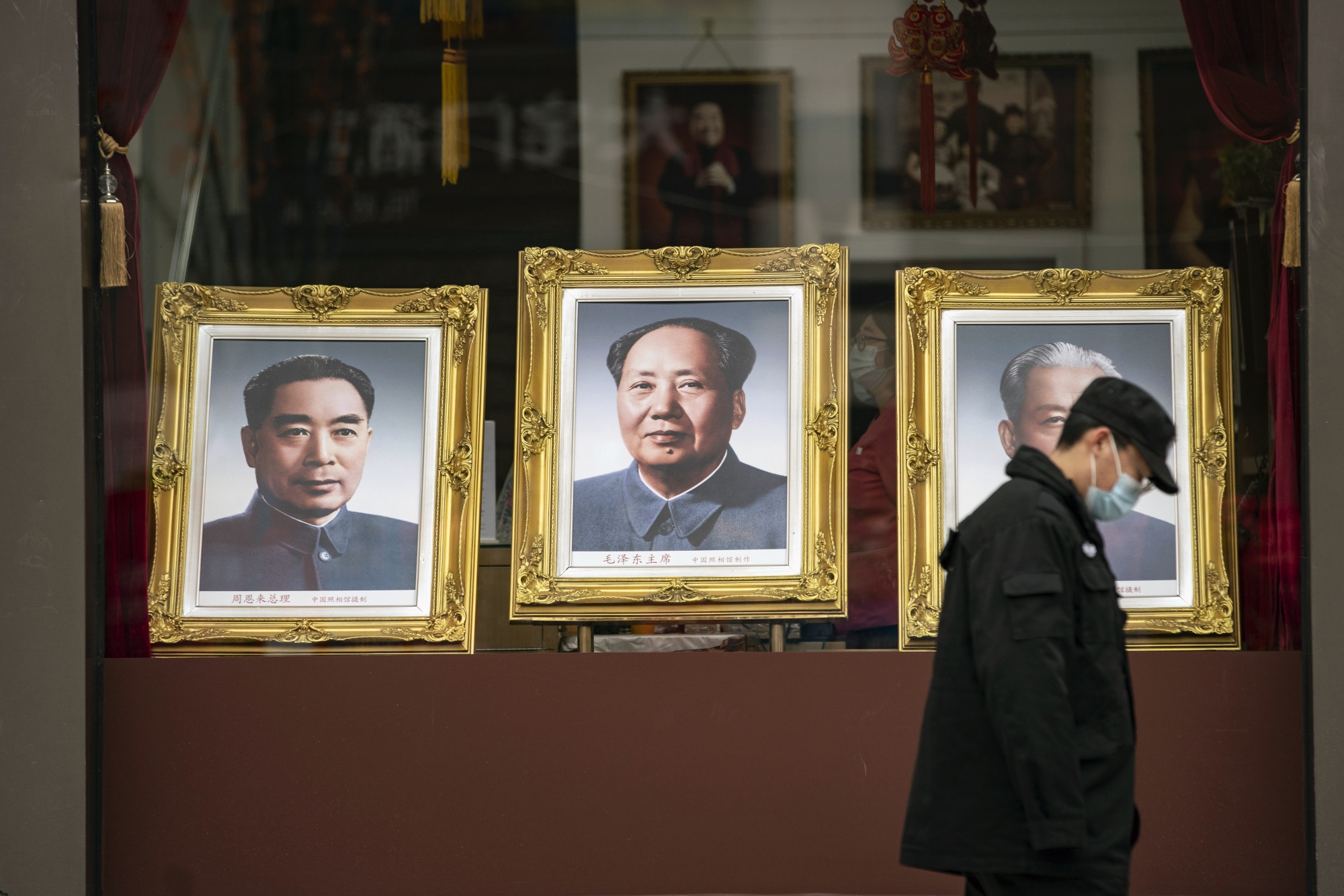 A pedestrian walks past portraits of former Chinese leaders today in Beijing. Photographer: Qilai Shen/Bloomberg Further punishment | The U.S. and U.K. are weighing more sanctions against Russia over the use of chemical weapons, with options ranging from penalizing oligarchs to the extreme step of targeting its sovereign debt, Saleha Mohsin, Alberto Nardelli and Jennifer Jacobs report. The Biden administration may follow up on sanctions over the poisoning and jailing of opposition leader Alexey Navalny unless Russia provides assurances it will stop using such weapons. The Kremlin denies involvement. Oil soars | Saudi Arabia's decision to keep a tight grip on oil supplies at yesterday's meeting of the OPEC+ alliance of producers sent prices briefly above $65 a barrel. The kingdom is betting that the glory days of U.S. shale, which transformed the global energy map in the last decade, are never coming back. UN fight | The United Nations has become a diplomatic battleground over the Feb. 1 coup in Myanmar, as the Southeast Asian nation's anti-junta ambassador refuses to cede his seat in New York. The Security Council today will hold a closed-door meeting on the crisis after 38 people were killed on Wednesday, the deadliest day of protests. What to Watch -
The White House will soon have to settle a Bitcoin fight caused by the decision of the prior administration to require financial services firms to record the identities of cryptocurrency holders. -
Canadian Procurement Minister Anita Anand said in an interview she hopes her efforts to secure Covid-19 vaccines will allow her compatriots to watch National Hockey League games in person next season. -
Yemen's Houthi rebels said today they launched a drone attack on a military airbase and an airport in Saudi Arabia, stepping up their offensive on the kingdom's energy and security installations. -
Pope Francis traveled to Iraq today to urge its dwindling number of Christians to stay put and help rebuild the country after years of war and persecution. Pop quiz, readers (no cheating!). Which country announced a plan to increase taxes to the highest level in more than 50 years? Send your answers to balancepower@bloomberg.net. And finally ... As the U.S. warns of what it sees as China's push to dominate technological infrastructure, Chinese companies are about to establish a beachhead in Europe. An undersea cable will emerge later this year near a popular sunbathing spot in the south of France that will be able to transport enough data in one second for 90,000 hours of Netflix. It will largely serve Chinese companies doing business in Europe and Africa but, as Helene Fouquet reports, it also represents a flash point in the geopolitics of the internet. 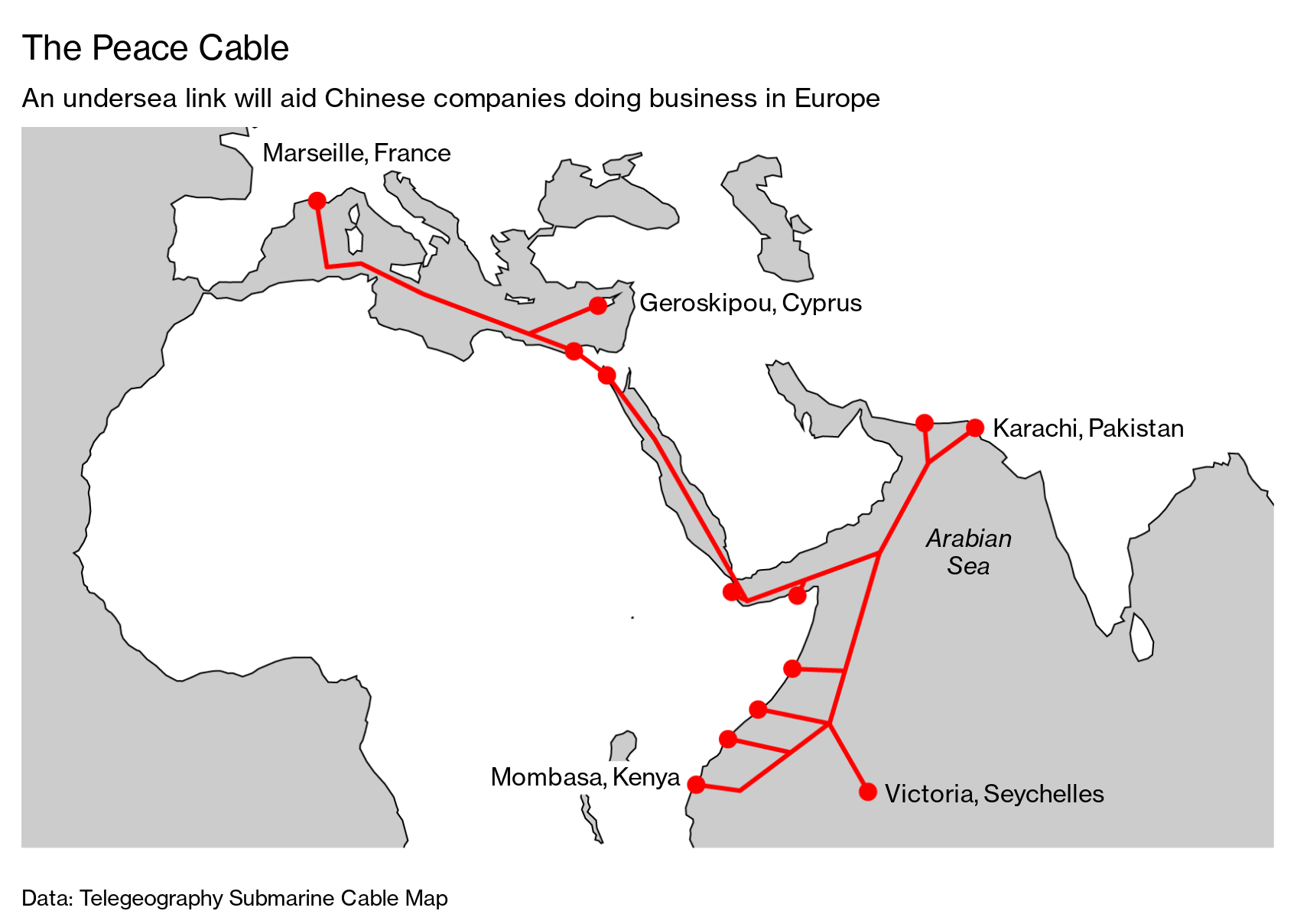 | 



Post a Comment