| Cooperation snag | President Xi Jinping has ambitious plans to turn China into a digital powerhouse. But, as Peter Elstrom and Coco Liu explain, Xi's drive for tech dominance is threatened by an unexpected speed bump: Beijing's forceful crackdown on Jack Ma's business empire. - The U.S. and China are pursuing divergent economic policies amid the pandemic — a role reversal from the last time the world economy was recovering from a shock.
- Top generals in China said the country must boost military spending to prepare for a possible confrontation with the U.S.
EU launch | Switzerland-based Adienne Pharma & Biotech has agreed to make the Sputnik V Covid-19 vaccine at its Italian facilities, the first European production agreement for the Russian shot. As Alessandro Speciale explains, while regulator approval is pending, the deal with Russia's sovereign wealth fund comes as Prime Minister Mario Draghi tries to speed up Italy's vaccination campaign amid a rise in infections. Price spike | As the pandemic curtailed economic activity, oil prices hit a freak low last April, even briefly going into negative territory. Sunday's missile attack on a key Saudi oil facility saw benchmark Brent crude spike above $70 per barrel, building on gains already seen due to coordinated supply constraints by major exporters. Enda Curran and Michelle Jamrisko run through what rising oil prices mean for everything from the global recovery to geopolitics. Another chance | Ex-Brazilian president Luiz Inacio Lula da Silva plans a press conference today at his former union headquarters after a judge tossed out criminal convictions against the leftist icon, his biggest chance yet at a long-sought comeback. Lula's return to the scene could deal a blow to pro-market reforms, make President Jair Bolsonaro even more populist and bring forward distracting electioneering that wasn't expected for months. 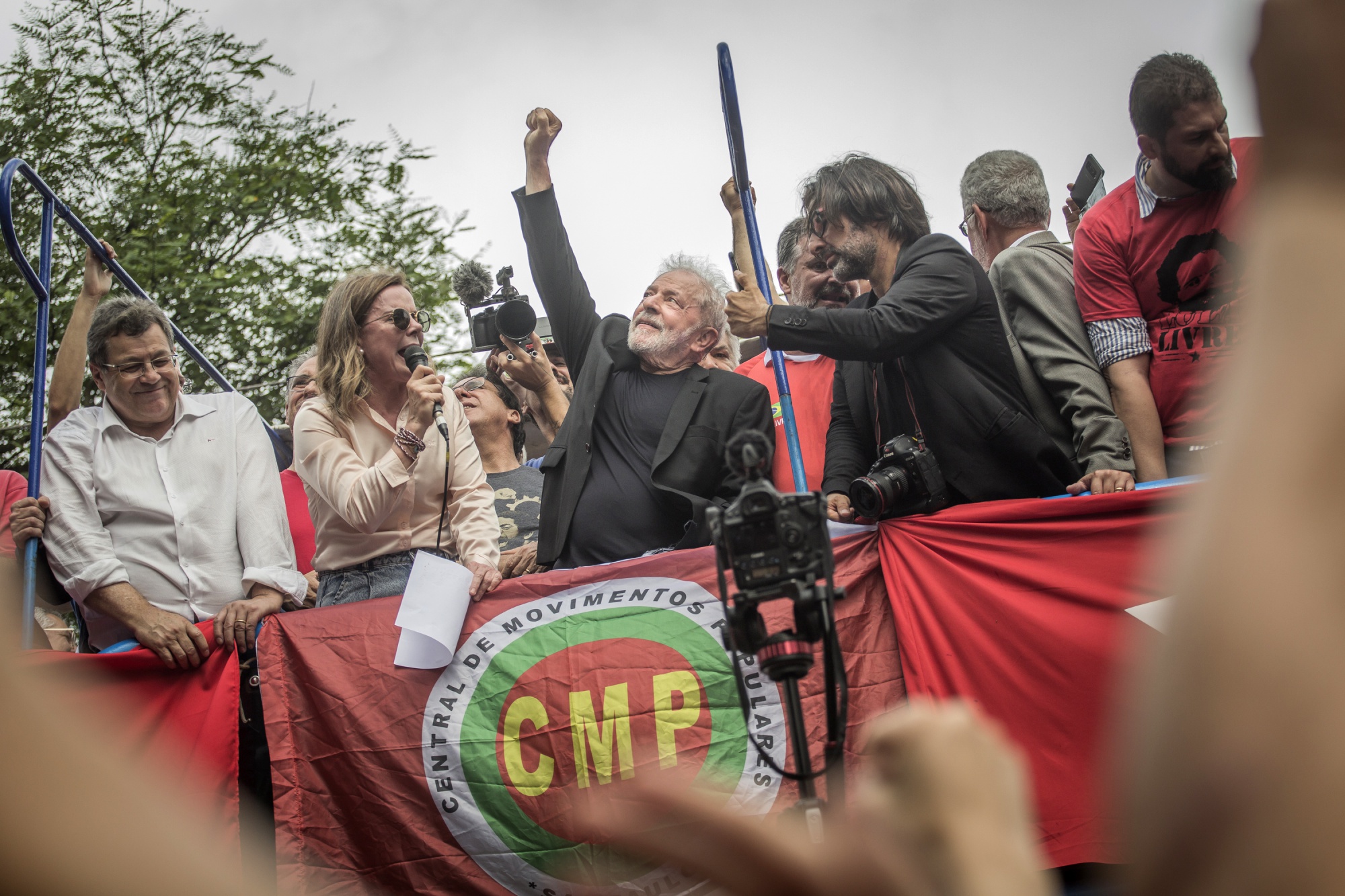 Lula raises a fist at a rally in front of the Metalworkers' Union in Sao Bernardo do Campo in November 2019. Photographer: Rodrigo Capote/Bloomberg Improving fortunes | Just over a year ago, Chile's billionaire president had an approval rating of 6%, the lowest in Latin America. Now, as Valentina Fuentes and Matthew Malinowski report, Chile is vaccinating against Covid at a rate that outstrips most of the world, due partly to Sebastian Pinera's shrewd deal making with drug companies, and his support has edged up to 14-20%. What to Watch -
Opposition lawmakers in Paraguay say they will begin preparing impeachment charges against President Mario Abdo Benitez as protests continue over the management of the pandemic. -
Myanmar authorities cordoned off part of Yangon last night to search for protesters, drawing international alarm as students defied a curfew to resist the post-coup crackdown. -
Pentagon officials are crafting a fiscal 2022 plan that assumes essentially a flat budget instead of the increase anticipated under the Trump White House, sources say. -
Sanjeev Gupta's steel and aluminum empire, GFG Alliance, which employs 35,000 people across 30 nations, told its biggest lender Greensill Capital it too faces insolvency without its financing. And finally ... When Prime Minister Narendra Modi's government offered Indian women cooking-fuel subsidies five years ago, it was life-changing: They could use gas cylinders instead of burning cow dung, crops and wood that left a sooty flame and teary eyes. Yet, facing a widening fiscal deficit, New Delhi has slowly cut the size of those handouts — a shift that risks upsetting women voters and potentially exposing millions to heavier levels of pollution. 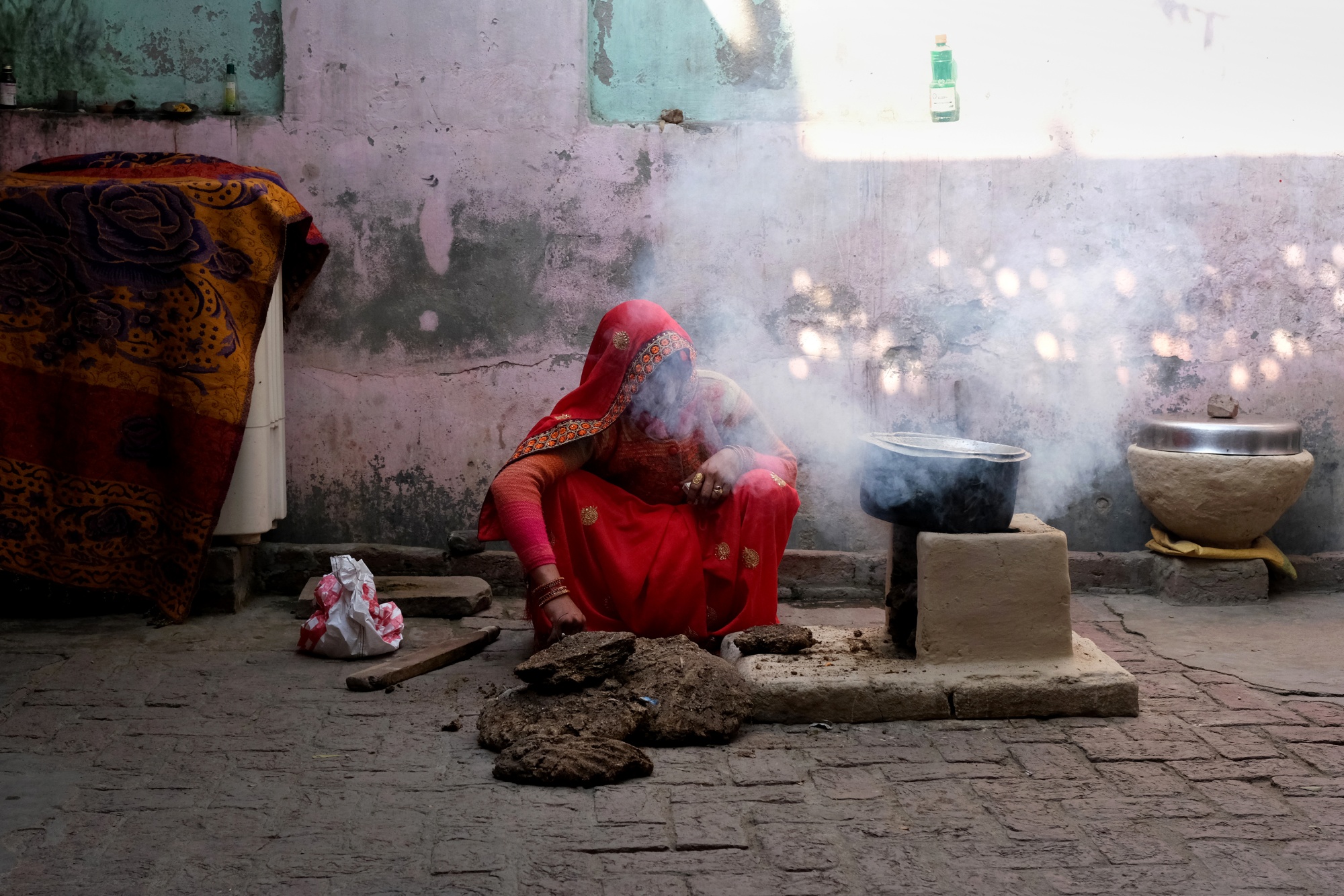 A woman uses dung as a cooking fuel at her village home in Uttar Pradesh. Photographer: T. Narayan/Bloomberg | 




Post a Comment