| This is Bloomberg Opinion Today, a repeated mistake of Bloomberg Opinion's opinions. Sign up here. Today's AgendaMistakes Were Made, AgainSix trillion dollars, we can all probably agree, is a lot of money. Sure, by the year 2121, when inflation will make an immortal cyborg Jeff Bezos worth $6 trillion, it won't seem like so much. But today it's nearly a third of U.S. GDP. But there is quantity and then there is quality. By the time President Joe Biden's $1.9 trillion Covid relief plan takes effect, the U.S. will have thrown $6 trillion at the problem of the pandemic. And that's an appropriate quantitative response to such a monumental catastrophe. But Nir Kaissar and Timothy L. O'Brien argue it hasn't been spent nearly as wisely as it could have been. It has eased economic pain, but not for everybody, and too little of it has been used toward the goal of permanently leveling the playing field for Americans. We're repeating mistakes we made after the last recession, Nir and Tim warn, with similarly dire economic and political results likely to follow. Expect more Capitol stormings, in other words. We have at least been more generous about helping state and local governments in this recession, which is kind of important, given how these places hire lots of people and teach all the kids and put out the fires and what-not. But even this spending has been delivered too late and ineffectively, writes Bloomberg's editorial board. This country needs a permanent system, backed up by a dedicated pool of money, to make state and local relief more automatic and efficient. That might help them survive long enough to collect taxes from immortal cyborg Jeff Bezos. Inflation Watch!Of course, if inflation really takes hold, then $6 trillion will become worth much less a lot sooner than 2121. You can't swing a dead cat around here these days without hitting somebody who's worried about inflation and what's with the dead cat. Of course, people have been fretting about inflation for the past 20 years without it ever materializing. But John Authers writes there are signs this deflationary regime has finally given way to an inflationary one. That $6 trillion in government spending, with promises for more, along with a Fed dedicated to raising prices, are just the beginning. If this is true, then stocks and bonds will be more likely to move in tandem, as we have seen occasionally happen in recent days, writes Richard Cookson. And that in turn would blow up value-at-risk models and make portfolios much riskier. Less fun than being hit with a dead cat. Or maybe we're just messy and hungry for drama. Look at the language we always use about the bond market, describing higher long-term interest rates as a "tantrum" "putting pressure" on the Fed to "fight back" somehow, like a harried parent with a toddler at bath time. Even today the collective bond market is reportedly "disappointed" that Fed Chairman Jay Powell didn't vow to stop it before it killed again. In fact, Brian Chappatta writes, everything seems to be going according to the Fed's plan: Short-term rates aren't budging, while long-term rates reflect hope for a better economic future. What drama? Masa Son EclipsedWe've written a lot about how new market gurus such as Cathie Wood, Dave Portnoy and RoaringKitty are supplanting Warren Buffett and sometimes viciously dunking on him in the process. But he's not the only fallen idol. Masayoshi Son's cachet was already diminished by WeWork and other stumbles. Now SPAC superstars such as Chamath Palihapitiya are hogging the spotlight and much of the money, Shuli Ren writes, while Son and his stable of graying unicorns quietly obsolesce. He can't even seem to get the SPAC thing quite right. Further Unicorn Reading: Deliveroo's London IPO could be a ploy for easy regulation from a jurisdiction hungry for business. — Alex Webb Telltale ChartsStress and boredom got people smoking again in the pandemic, including many who switched back from vaping. This is of course terrible news for the smokers, Joe Nocera writes, but it's not even good for tobacco companies, which really need people to keep vaping. 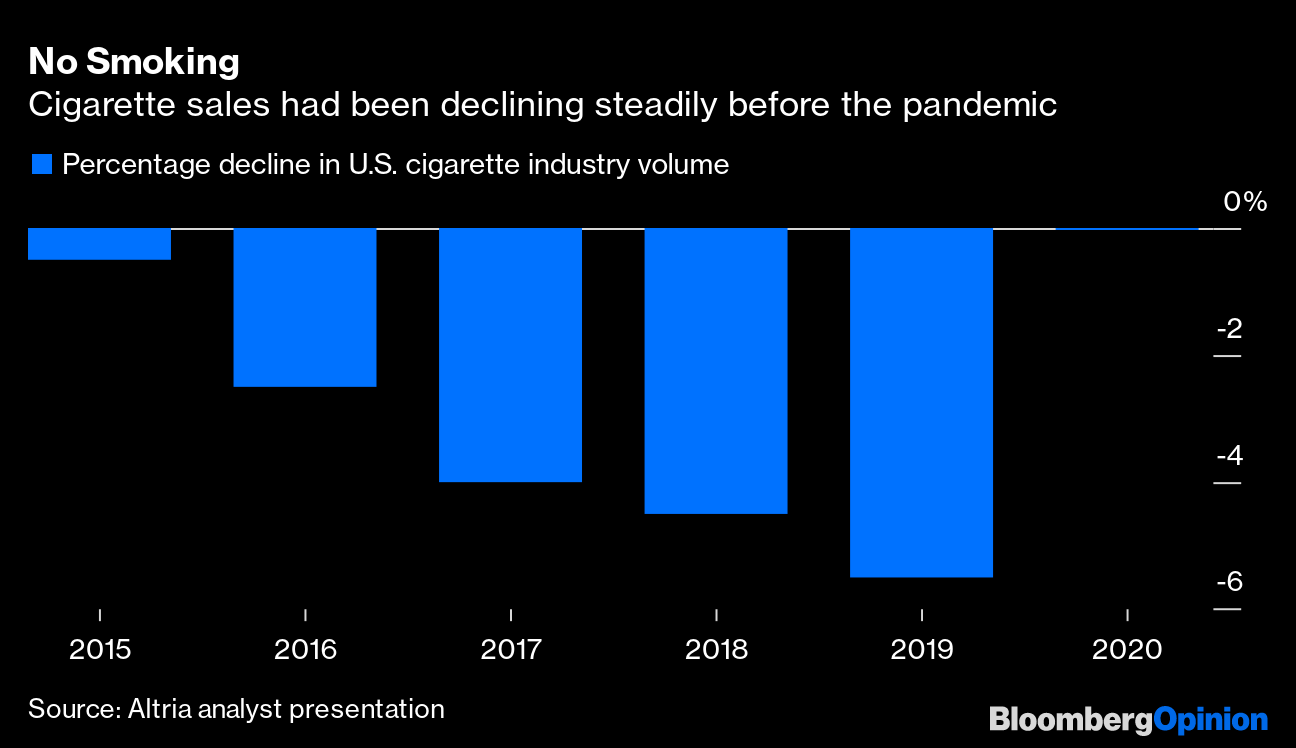 David Fickling has the four key numbers to watch in China's Five-Year Plan. Will it meet its carbon-emissions goals and save the planet? It didn't do so great last year. 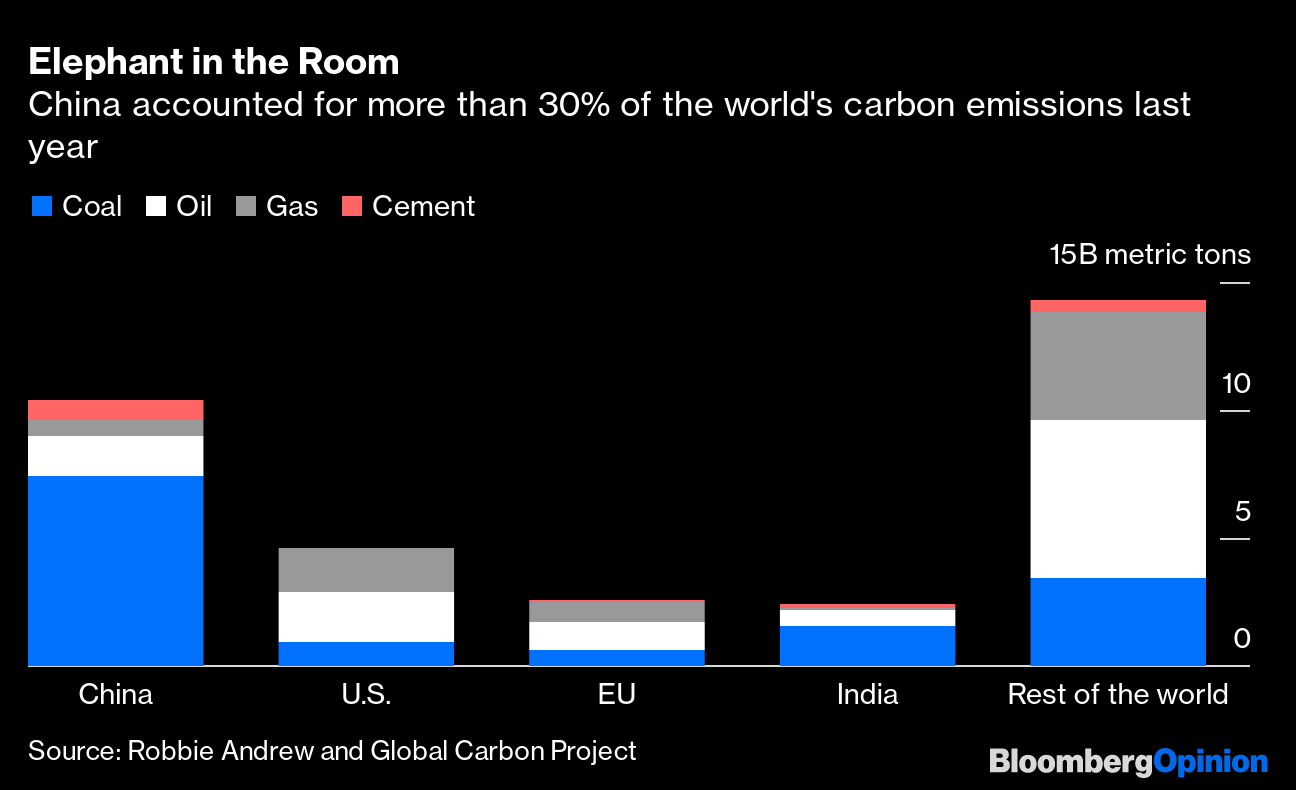 Further ReadingFrom vaccines to foreign policy, the EU keeps failing to protect its people. — Andreas Kluth Ireland's days as a low-tax haven are coming to an end, so it must adapt. — Lionel Laurent The #MeToo movement is alive and well globally, as women still face hostile environments in politics and at work. — Ruth Pollard Former airline CEOs Gordon Bethune and Robert Crandall have thoughts about the future of air travel. — Brooke Sutherland Cryptoart seems ludicrous, but that's kind of the point: to hype blockchain applications. — Leonid Bershidsky Square buying Tidal makes no sense. — Tae Kim Slowly but surely, the day is coming when we lower the voting age to 16, as we should. — Jonathan Bernstein ICYMIThe Covid relief package will likely pass this weekend. Texas' power-grid operator made a $16 billion error. Pfizer's vaccine distribution is fraught with moral dilemmas. KickersScientists build a robot that can swim in the Mariana Trench. (h/t Scott Kominers) Scientists create human-Neanderthal "minibrains" in petri dishes, for some reason. (h/t Mike Smedley) Power workers discover medieval tunnel system in Wales. NYC woman discovers entire empty apartment behind her bathroom mirror. Notes: Bloomberg Opinion is now on Clubhouse. Join a lineup of Bloomberg writers at 6 p.m. ET for our first-ever discussion: Can Square Save Tidal? Can Clubhouse Save the Internet? Don't miss it. Please send minibrains and complaints to Mark Gongloff at mgongloff1@bloomberg.net. Sign up here and follow us on Twitter and Facebook. | 


Post a Comment