| This is Bloomberg Opinion Today, a vaccine passport of Bloomberg Opinion's opinions. Sign up here. Today's AgendaOn a Clear Day, You Can Almost See Normal From HereYouyang Gu, the young data scientist who built better pandemic models than anybody else in the early days of this nightmare, suggested on Twitter today that vaccinations could restore normal life to the U.S. by this summer. You'll probably want to take that with a heaping helping of salt, as with Boris Johnson's hint of a summer of normalcy for the U.K. And before booking a trip to Mykonos, which Johnson says will be OK for Brits starting in June, Andrea Felsted suggests you might want to check with, uh, Greece. Still, summer 2021 could look a lot more like summer 2019 for the vaccinated than summer 2020 did. That may not be a message you've heard often enough, with some officials warning people to keep masking and distancing even after getting all their shots. As Faye Flam writes, public messaging has been freaking us out about remote Covid risks almost since the beginning. If you're still wiping down your groceries or wearing masks when walking alone outside, you've probably fallen victim. Ironically, China, which has done a better job of handling the pandemic than the U.S. or U.K., is now struggling to immunize its people, despite having its own successful vaccine, Adam Minter writes. Too many in the country are still scarred from past episodes of bogus and unsafe vaccines. The 2021 version of "normal" will likely mean many different things to many different people. Further Vaccine Reading: Why pharma firms worked together for once. — Matt Levine A Thousand Points of Green LightThe challenge of global warming can seem so daunting that it's only addressable by massive government intervention, like a world war, pandemic and space race all rolled up into one. We've spent years fretting about such 30,000-foot solutions as the Paris accords and the Green New Deal for that reason. Meanwhile, though, without nearly as much agita, companies and local governments have quietly done much of the blocking and tackling needed to make the future less awful, write Bloomberg LP founder Mike Bloomberg and Carl Pope. There's no better example than the fact that more coal-fired power plants closed during the presidency of Donald "Beautiful, Clean Coal" Trump than during that of his predecessor. The full might of Trump's government couldn't reverse the ebb of an industry giving way to cheaper, cleaner alternatives. Of course there's still a place for massive government intervention. The recent tragedy in Texas reminded us just how unprepared our energy infrastructure is for the future and federalism's inadequacy in handling such problems. But if President Joe Biden ever feels like he's low on congressional support in fixing them, he should remember he's got many allies on the ground across America. Fine, OK, Worry About Inflation a LittleYesterday this newsletter wrote that higher bond yields weren't anything to worry about, not a sign of soaring inflation or anything. And then they jumped again this morning, making this newsletter start to worry it might be wrong for probably like the first time ever (please don't check that). But Fed Chairman Jerome Powell calmed everybody down again by reaffirming he's still not worried and nowhere near taking his foot off the economy's gas pedal. Still, at some point the Fed will have to grapple with the possibility it's doing too much, especially once all the fiscal relief it has long asked for is fully in train, writes Bloomberg's editorial board. And John Authers warns it's not too soon to worry about the forces that could drive secular inflation in the years ahead. And in the here and now, higher bond yields in the U.S. are bleeding into Europe, which feels the pain more acutely, write Marcus Ashworth and Mark Gilbert. It's almost as if there are no free lunches! Further Inflationary Reading: The U.S. should encourage other countries to diversify their currency reserves away from the dollar. — Noah Smith Telltale ChartsBreakfast cereal was heading for decline until the pandemic hit, writes Justin Fox. But it's still not clear how much of the surge will stick. 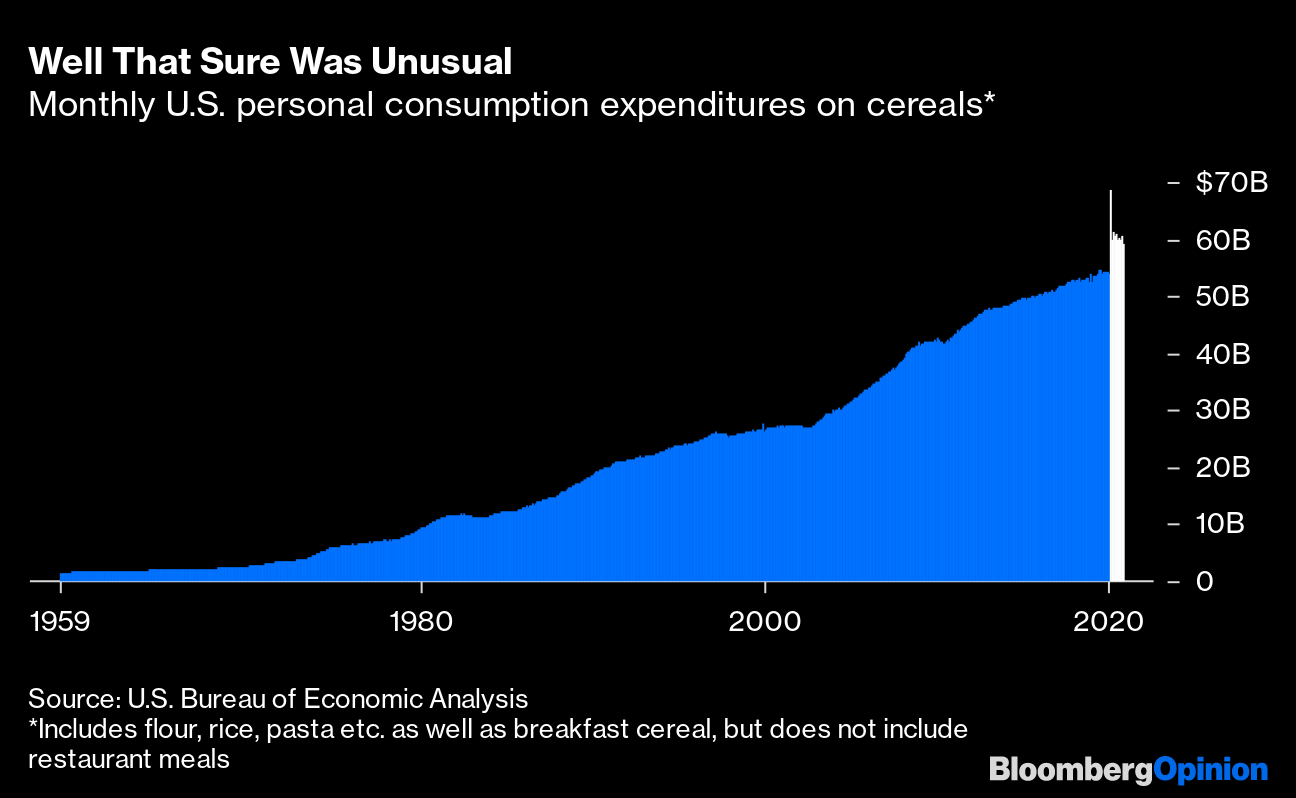 Clubhouse could change the world, writes Tae Kim. 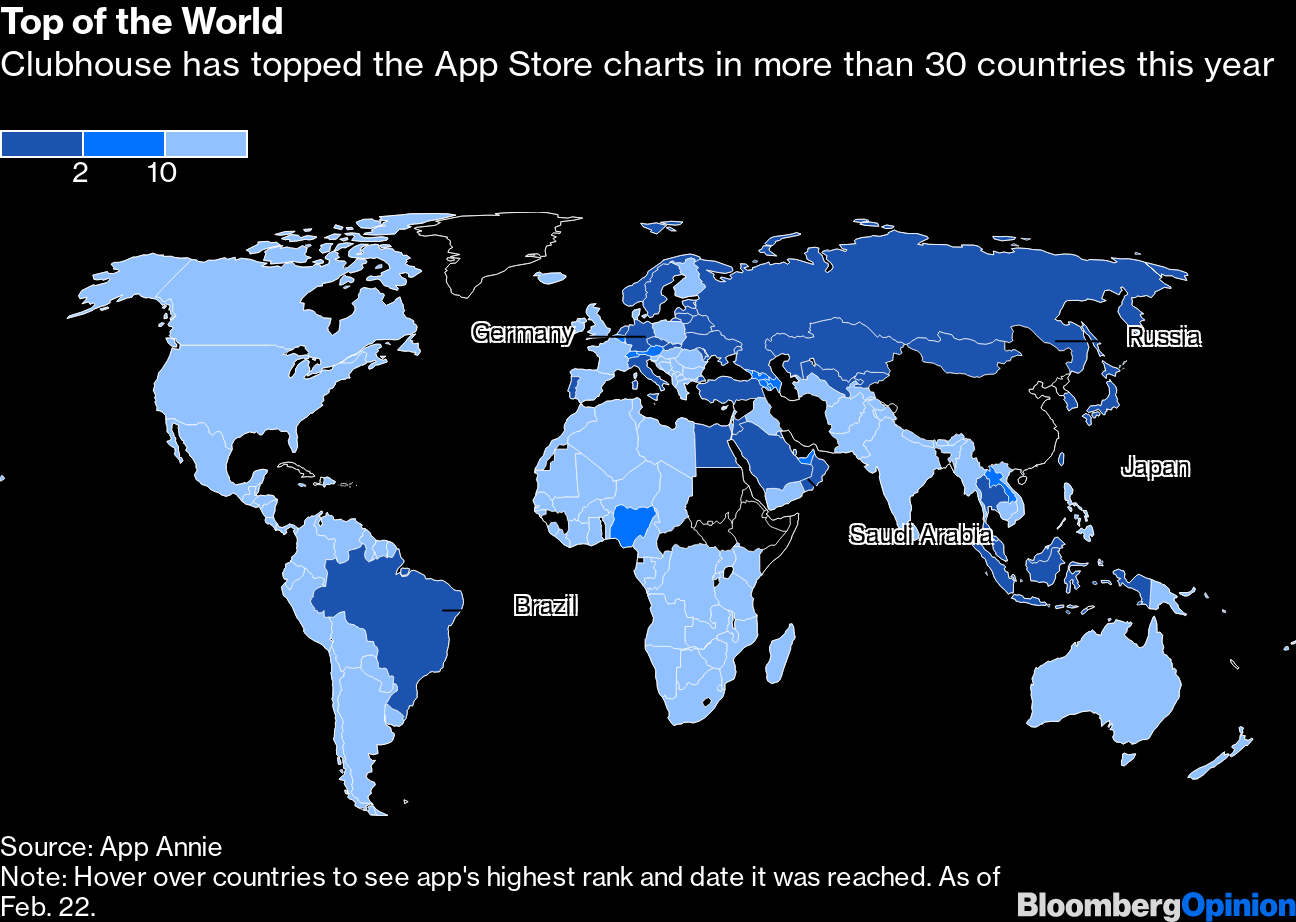 Further ReadingThe U.S. can't afford to let the Philippines slip out of its orbit if it hopes to contain China. — Hal Brands Fixing the computer-chip supply chain will take more than just money. — Brooke Sutherland and Tae Kim Jair Bolsonaro's populism has dashed any hopes of free market reforms in Brazil. — Mac Margolis Libya may actually be on the cusp of a durable peace. — Bobby Ghosh With HSBC and Citi retreating, the era of global retail banking is ending. — Elisa Martinuzzi Eager to pay off your mortgage early? Think about doing this stuff first. — Farnoosh Torabi ICYMIJohnson & Johnson's Covid vaccine is effective. Cathie Wood's ARK Innovation ETF suffered record outflows. Here's how much money you need to join the 1%. KickersThe Mars rover's parachute has a secret code. (h/t Mike Smedley) Area sheep large. (h/t Scott Kominers) The F-35 is a failure. We haven't come up with a truly world-ending technology. Yet. Note: Please send parachutes and complaints to Mark Gongloff at mgongloff1@bloomberg.net. Sign up here and follow us on Twitter and Facebook. | 




Post a Comment