| Welcome to The Weekly Fix, which stands with bonds, always. --Emily Barrett, cross-asset editor, Asia. Message from AsiaAustralia's markets have a message for policy makers globally -- who knows when they'll get it? Possibly the biggest monetary policy challenge of a generation is unfolding first in the country best known for its laid back vibe, long sandy beaches and off-the-charts cuddly and/or terrifying wildlife. It's all playing out in the bond market. A mounting conviction that the success of vaccines could see life returning to normal sooner than anticipated, and bring demand roaring back, has lifted rates on government borrowing globally. And now we're seeing the pressure growing on central banks, which have pledged to hold interest rates low to ensure a full economic recovery. The Reserve Bank of Australia's strategy to do so was more explicit than most, so the strain of the global reflation trade is showing clearly here. This is one of the few countries to have explicitly implemented yield curve control, designating a target for the three-year at 0.10%. The yield has traded above that level pretty consistently this year as expectations of a sharper recovery in many major economies have propelled global yields higher. But this week Australia's curve appeared to slip the leash altogether, with the three-year trading as high as 0.15%, and the 10-year -- which the short end is supposed to help curb -- surging as high as 1.93%. The breakout is a test for the RBA, and forced it to step in to defend its yield target for the first time this year, with three rounds of purchases that finally brought the market more or less to heel. And it's not only Australia -- Bank of Korea this week was also moved to announce more bond purchases. And consider Japan, where yields have been so supine the central bank has worried about how to get them moving at all. As the 10-year rate gravitated to the top of its trading band Friday, Finance Minister Taro Aso warned: "It's important that yields don't suddenly jump up and down. We need to make sure not to lose the market's trust with fiscal management." 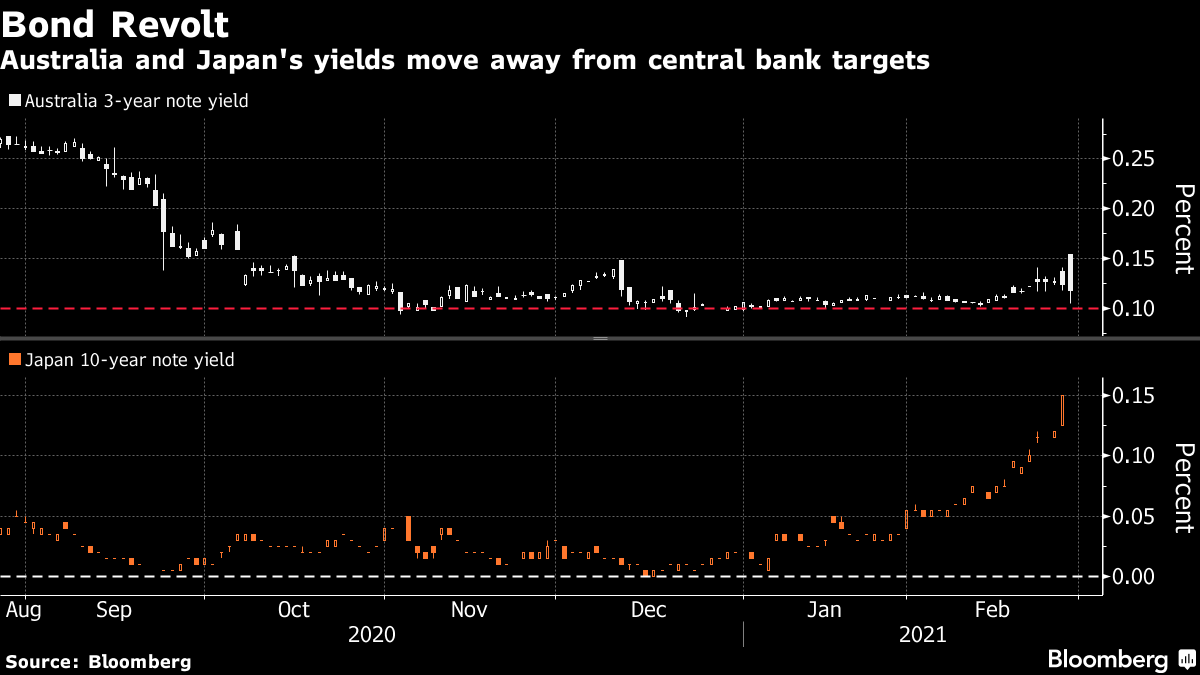 Markets are really starting to question the viability of policy "set at pandemic-fear levels" when economic conditions appear to be improving dramatically, said National Australia Bank economist Tapas Strickland.
Australia's policy makers may need to do more to convince investors that they're serious about keeping rates on hold at least until 2024. Similarly, in the U.S., a stronger statement may soon be necessary. Strickland says the Fed's emphasis on patience and a long road to recovery may look inconsistent with any improvements in economic data, particularly given Treasury Secretary Janet Yellen's comment last week that the U.S. "could be back to full employment next year."
The Fed is not worried.We'd love to stop talking about the reflation trade but we can't. As noted above, the big difference from the past few weeks is that it's not just the skittery long end of the curve that's climbing faster. Yields on shorter-maturity bonds -- which central banks have so far succeeded in keeping pinned with the assurance that they're not raising interest rates any time soon -- are on the rise. The global rates selloff doesn't seem to have raised too many hackles at the Fed just yet. The central bank is holding its line that the rise in yields reflects optimism about the recovery, and the latest comments from current voters on central bank policy -- James Bullard and Esther George -- suggest they're are sticking to the script. That hasn't stopped traders in U.S. rates markets positioning more aggressively for policy tightening, and sooner than the Fed currently envisages. At the height of this week's bond-market turmoil, Eurodollar futures were almost fully priced for a quarter-point hike by the end of next year. 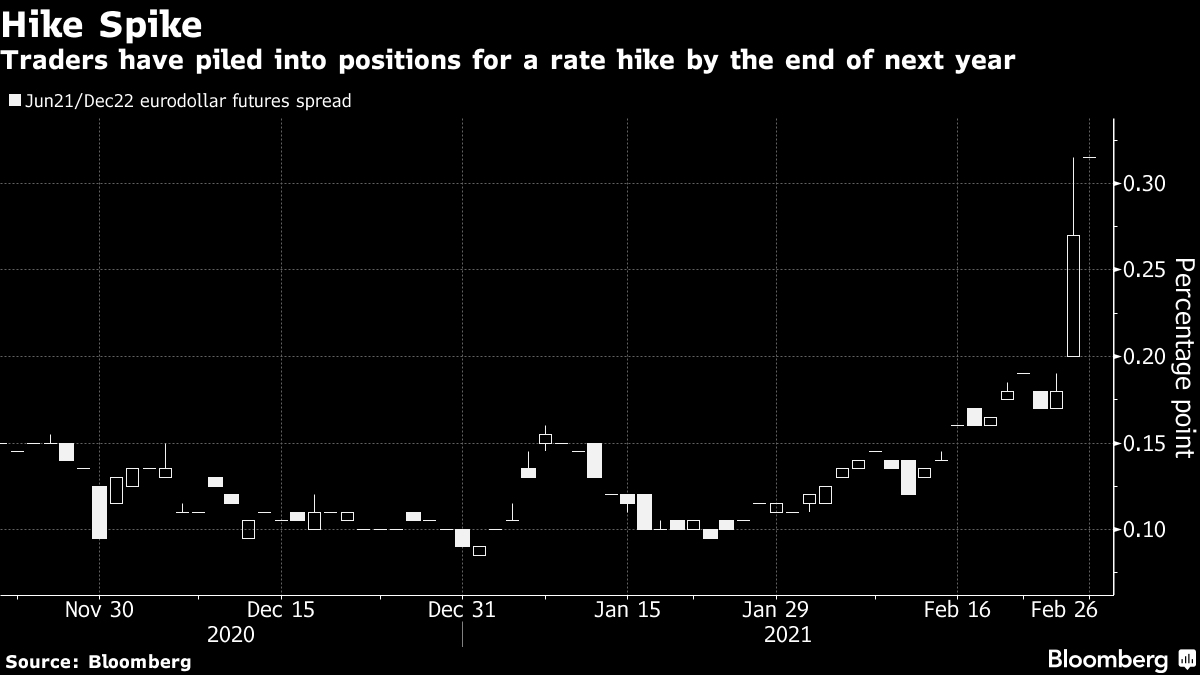 And while the steepening yield curve has hogged a lot of attention lately, less has been paid to the front end. The two- to five-year segment has moved pretty dramatically as those suspicions about policy tightening spilled into parts of the market that volatility forgot. 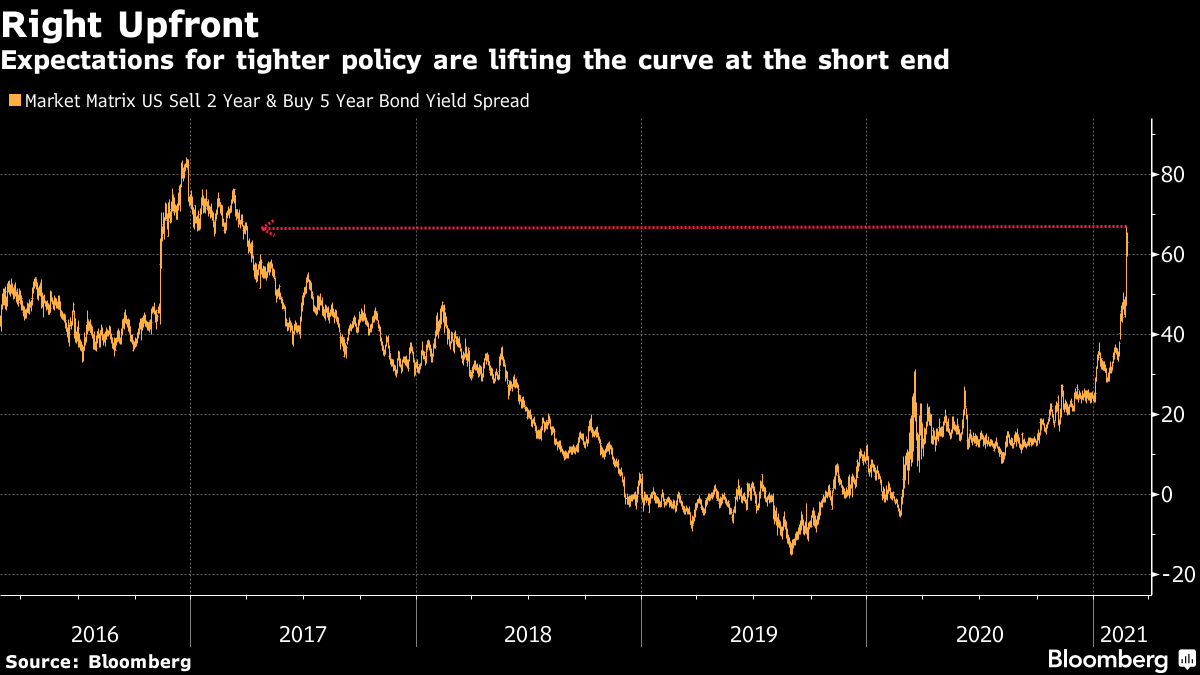 There's no clear cause for alarm, however. While the speed of the moves is disconcerting, financial conditions remain relatively comfortable. The rise in yields hasn't so far triggered a very deep capitulation in risk assets, and stock market losses for now have been more pronounced in the tech sector, with areas more geared to cyclical recovery relatively resilient. Moreover, the Fed can be reassured that the market has strong conviction in a critical function of the central bank, which will determine its success in steering the economy through a recovery from this crisis. There's been a lot of buzz about inflation, as breakeven rates -- which are derived from the difference between yields on Treasury notes and their inflation-protected counterparts -- have reached multiyear highs. But for all the palaver, the market's main gauge of price pressures shows a path very much in line with the Fed's objective. Looking at the breakeven curve below -- which shows the current curve in green relative to last month's shape in yellow -- it's clear how the main recent boost in inflation-adjusted yields has been in the five-year sector. This suggests traders see the consumer-price index peaking over a five-year horizon, and then subsiding to just above 2% over the longer time line. 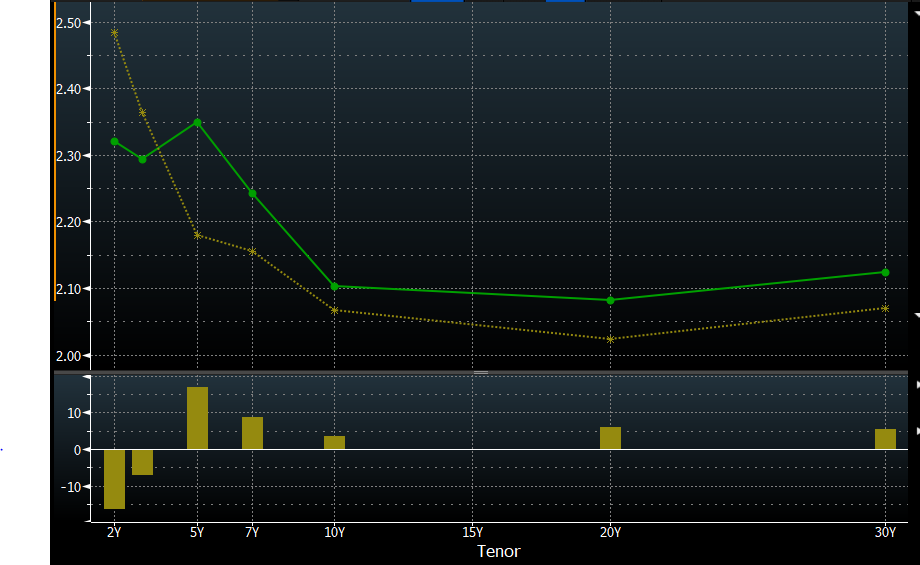 The U.S. breakeven curve reflects confidence in the Fed's inflation strategy Photographer: Bloomberg And according to Michael Pond, head of global inflation strategy at Barclays, that's a vote of confidence in the Fed's ability to keep price pressures anchored, while allowing them to run a little hotter throughout the recovery. "We have the Fed not only saying they're willing to allow inflation to rise, they're actively looking for above-target inflation. But long term the Fed's 2% average inflation regime is still in place. Even though they're looking for an overshoot, it's a temporary one. So breakevens should be pricing in above target inflation, but not forever."
Hence the market isn't pricing in an inflation surge and it's got a lot of faith in the Fed's ability to address it. Or it believes in secular stagnation, which must be a consolation for the theory since Larry Summers dumped it.
Bonus pointsRate volatility! It's back! U.S. and European measures of bond market turmoil have picked up to their highest levels in many months... 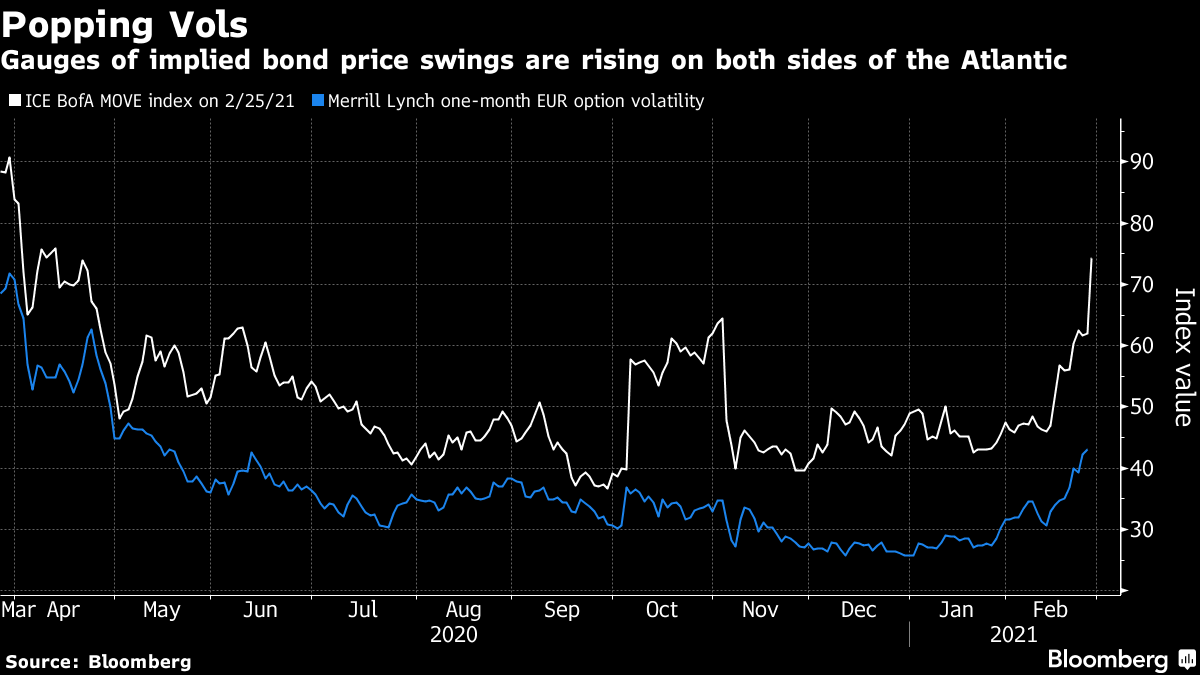 .... Stodgy government bonds are giving U.S. equities a run for their money now... 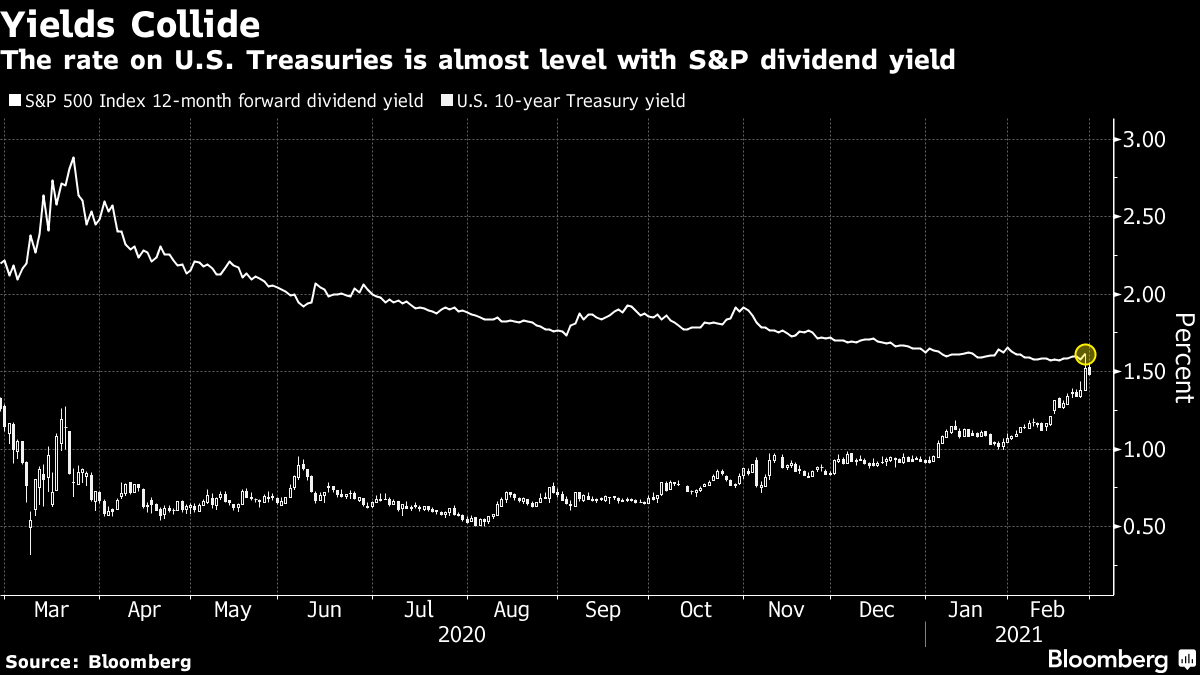 Gender hostilities are out in the open in the field of economics Treasury Secretary Yellen has said it before and just said it again, she isn't a fan of Bitcoin. Bitcoin consumes as much electricity as the entire population of Pakistan, by DB's reckoning. Mel Brooks, an inspiration for revolutions everywhere | 


Post a Comment