| Bonds get messy, House to vote on stimulus, and a check on inflation. Bounce The startling speed of the move in U.S. Treasuries yesterday, which saw the yield on the 10-year note reaching 1.61% at one point, is being blamed on technical, rather than fundamental reasons. The yield on the five-year note surged through 0.75% after an auction of seven-year bonds saw record low demand. Traders scurried to manage positions in the wake of the spike, with liquidity also becoming an issue as open interest in Treasury futures collapsed across the curve. The moves do appear to have been a flash in the pan for now, with the 10-year yield back under 1.5% this morning. Stimulus The House is set to pass the $1.9 trillion stimulus package today, bringing $1,400 checks a step closer for most Americans. It does appear that one Democrat policy goal -- the $15 minimum wage -- will not be part of the plan after Senate parliamentarian Elizabeth MacDonough found that the measure did not qualify under budget reconciliation, meaning changes to that would require 60 votes in the Senate. There is also a risk that President Joe Biden's Covid relief package will trigger cuts to Medicare. Inflation While technical factors are being blamed for the rapid spike in yields yesterday, there is no getting away from market fears that price growth is going to accelerate faster than policymakers suggest. This morning's personal income data is expected to show a surge of 9.5%, driven by stimulus checks, while spending may have risen 2.5%. The PCE deflator, the Federal Reserve's preferred measure of inflation, may quicken to 1.4%. With more stimulus on the way, and continued good news on the rapid progress of vaccinations, the market will continue to worry that the risk of the economy overheating is high. Stocks slip The moves in the bond market yesterday have rattled global equities. Overnight the MSCI Asia Pacific Index tumbled 3.5% while Japan's Topix index closed 3.2% lower. In Europe, the Stoxx 600 Index had recovered some early session losses to trade down 0.6% by 5:50 a.m. Eastern Time. Futures for the S&P 500, which got much of its selling out of the way in yesterday's session, pointed to little change at the open, oil was lower and gold slipped. Coming up... As well as personal income and spending data, we get the latest advance goods trade balance and wholesale inventories at 8:30 a.m. University of Michigan sentiment is at 10:00 a.m. with the Baker Hughes rig count at 1:00 p.m. G20 finance ministers and central bankers meet virtually. Cinemark Holdings Inc., AMC Networks Inc. and DraftKings Inc. are among the companies reporting results. Warren Buffett's annual letter to shareholders is published tomorrow. What we've been readingThis is what's caught our eye over the last 24 hours. And finally, here's what Emily's interested in this morningAustralia's markets have a message for policy makers globally -- who knows when they'll get it? Possibly the biggest monetary policy challenge of a generation is unfolding first in the country best known for its laid back vibe, long sandy beaches and off-the-charts cuddly and/or terrifying wildlife. It's all playing out in the bond market. A mounting conviction that the success of vaccines could see life returning to normal sooner than anticipated, and bring demand roaring back, has lifted rates on government borrowing globally. And now we're seeing the pressure growing on central banks, which have pledged to hold interest rates low to ensure a full economic recovery. The Reserve Bank of Australia's strategy to do so was more explicit than most, so the strain of the global reflation trade is showing clearly here. This is one of the few countries to have explicitly implemented yield curve control, designating a target for the three-year at 0.10%. The yield has traded above that level pretty consistently this year as expectations of a sharper recovery in many major economies have propelled global yields higher. But this week Australia's curve appeared to slip the leash altogether, with the three-year trading as high as 0.15%, and the 10-year -- which the short end is supposed to help curb -- surging as high as 1.93%. The breakout is a test for the RBA, and forced it to step in to defend its yield target for the first time this year, with three rounds of purchases that finally brought the market more or less to heel. And it's not only Australia -- Bank of Korea this week was also moved to announce more bond purchases. And consider Japan, where yields have been so supine the central bank has worried about how to get them moving at all. As the 10-year rate gravitated to the top of its trading band Friday, Finance Minister Taro Aso warned: "It's important that yields don't suddenly jump up and down. We need to make sure not to lose the market's trust with fiscal management." 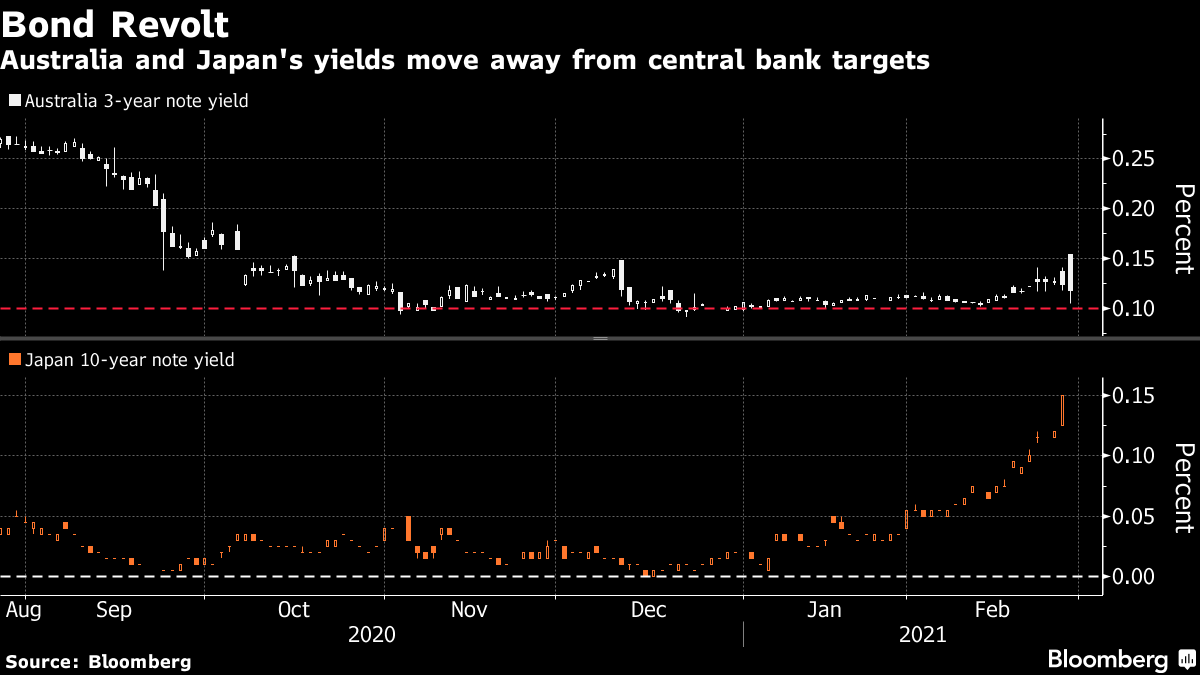 Markets are really starting to question the viability of policy "set at pandemic-fear levels" when economic conditions appear to be improving dramatically, said National Australia Bank economist Tapas Strickland.
Australia's policy makers may need to do more to convince investors that they're serious about keeping rates on hold at least until 2024. Similarly, in the U.S., a stronger statement may soon be necessary. Strickland says the Fed's emphasis on patience and a long road to recovery may look inconsistent with any improvements in economic data, particularly given Treasury Secretary Janet Yellen's comment last week that the U.S. "could be back to full employment next year." Follow Bloomberg's Emily Barrett on Twitter at @notthatECB Like Bloomberg's Five Things? Subscribe for unlimited access to trusted, data-based journalism in 120 countries around the world and gain expert analysis from exclusive daily newsletters, The Bloomberg Open and The Bloomberg Close. | 


Post a Comment