| Half a million Americans are dead as a result of Covid-19. Commodities are on a tear. Hong Kong heads for record budget deficit. A half-million Americans are now dead as a result of the novel coronavirus that first hit U.S. shores just a little more than a year ago. Global deaths related to Covid-19 have surpassed 2.46 million, with the U.S. leading all countries with more than twice the number recorded by the next closest, Brazil, according to Bloomberg's virus tracker. Meanwhile new findings in the U.K. show a single vaccine dose provides a high level of protection against infection, illness and death. Commodities rose to their highest in almost eight years amid booming investor appetite for everything from oil to corn. Hedge funds have piled into what's become the biggest bullish wager on the asset class in at least a decade, a collective bet that government stimulus plus near-zero interest rates will fuel demand, generate inflation and further weaken the U.S. dollar. The Bloomberg Commodity Spot Index, which tracks price movements for 23 raw materials, rose 1.6% on Monday to its highest since March 2013. The gauge has already gained 67% since reaching a four-year low in March. Copper lead the gains, surging above $9,000 a metric ton for the first time in nine years. Most Asian stocks look poised for a weaker open Tuesday following declines in U.S. markets. Commodities have extended gains to multiyear highs. Brent oil climbed above $65 a barrel as Goldman Sachs predicted prices could advance above $70 in coming months. Treasury yields extended gains and a key part of the curve — the gap between 5- and 30-year yields — touched the highest level in more than six years. Bitcoin was down about 9%. Hong Kong is heading for a record budget deficit, leaving little room for the kind of cash handouts and stimulus Financial Secretary Paul Chan doled out in 2020 during the coronavirus outbreak. Chan is expected to deliver a muted budget Wednesday as he tries to balance fiscal pressures with the demands of an economy that's shrunk two years in a row. Meanwhile, there are more signs that Chinese authorities are considering major changes to Hong Kong's electoral system to ensure "governance is firmly controlled by patriots." Canva, the most valuable technology startup in Australia, acquired two European companies as the online design platform doubles down on visual communications tools. Canva took control of Kaleido.ai, an Austrian startup behind a popular design tool to instantly remove background from a photo or video, and purchased Smartmockups in the Czech Republic, which allows users to design mockups for t-shirts and mugs. The Australian upstart raised $60 million in June, nearly doubling its valuation to $6 billion. In other app news, Spotify is introducing its audio service in 80 markets in coming days, expanding the company's potential market by some 1 billion people. What We've Been ReadingThis is what's caught our eye over the past 24 hours: And finally, here's what Tracy's interested in todayWhat's DeFi? The buzzword has helped propel Ethereum by as much as 165% this year, but it's not a well-known, or even well-defined, concept. It's usually described as a way of using smart contracts based on blockchain technology for financial transactions like lending and borrowing. It's often pitched as a way of cutting out traditional banks and financial architecture, and proponents say it will not only make finance more efficient but also fairer. I remember another movement that was supposed to make finance fairer and more efficient. Peer-to-peer lending was supposed to be a way of connecting borrowers to lenders, bypassing banks. But as I wrote repeatedly at the time, it ended up being something far less cuddly than the "P2P" label might suggest. P2P loans were largely bought by institutional investors like big banks (who liked them because they came with higher yields) and were eventually sliced-and-diced into securitized packages. An industry which sought to disrupt traditional finance ended up joining forces with it instead. 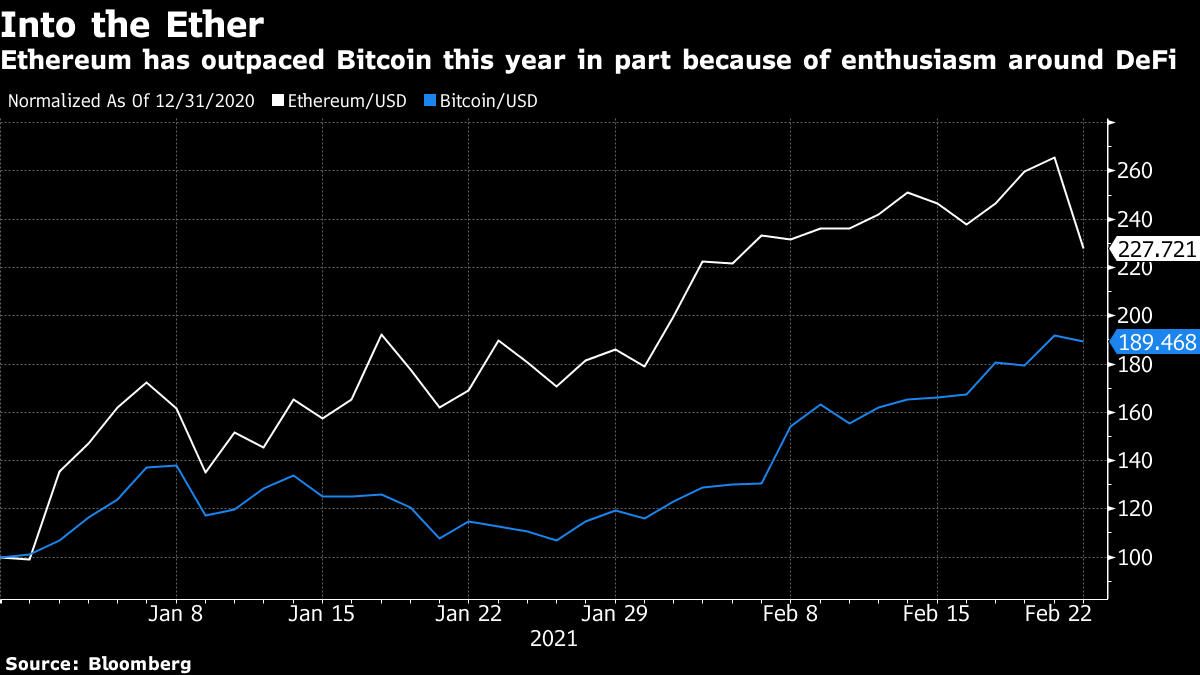 DeFi is still new but already traditional finance is creeping in. Take, for example, Smart Yield Bonds, described by their creator, a company called BarnBridge, as "interest rate volatility risk mitigation using debt based derivatives." They seem to feature the kind of financial engineering that would be recognizable to any securitisation desk at a large investment bank, including tranching of risk into different slices (tokens). In that, it looks very much like a DeFi CLO. It's unclear whether DeFi will ultimately go the way of P2P, but it's worth thinking about. You can follow Tracy Alloway on Twitter at @tracyalloway. | 


Post a Comment