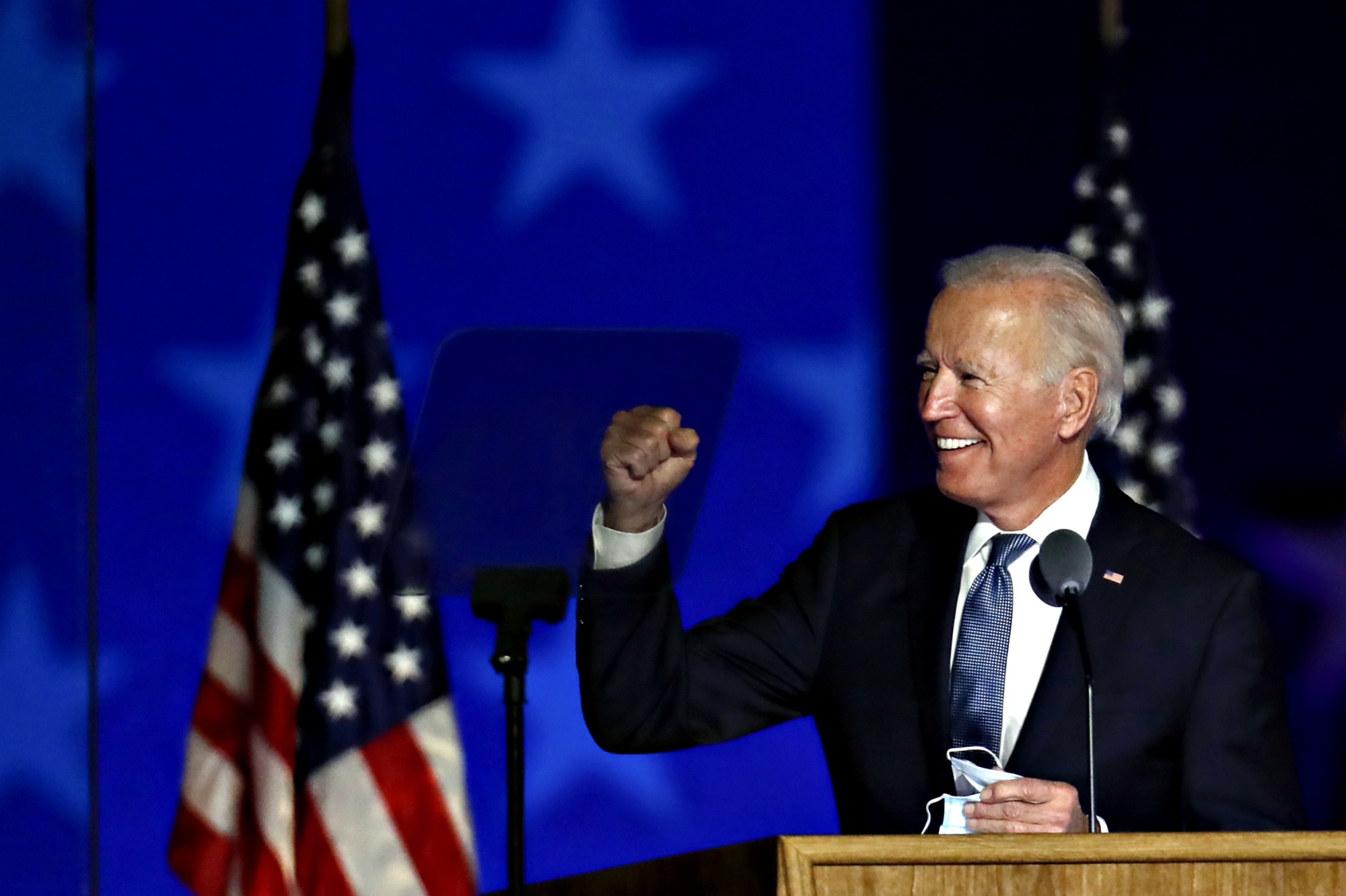
| Joe Biden's path to victory in the U.S. presidential election has widened as he is projected to win the key state of Wisconsin and pulls ahead in Michigan. But it could still be days before enough votes are tallied to determine the winner. Donald Trump will ask for a recount in Wisconsin, his campaign manager says. And even if Trump loses his bid for a second term, he will leave a complicated legacy for his successor. The Democratic party was hoping for a surging "Blue Wave" to sweep Biden to a decisive victory, that voters would come out to support across America after four years of often chaotic and divisive leadership under Trump. That wave hasn't really materialized. Aside from Wisconsin, Biden has secured a projected win in one state that went to Trump in 2016 – Arizona. The Democrats are set to hold onto the U.S. House, but perhaps with a smaller majority than before, and look unlikely to gain control of the Senate. So what America are we left with, whoever wins? One that is deeply polarized, at odds with itself on many issues (including on how to manage the coronavirus pandemic), where the "America first" and law-and-order messaging of Trump has resonated with many. A contested result that ends up in the courts will only exacerbate that.
It's also a reminder to longstanding allies around the world that a Biden presidency may provide a reset, but that he would face pressure to reflect the U.S. public's appetite for a harder stance on trade and a pullback from costly conflicts overseas. A Biden presidency would make a difference to policy, both at home and abroad. But this election has shown something profound: Support for Trump in 2016 wasn't a one-off. — Rosalind Mathieson | 






Post a Comment