| Wall Street questions AstraZeneca's vaccine results. Janet Yellen tapped to serve as Treasury secretary. AAA bonds tumble in China. A Covid-19 vaccine developed by the University of Oxford and AstraZeneca prevented a majority of people from getting the disease in a large trial, another promising development in the quest to end the pandemic, and the rollout could begin next month. The vaccine stopped an average of 70% of participants from falling ill, with effectiveness rising to 90% for one of two regimens. The results drew a harsh review from at least one sell-side analyst as Wall Street grappled with the future of a potentially less effective shot. SVB Leerink analyst Geoffrey Porges noted the results were from a "relatively small" group of volunteers and the company wouldn't get U.S. approval based on a lack of diversity among participants, he wrote in a note. Astra shares fell. The shot may also be in short supply. Meanwhile, there could be too many vaccines. President-elect Joe Biden plans to nominate former Federal Reserve Chair Janet Yellen to serve as his Treasury secretary, people familiar with the matter said, choosing the first woman and a seasoned central banker for the nation's top economic policy job. In Yellen, Biden is likely to find support from both Wall Street, which feared a more provocative pick such as Senator Elizabeth Warren, and progressives, who were concerned he might choose someone too friendly to big banks and the wealthy. Biden's transition team declined to comment. Investors appeared to welcome Yellen's selection. The S&P 500 benchmark stock index was up less than 1 percent following the news. Asian stocks looked poised to open mostly higher on Tuesday as investors bet on a return to normal economic activity amid vaccine progress. The dollar gained and Treasury yields rose. Futures pointed higher in Japan and Australia, though Hong Kong contracts slipped. Positive vaccine developments bolstered demand for cruise-line operators and airlines and Biden's nomination of former Federal Reserve Chair Janet Yellen to be Treasury Secretary aided sentiment. Gold retreated and oil advanced. AAA-rated bonds are tumbling in China amid a wave of defaults by state-owned companies. While none of the companies have missed debt payments, their bonds have tumbled by at least 14% since Nov. 10. That's when a surprise default by a state-owned Chinese coal producer cast fresh doubt on the implicit guarantees that have long underpinned government-backed borrowers. Meanwhile, private share placements are offering a potential lifeline for cash-strapped companies, as a string of high profile defaults tightens scrutiny of the country's credit market. Former Goldman Sachs banker Roger Ng — who is facing trial next year on charges of bribery and money-laundering conspiracy — asked for the foreign bribery case against him to be dismissed, saying he "warned" the bank not to do business with Malaysian financier Jho Low. Ng says he told Goldman that Low was "not to be trusted." He is accused of helping Malaysia's former prime minister and others embezzle at least $2.7 billion from the fund known as 1MDB. Low is accused of masterminding the scheme. Here's more on how it all went down. What We've Been ReadingThis is what's caught our eye over the past 24 hours: And finally, here's what Tracy's interested in todayOne of the great mysteries of the markets is the underperformance of value investing in recent years. The biggest and most expensive stocks keep getting bigger and more expensive, while the unloved and cheap ones remain unloved and, well, relatively cheap. On the new episode of Odd Lots, Alliance Bernstein's Inigo Fraser-Jenkins and Bloomberg Opinion columnist Aaron Brown (formerly of AQR Capital Management) debate why that's happened and whether it will continue. The whole conversation is definitely worth listening to but I want to focus on one particular point made by Aaron: He argues that the problem isn't value itself, but how we're measuring it. 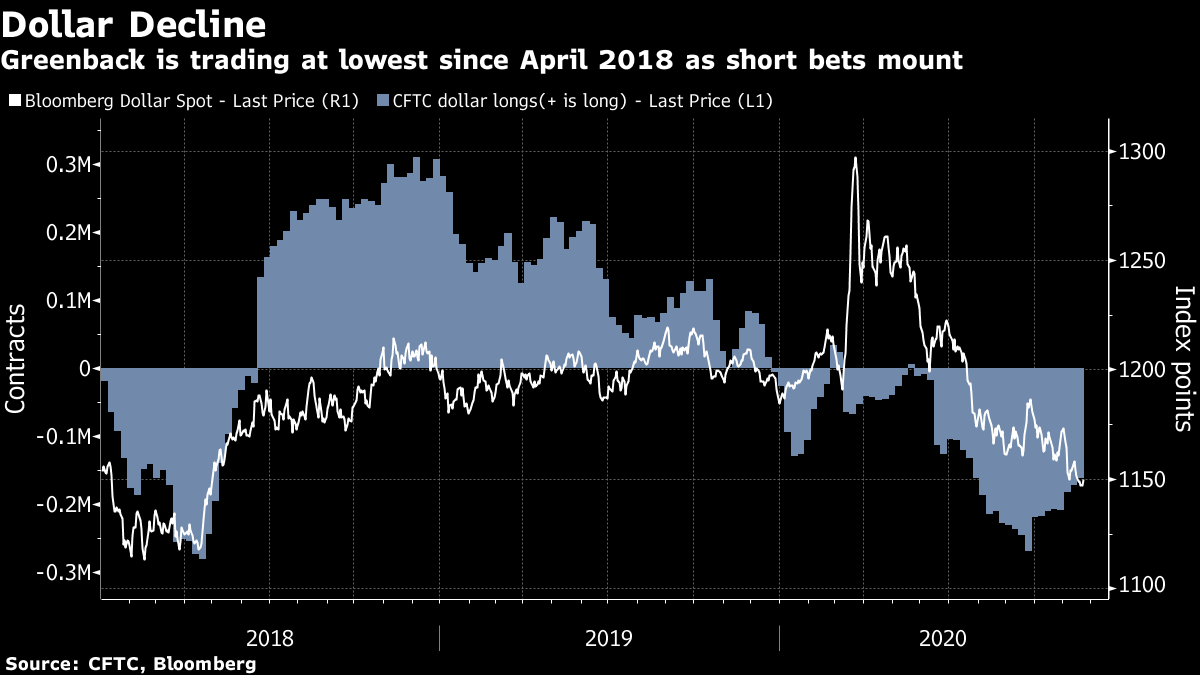 "Whenever you look at a price, you're looking at a price in dollars per share," he says. "The market is awakening to the possibility of extended periods of significant negative real rates and that's causing a lot of repricing in the market and that makes the dollar a bad thing to use to measure value." It's an interesting argument and worth thinking about in a week where the U.S. currency has fallen to its lowest in two years. You can follow Tracy Alloway on Twitter at @tracyalloway. | 


Post a Comment