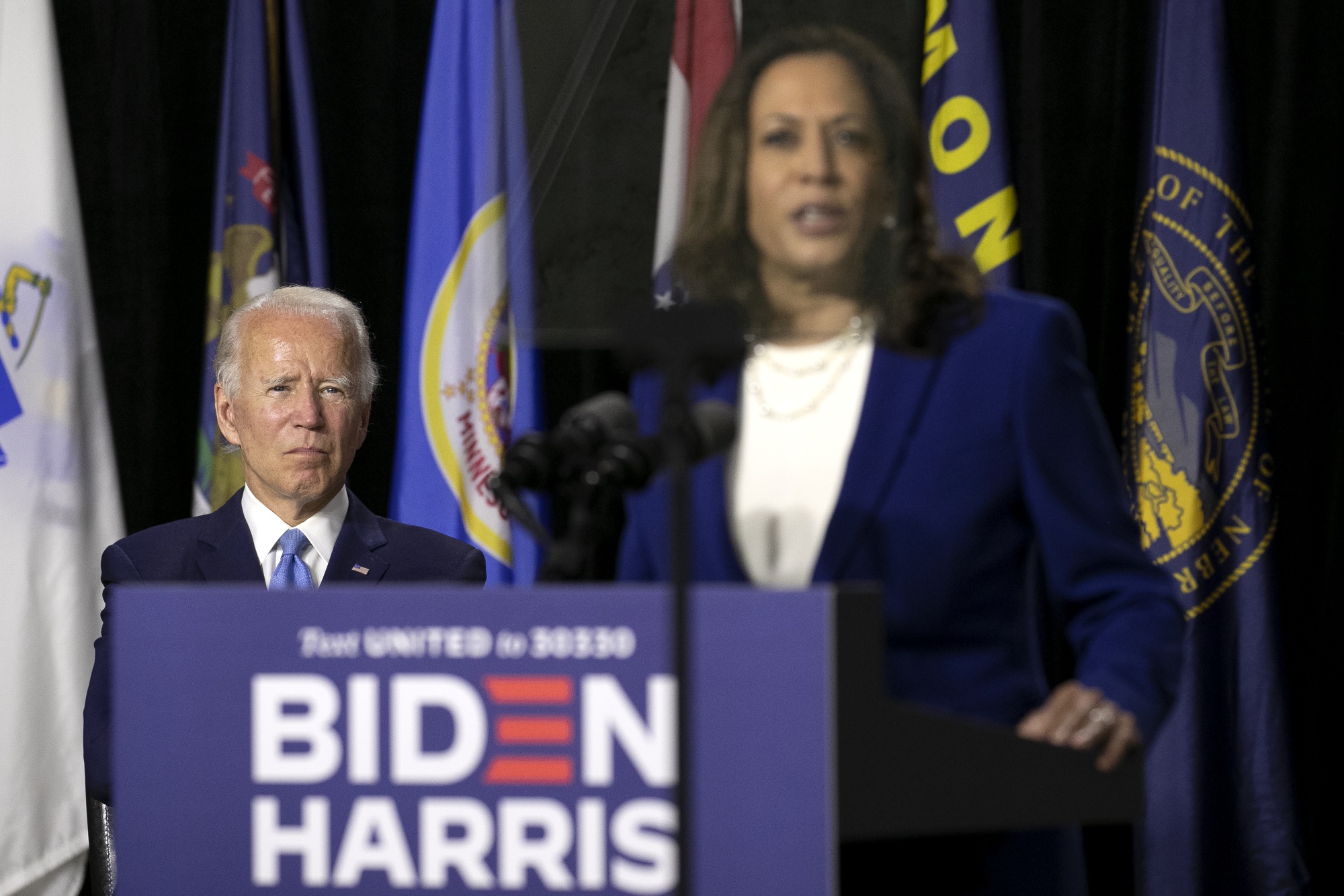
 Biden listens as Harris speaks during a campaign event in Wilmington, Delaware, on Aug. 12. Photographer: Stefani Reynolds/Bloomberg Read about Harris's record on climate change and click here for more of this week's most compelling political images. Iran, Not Israel, Now the Unifying Focus for Much of Middle East
The breakthrough between Israel and the UAE reflects a shift in the modern Middle East's foundational fault-line, as a Persian Gulf power for the first time agrees to make peace with the Jewish state. But, as Golnar Motevalli reports, it also focused the spotlight on another, perhaps more dangerous, rift over Iran. Jimmy Lai Shows Why the West Lost Faith in Hong Kong's Courts
Iain Marlow explains how the statements issued by China and Hong Kong after Monday's arrest underline how quickly the new national security law is undermining the city's independent judicial system. 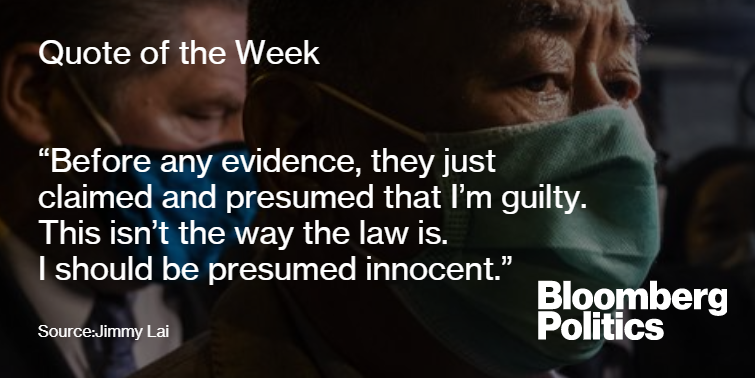 Lai leaves Mong Kok police station after being released on bail in Hong Kong early on Aug. 12. Photographer: Chan Long Hei/Bloomberg A Woman Pays the Price for Taking On a Former Soviet Regime
Svetlana Tikhanovskaya had won supporters hungry for change in Belarus and seemed ready to take on an authoritarian leader who has ruled the former Soviet state for 26 years. But after an election loss and detention by authorities, Tikhanovskaya made the "difficult decision" to flee to neighboring Lithuania. Milda Seputyte, Andrea Dudik and Aliaksandr Kudrytski explore what's next for her and for Belarus. Lebanon's Deepening Economic Crisis Laid Bare by Beirut Blast
Even before last week's explosion, vested interests and sectarian politics had already brought the country to its knees. As the realization sank in that the blast was the culmination of decades of corruption and mismanagement, the streets exploded with rage. Lin Noueihed takes a closer look. 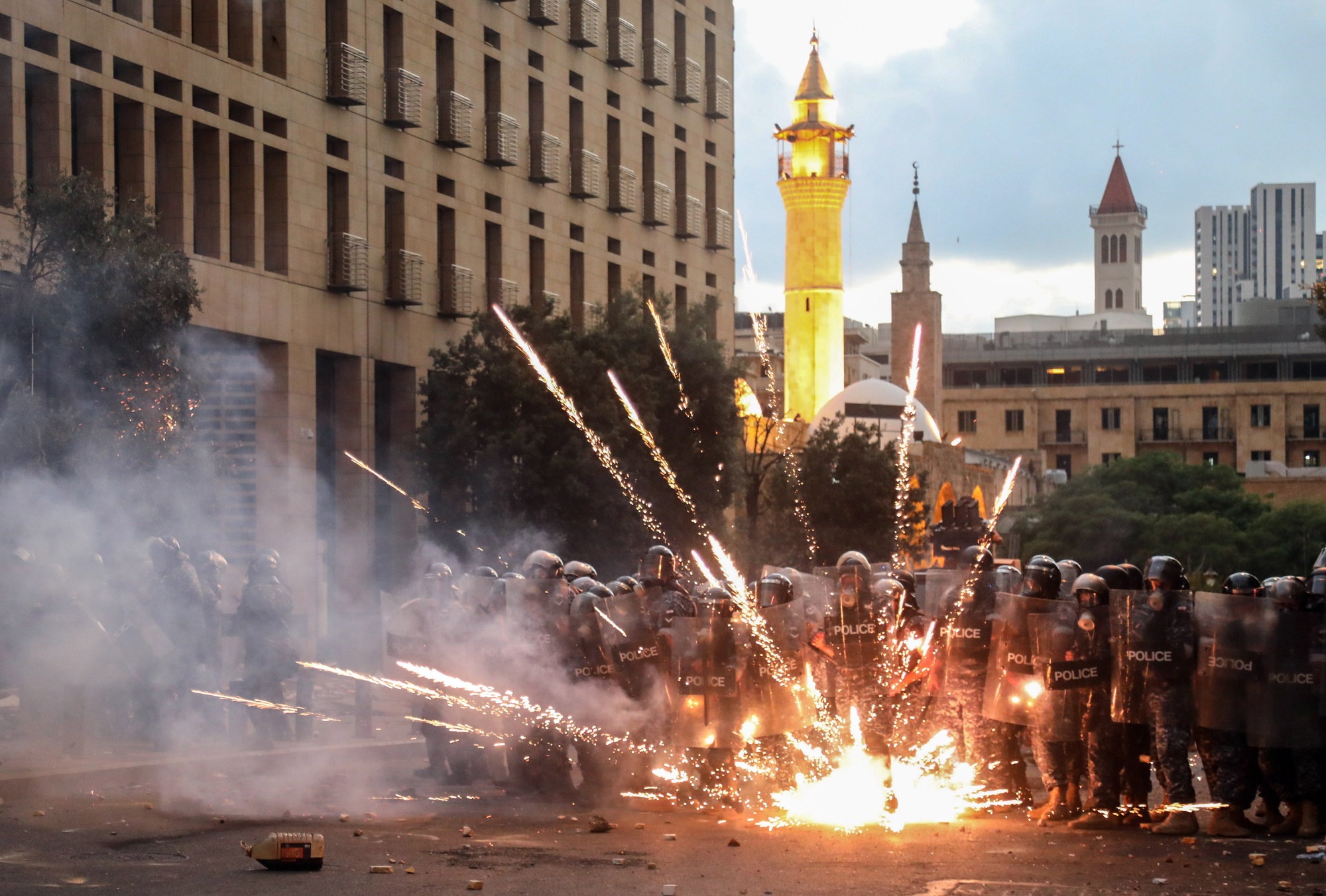 Fireworks explode close to riot police during an anti-government protest in Beirut on Aug. 10. Photographer: Hasan Shaaban/Bloomberg Amazon Draws New Washington Foe as Retailers Add Lobbying Muscle
More than a dozen trade groups are launching a new coalition aimed at forcing e-commerce companies such as Amazon to take stronger measures to fight stolen or counterfeit goods sold on their platforms. The lobbying push will only add to the scrutiny of the sale of counterfeit products from bicycles to jeans, Naomi Nix and Rebecca Kern explain. Virus Vaccine Rush Leaves Little Recourse for Anyone It Harms
Americans who suffer adverse reactions to coronavirus vaccines that the U.S. is racing to develop will have a hard time getting compensated for injuries from the drugs. As Valerie Bauman and Susan Decker report, that's because pandemic-related claims will be routed to a rarely used federal program that spares drugmakers from costly liability lawsuits. Raging Protests Confront Netanyahu With Virus Moment of Truth
Criminal charges didn't do it. Neither did election machinations that kept the country in limbo for over a year. It took lives blighted by a mismanaged coronavirus outbreak to galvanize thousands of Israelis into a cacophony of protests calling for Benjamin Netanyahu's head. Ivan Levingston takes a closer look at why. Chronic Underperformer South Africa Nears the Point of No Return
The continent's dominant powerhouse is being pushed to the edge of economic and political disaster. Antony Sguazzin and Prinesha Naidoo explain what went wrong. And finally ... The re-imagining of nightlife after the coronavirus pandemic now includes contactless cocktails shaken and stirred by robot mixologists like Makr Shakr. With fear of enclosed spaces and sloppy, less-than-socially distanced crowds changing drinking culture, the future might include less contact with your friendly (human) bartender, Breanna T Bradham reports. 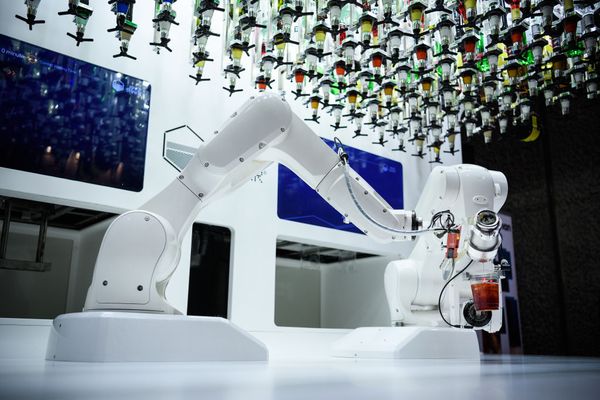 "Toni," an automated cocktail maker made by Makr Shakr, mixes a cocktail. Photographer: Leon Neal/Getty Images | 


Post a Comment