After a whirlwind week of uncertainty for international students, the White House announced it was retreating from a requirement that could have forced many of them to leave the U.S. The rule barred visas for students attending programs taught exclusively online, something many campuses were planning to do because of the pandemic. The proposal drew wide criticism from universities and corporations alike. And while international students can breathe a sigh of relief for now, many are wary of the future. Students from China have particular cause to be nervous. Anti-Chinese sentiment spiked early this year as the novel coronavirus spread from Asia to Europe and then the Americas. Even before Covid-19, President Donald Trump was targeting students from China as part of his trade war. Trump's rhetoric about China has some students reconsidering coming to the U.S. for college and graduate school. "Even with the latest development on student visas, there's still a lot of uncertainty," said Anson Qian, a Northwestern University MBA student. "I'd like a bit more clarity before I return." —Marin Wolf Did you see this? The Covid-19 death rate in majority-Black counties was already bad. Then it got much worse. Many U.S. parents are panicking about how to keep working when an abnormal, pandemic-constrained school year begins. Some affluent families have already hired private tutors for their preschoolers. White hourly workers have better work schedules than people of color. Facebook has scrambled for the past six years to add Black technical workers. The company claims its failure is not for lack of trying. A new generation of elected women are on the rise in Singapore. A record number of women are running for U.S. Congress. Black-owned U.S. businesses are twice as likely to fail during the pandemic as White-owned businesses. The cluster of coronavirus infections tied to a gay club in South Korea has raised questions about whether anonymity is the key to contact tracing. British regulators are holding brokerages accountable for racist work environments. The view from a billionaire's office as the pandemic took hold? Quite rosy, Bloomberg Businessweek reports. After two months of Black Lives Matter protests, U.S. campuses are removing Confederate memorials at a rapid clip. We love chartsFood prices have ticked up during the pandemic, a blow to the poorest Americans. However, some wages may rise, too: As restaurants reopen, they're finding they must pay a premium to persuade workers to face the public—and the increased risk of infection. 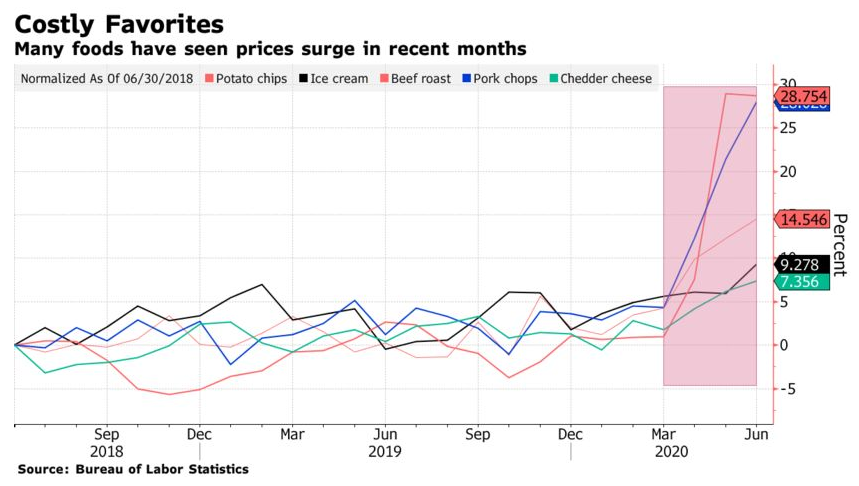 Racism's cost to communities More than 50 American cities now recognize racism as a public-heath crisis, according to Bloomberg CityLab. The American Public Health Association and American Medical Association concur, calling racism an urgent problem like opioid addiction, cigarettes or the coronavirus. In an editorial last month, the New England Journal of Medicine said racial discrimination aggravates brain disease, aging and circulation problems, producing "disproportionate burdens of disease on Black Americans and other minority populations." For professionals and governments to recognize the toll of racism is a step, but as one Tennessee politician said, "Now we have to do something with it." | 


Post a Comment