| AstraZeneca's vaccine trial shows promising signs in the lab. China chips away at Taiwan's toehold in Hong Kong. And Jack Ma's Ant Group is seeking a valuation north of $200 billion as it goes public. Here are some of the things people in markets are talking about today. A coronavirus vaccine that the University of Oxford is developing with AstraZeneca is showing promising results in early human testing, and is now set to move into larger tests. That may sound like cause for good news, but the results still weren't enough to convince the market. AstraZeneca fell from a record high in New York trading on concerns over whether its vaccine can match the progress seen in programs from Pfizer and BioNtech SE, as well as Moderna. "In the competitive context they fail to impress," said Bernstein analysts led by Ronny Gal. The vaccine increased levels of both protective neutralizing antibodies and immune T-cells that target the virus, according to the study organizers. The results, published Monday in The Lancet medical journal, are a key milestone for one of the fastest-moving vaccine projects globally. "Our hope is that we can actually start delivering a vaccine before the end of the year," Chief Executive Officer Pascal Soriot said on a call. Asian stocks looked set to climb after a technology-fueled rally lifted their U.S. counterparts to the highest since February. The dollar weakened to an almost six-week low. Futures indicated a firmer open in Japan, Australia and Hong Kong. The S&P 500 turned positive for the year as Monday's rally took it to levels last seen just as the pandemic was starting. The Nasdaq 100 jumped the most since April, hitting a record high, after Amazon and Zoom Technologies soared on demand for companies that benefit from diminished economic activity. Treasuries pushed higher, and elsewhere, Italy's 10-year bond yield spread over Germany, a key gauge of risk in the euro region, fell to the lowest level since March. Oil climbed above $40 a barrel. China is insisting that Taiwanese officials in Hong Kong who wish to remain there sign a statement agreeing that both sides belong to "one China," adding pressure on Taipei to close its de facto consulate in the city. The move advances two goals of Chinese President Xi Jinping: punishing Taiwanese leader Tsai Ing-wen for her refusal to accept the "one China" framework and curbing perceived sources of outside interference in Hong Kong. Meanwhile, Taiwan's top financial regulator says global banks are looking to expand on the island after China's passage of a controversial security law in Hong Kong. Some U.S. securities firms are considering an expansion in Taiwan and other international banks plan to start new operations, said Huang Tien-mu, chairperson of Taiwan's Financial Supervisory Commission. He didn't name any of the companies that have expressed interest in Taiwan. Tech firms are also reconsidering their presence in Hong Kong because of the national security law. The nimblest among them — the city's startups — are already moving data and people out or are devising plans to do so. Billionaire Jack Ma's Ant Group is seeking a valuation north of $200 billion as it goes public in Hong Kong and Shanghai, people familiar with the matter said, kicking off a much-anticipated market debut for China's leader in internet finance.The parent of China's largest mobile payment company will pursue a simultaneous dual listing in Hong Kong and on the Shanghai stock exchange's STAR board, the Hangzhou-based firm said, in what promises to be one of the largest debuts in years. Ant is already more richly valued than most Wall Street firms and, if conditions are favorable, it could seek to raise more in its IPOs than Saudi Aramco's record $29 billion haul, one of the people said. The record-shattering run in U.S. technology stocks has captivated mom-and-pop investors across America. Now, their counterparts in India are piling in too. Spurred on by a spate of Indian brokerages offering new low-fee trading plans and the ability to buy fractional shares overseas, local amateur investors are snapping up names like Netflix, Amazon and Facebook. Vested Finance, which helps Indians buy and sell offshore stocks and exchange-traded funds, said it received $5 million in investor deposits in the June quarter, up 50% from the previous three-month period. "The underlying focus for a lot of them is to invest in brands that they have been using, especially the technology brands listed in the U.S.," said Viram Shah, the brokerage's chief executive officer. What We've Been Reading This is what's caught our eye over the past 24 hours: And finally, here's what Tracy's interested in this morning When there's a headline about progress in coronavirus testing, or news about a potential vaccine showing promising results, there usually seems to be a knee-jerk positive reaction in markets. The assumption is that a vaccine will bring a halt to the spread of Covid-19 and allow the global economy to begin the long process of healing. But what if that assumption is overly simplistic? There are a number of companies in multiple countries currently scrambling to be the first to successfully develop a vaccine. Not all inoculations are created equal, however, and it seems clear that a vaccine from a certain type of company, with a particular business model, in a specific jurisidiction, might be a better or worse candidate when it comes to actually boosting the economy. In other words, one vaccine might be of greater benefit to the global economy by virtue of being more affordable or more widely available. 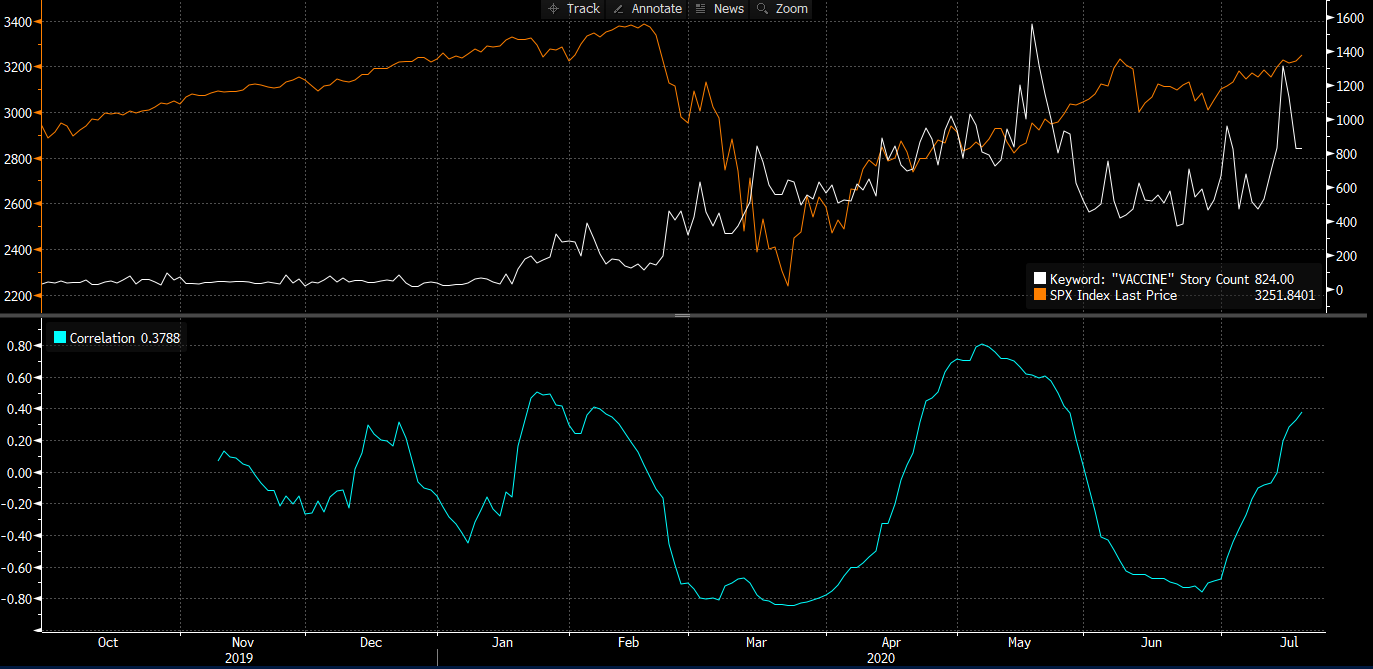 Anyway, it's a point I was thinking about while reading a recent note from Deutsche Bank analysts. They point out that "companies that were given subsidies to develop a cure or vaccine could sell their products at a premium to standard market prices — and consumers could find them prohibitively expensive or affordable." They're talking about U.S. companies and, in a country where health insurance is still largely provided by employers and many people now find themselves out of a job, the idea of a Covid-19 vaccine being rolled out to a limited (privileged) segment of society doesn't appear completely out of the realms of possibility. The best in-depth reporting from Asia and beyond. Sign up to get our weekly roundup in your inbox. | 


Post a Comment