This is Bloomberg Opinion Today, a New York subway car of Bloomberg Opinion's opinions. Sign up here. Today's Agenda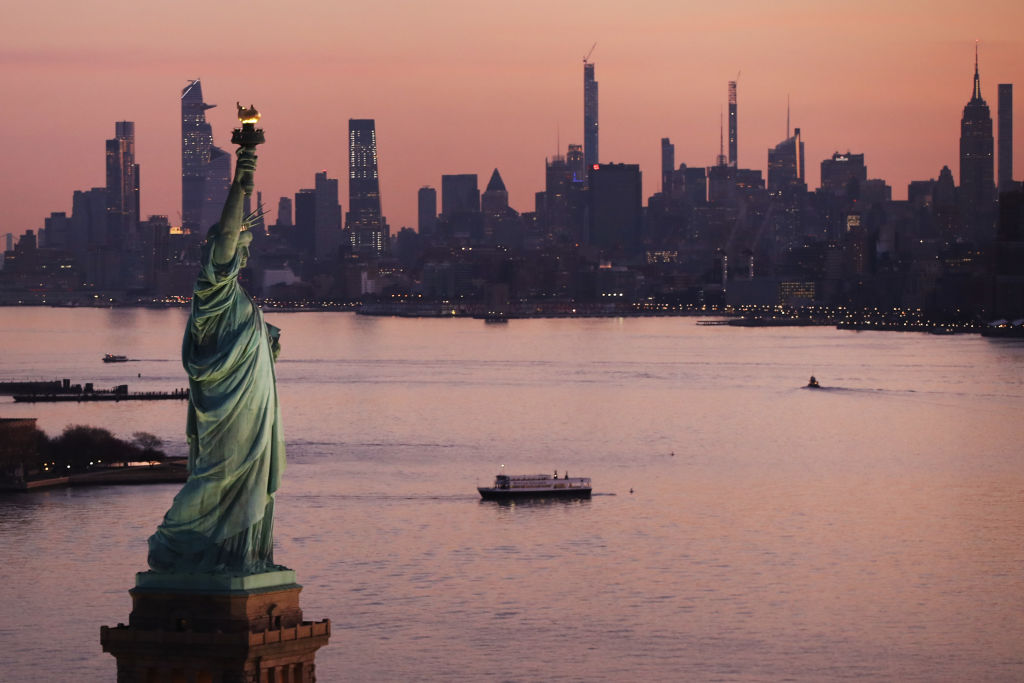 Emerging from its shell. Photographer: Spencer Platt/Getty Images North America We Are All New YorkNew York City has been the epicenter of the pandemic in the U.S., and now it's the epicenter of the recovery, for better or worse. The city today began tiptoeing out of restrictions meant to slow the spread of Covid-19. Lockdowns across the country may have prevented 60 million cases, according to a new study. And New York appears to be one of the few places following CDC guidelines in ending them, reporting significantly lower hospitalization and death rates than in April. For now, you still can't cram into line at Just Salad, and you'll have to wear a mask on the subway. But those are probably life-improving changes anyway. If you don't live there, you may be indifferent or even hostile to what New Yorkers do. But no city in the country means more to the overall U.S. economy, write Brian Chappatta and Elaine He, illustrating their point with many striking charts: 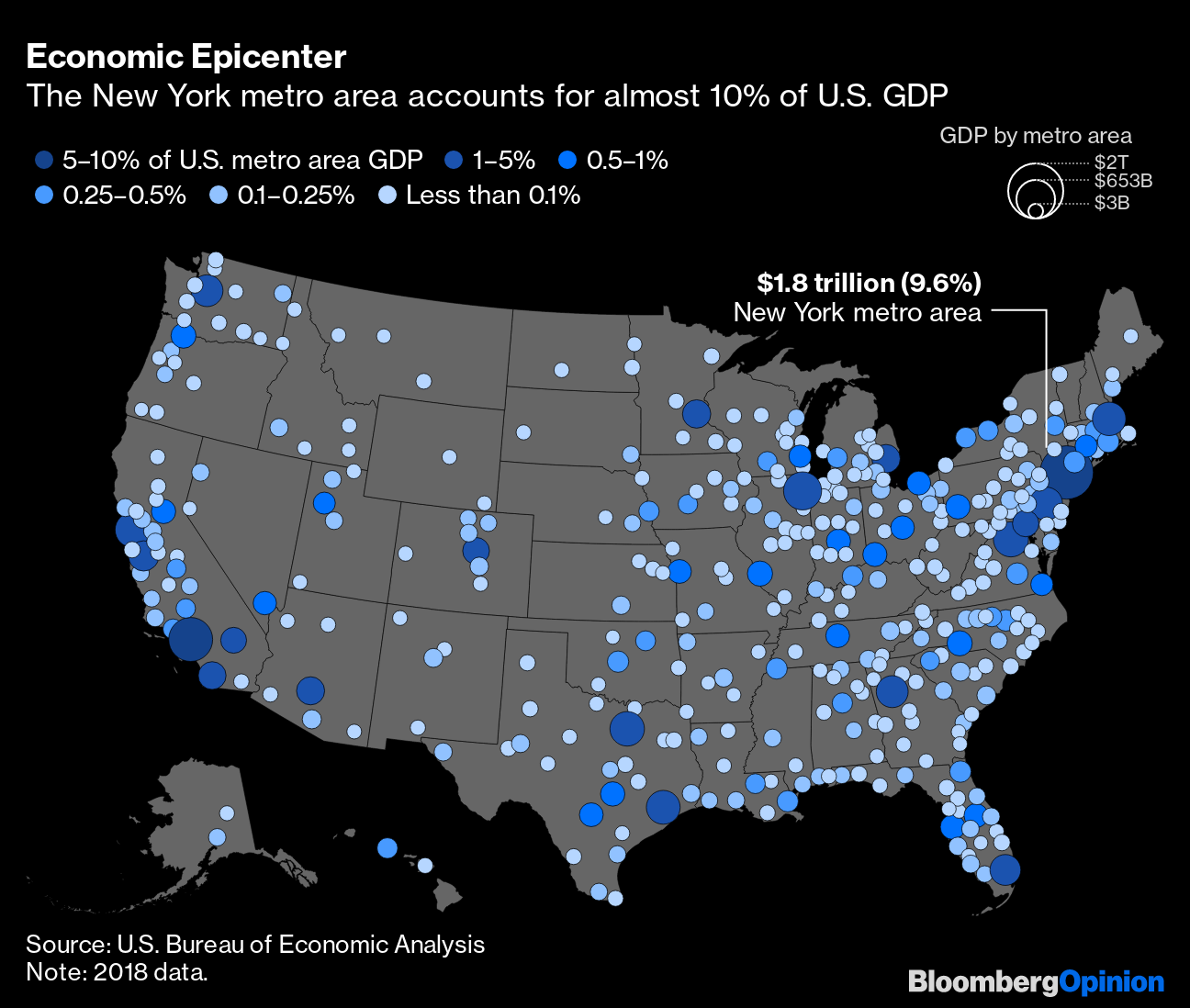 By itself, New York would be the 10th-largest economy in the world, with greater annual GDP than Canada, Russia or South Korea. The whole country is hoping for a quick economic comeback, but that starts in the Big Apple. What's tricky is that the factors making New York so susceptible to the virus haven't gone away, notes Max Nisen. It will be difficult to prevent a resurgence in a place whose functioning depends on people routinely cramming into public transit, elevators and Just Salads. But if we can fight the disease there, we can fight it anywhere. Further Coronavirus Reading: Trump in CrisisLast week was quite a year for President Donald Trump. Last Monday, he used police and troops to drive peaceful demonstrators from the front of the White House so he could wave a Bible around. This violated the protesters' First Amendment rights, writes Noah Feldman, as a lawsuit will hopefully soon confirm. This stunt, along with Trump's call to send American troops to American cities to fight American protesters, drew sharp rebukes from Republicans and retired military leaders, who want the armed forces to stop being politicized, writes James Stavridis. But the first, third and other amendments to the Constitution are just so much argle bargle to our president, who cares only about himself, Tim O'Brien writes. Trump's responses to the pandemic and racial unrest have finally made this plain even to some of his enablers. He seeks not to unite or help the country but to build his own brand, enough to keep making money and poisoning the discourse long after he leaves office. In fact, the only thing standing between America and a post-presidency Trump Show is right-wing media, writes Jonathan Bernstein. Not exactly confidence-inspiring.Of course, racial unrest could help re-elect Trump by firing up his base, suggests Niall Ferguson. But protests of George Floyd's death at the hands of police seem to have shifted the national mood significantly, writes Francis Wilkinson. For proof, see all the statues of racists finally being torn down. It's almost enough to make you hope the toxic culture wars that powered Trump's political career are starting to lose steam. It's Officially a RecessionThe National Bureau of Economic Research is a shadowy cabal of economists that meets in an underground lair to determine when U.S. recessions begin and end. Please don't bother to confirm those details; just know the NBER did declare a U.S. recession officially began in February, ending the longest expansion in U.S. history. How quickly it recovers still depends on how quickly we contain the coronavirus, former Fed Chairman Ben Bernanke tells Noah Smith. In any event, Bernanke warns, we'll still need more relief from Congress. Friday's shockingly good jobs report may have made some congresspeople relax about stimulus. A stock market that has almost fully recovered from its pandemic panic doesn't help. But keeping those market gains depends on more policy action, warns Tim Duy. The Fed, which meets this week, may feel compelled to chip in more of its own assistance. But Mohamed El-Erian wants it to leave any more heavy lifting to Congress, or risk widening the markets-reality disconnect even further. Further Markets Reading: OPEC's Nuclear OptionOver the weekend, OPEC and its oil-producing frenemies, now in the supergroup known as OPEC+, agreed to extend production cuts to support higher crude prices. Some nations that had been cheating on cuts even agreed they had been very bad and accepted punishment for their naughtiness. Julian Lee suggests OPEC and its leader Saudi Arabia have restored some of the credibility lost in the price war that sent crude briefly into negative territory. But OPEC's only tools to control the oil market are bad ones, writes Liam Denning. Ramping up production to punish rivals or recalcitrant Russians hurts everybody in OPEC by crushing prices. Cutting production also hurts everybody in OPEC by reducing desperately needed oil revenue. Further Saudi Reading: What was supposed to be a big year for Crown Prince Mohammed bin Salman has turned into a nightmare because of his own mistakes. — Bobby Ghosh Further ReadingInviting immigrants from Hong Kong to the U.S. would punish China's aggression there, bolster America's reputation and help the economy. — Bloomberg's editorial board Boris Johnson is showing how to defend democracy in a fractured world, while Trump dismisses it. — Hal Brands All of Sheryl Sandberg's talk about leadership is hollow if she doesn't use it to stand up to racists. — Cathy O'Neil How Minneapolis ended up with such deep racial inequality, and how to fix it. — Adam Minter ICYMIThere's evidence blood type plays a role in Covid-19. How Camden, New Jersey, reformed its police department. A million-mile battery could charge your electric car. KickersYellowstone may be less likely to kill us all than we realized. (h/t Mike Smedley) The deadly search for a millionaire's buried treasure is over. (h/t Scott Kominers) The last person to collect a Civil War pension has died. South Korea is playing baseball in front of stuffed animals. Note: Please send treasure chests and complaints to Mark Gongloff at mgongloff1@bloomberg.net. Sign up here and follow us on Twitter and Facebook. | 


Post a Comment