| Lost opportunity | As the coronavirus snaked out of Wuhan and accelerated around the world, China initially seemed to recognize the diplomatic potential of leading the global response, with the U.S. abandoning its usual leadership role, Rosalind Mathieson writes. Instead, Beijing blundered gracelessly. Rather than winning over countries, it appeared to send a message that it sees China's rise to global primacy as inexorable and other nations should bow to that fact. Tight spot | A team of medical experts sent by the WHO to China in mid-February decided the key task was to focus on gathering technical information about the coronavirus, and not whether warnings had been suppressed in Wuhan. The decision was an example of why, amid the worst pandemic in a century, the organization faces an unprecedented political challenge, with Trump threatening a funding cutoff and accusing it of pandering to Bejing. Firing defense | Michael Pompeo is defending the firing of the State Department's inspector general but refuses to give any details, Nick Wadhams reports. The lack of an explanation has prompted Democrats to point out the different inquiries the watchdog had under way that could have embarrassed the secretary of state, including allegations that Pompeo and his wife used department staff and security agents for personal tasks. Migrants wanted | Known as a pro-immigration country, Canada has actively recruited immigrants to boost its economy. Now it's facing a shortage of farm workers as migrants who usually make the journey are put off by Covid-19. Kait Bolongaro and Shelly Hagan report on the country's plan to fill this labor dearth, including sending students to the fields. Transformation stumble | Hit by plunging crude prices and the coronavirus shutdown, Saudi Arabia's non-oil economy is expected to contract for the first time in more than 30 years. With a sharp turn toward austerity threatening a transformation that was just taking root, it will likely lead to lower average incomes and a young generation whose living standards won't match those of their parents. 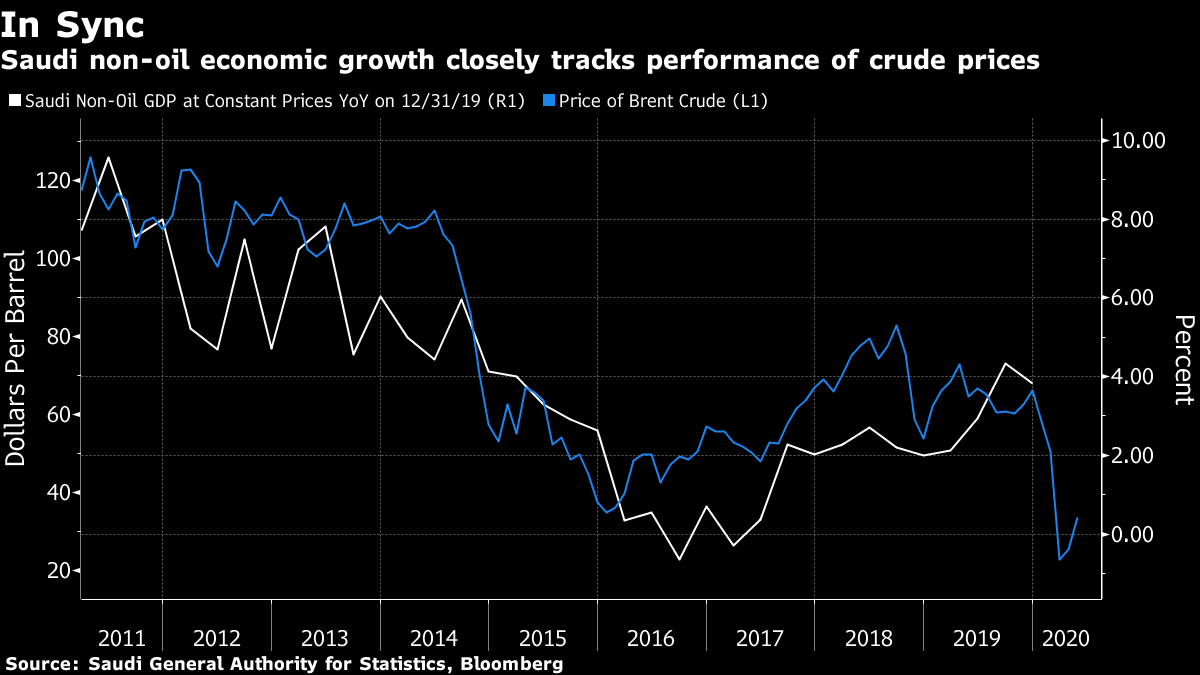 What to Watch: - Tensions between U.K. and European Union officials are boiling over after Britain's chief negotiator traded barbs with his counterpart in the bloc, Ian Wishart reports.
- Russian-backed Libyan strongman Khalifa Haftar's air force announced it will strike Turkish targets in the North African country, signaling a possible escalation in his war against the government in Tripoli that's supported by Turkey.
- With his administration caught in a nexus of health, political and economic crises, Brazilian President Jair Bolsonaro has quietly forged an alliance with a powerful group of centrist lawmakers he used to despise.
And finally ... South Koreans receive virus relief via a tech-savvy administrative infrastructure. In Japan, people wait in long lines to process their claims or for delivery through the snail mail. The results are clear. While the two countries both approved their extra budgets on April 30, as of Tuesday, about 80% of South Korean households had received their payments, while 72% of Japan's municipalities had only started mailing out application forms. 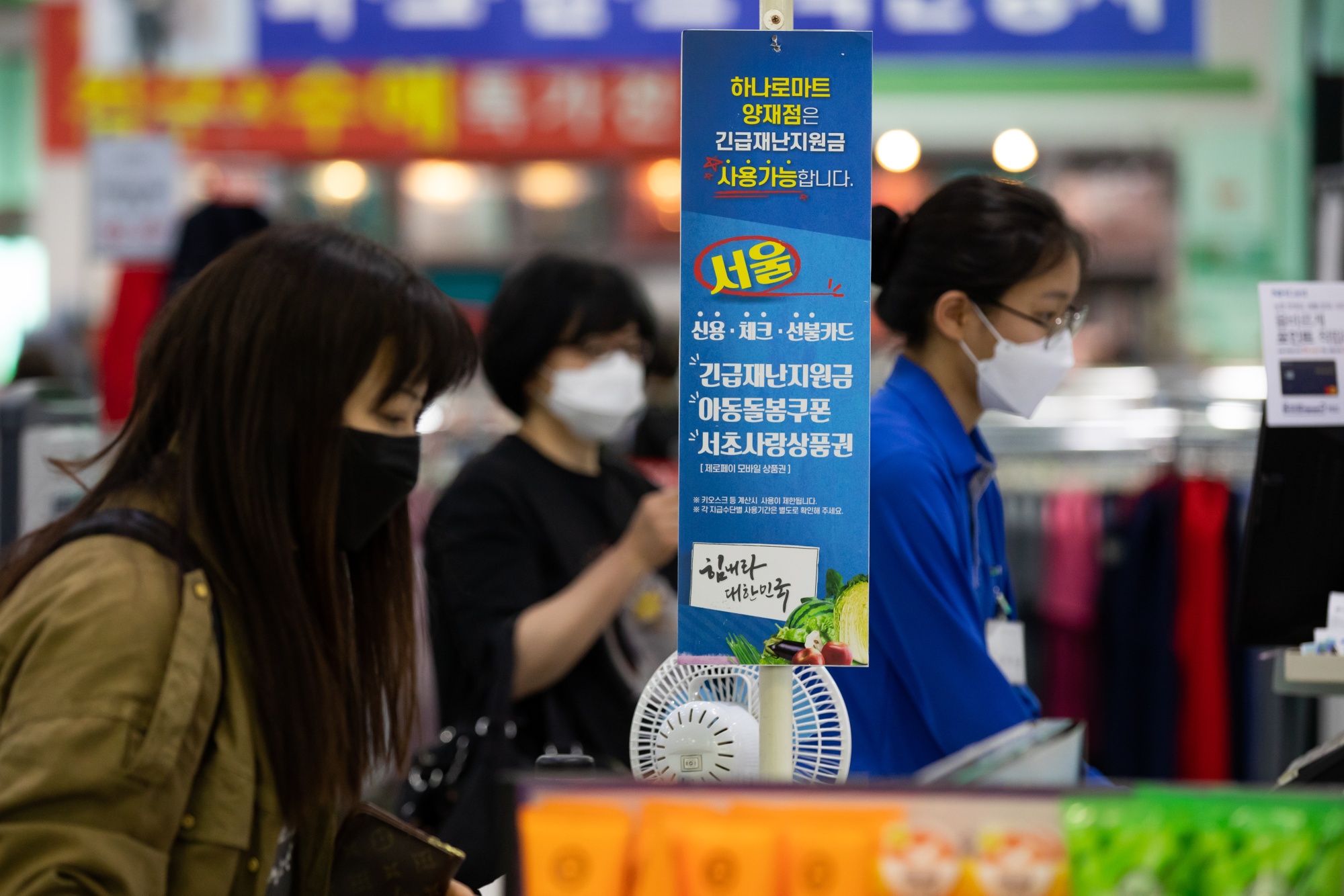 A notice about emergency disaster relief funds in a supermarket in Seoul, South Korea, on May 14. Photographer: SeongJoon Cho/Bloomberg
| 




Post a Comment