| Groups that were finally seeing real job gains a decade after the financial crisis are being hit especially hard by the coronavirus's fallout. Employment and wages had ticked up steadily for black and Hispanic Americans, for women, for workers over 65, and for those without a college degree. In 2019, unemployment was persistently low, and the "quits rate" showed workers were becoming confident enough to leave their jobs for new opportunities. Then came 2020. Bloomberg Businessweek reports that in the sudden economic downshift caused by Covid-19 precautions, the old saw of "last hired, first fired" is playing out on a mass scale across the U.S. People who had pulled themselves up a rung or two are being pushed back down, joining the 33 million Americans who have sought unemployment benefits. Worse yet, many employers are making layoffs permanent. —Philip Gray Did you see this? The fixation in some quarters of preventing welfare fraud does more harm than good. The number of Americans who are eligible but not receiving aid far exceeds the number who are receiving too much. Peru's pandemic response is saving the economy, and the credit goes to Maria Antonieta Alva, the 35-year-old finance minister appointed just seven months ago. The European Central Bank met its target for female representation among top managers. For lower tiers, it fell short. Europe's wealthiest man has lost more money in the pandemic than anyone else in the world. He's got a plan to bounce back. A judge tossed out a claim by women in U.S. soccer that they were paid less than men. The post-shutdown workplace will not be the same. Expect masks, fever screenings, half-empty open offices and plexiglass dividers between cubicles. We love charts Job losses during shutdowns are not evenly shared. Michigan, Kentucky and Georgia have suffered acutely. 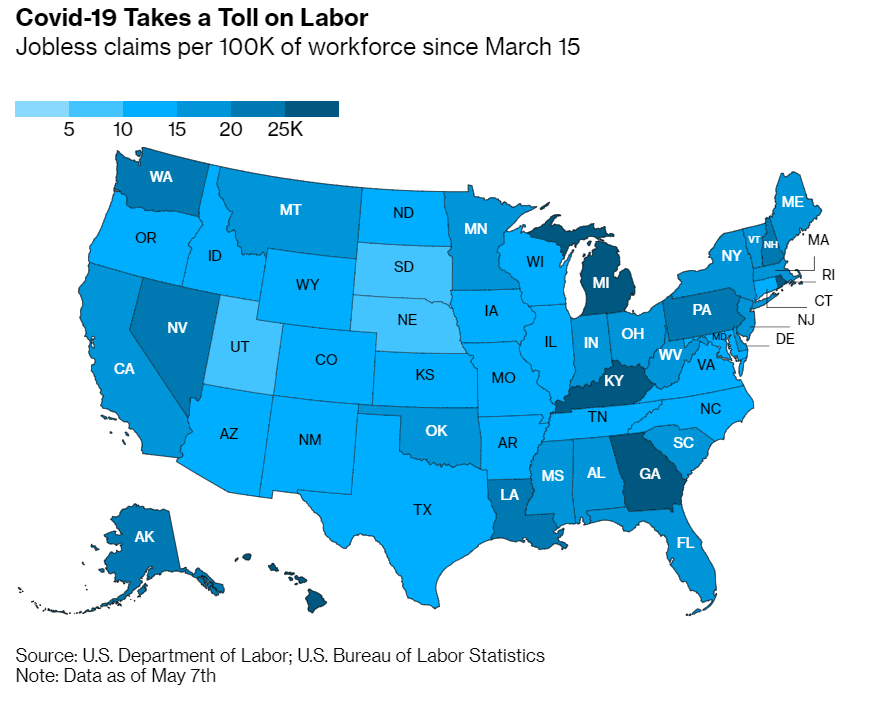 Infection for the greater good Could it be ethical for researchers to deliberately infect people with a deadly disease? Theoretically, infecting humans with Covid-19 in a "challenge study" would be a rapid way to test treatments, but until recently, scientists wouldn't even consider it unless a cure was handy. A United Nations report this week outlines some conditions that would need to be met in order to pursue such experiments: Participants would need to be healthy and 18 to 30 years old. Ideally, they would be individuals already at high risk of becoming infected. And researchers would need to take precautions to avoid targeting poor and vulnerable populations. Although billions of people are trying to avoid coronavirus infection, for this good cause, more than 14,000 have already volunteered. | 


Post a Comment