| Reopenings beckon, China promises more stimulus, and cases in Europe drop. Stay alert The White House is combating an outbreak of coronavirus after Vice President Mike Pence's press secretary Katie Miller tested positive for the disease. A spokesman said Pence would be back at work today. The administration is pushing ahead with plans to reopen the economy, citing South Korea and Austria as models for getting back to work. In the U.K., Prime Minister Boris Johnson set out a plan for easing the lockdown, while emphasizing that the time has not yet come to lift major restrictions. There was more bad news for airlines as he announced the country planned to quarantine travelers arriving in the U.K. More money The People's Bank of China said it will use "more powerful" policies to counter the economic fallout from the coronavirus outbreak. Worries are increasing that sluggish domestic demand and a collapsing global economy will slow the potential recovery. The PBOC comments echo sentiments expressed by Federal Reserve Bank of Minneapolis President Neel Kashkari who predicted that the worst is yet to come for the U.S. economy. Economists also still expect more stimulus from the European Central Bank, despite last week's Germany constitutional court ruling. Outbreak easing, but... There was better news on the spread of the virus in Europe, with Spain recording its lowest death toll in almost two months while Germany saw the smallest number of new cases in almost a week. Concerns remain over the risks of a second wave, with South Korea facing a sudden increase in cases with the surge tied to nightclubs in Seoul. In the U.S., manufacturing is making a slow return, even if the pace is not fast enough for Tesla Inc. CEO Elon Musk. Markets mixed The uncertainty over both the timing of measures to open the economy and whether moving too early could lead to a second round of lockdowns is keeping a lid on stocks this morning. Overnight, the MSCI Asia Pacific Index added 0.7% with gauges in the region boosted by the PBOC's comments. In Europe the Stoxx 600 Index was 0.4% lower at 5:50 a.m. Eastern Time. S&P 500 futures reversed early-session gains to point to a drop at the open, the 10-year Treasury yield was at 0.696% and oil slipped. Coming up... There is little data of note on the economic calendar today. Atlanta Fed President Raphael Bostic is set to discuss the response to the pandemic, adding his voice to the growing chorus of Fed speakers ahead of an address by Chairman Jerome Powell on Wednesday. Marriott International Inc., Under Armour Inc. and Mylan NV are among the companies reporting today. What we've been reading This is what's caught our eye over the weekend. And finally, here's what Joe's interested in this morning After nearly two months of economic emergency, we finally got a Jobs Report on Friday that gave us a real glimpse at the devastation. The headline numbers: 20.5 million jobs lost and a 14.7% unemployment rate. The most perverse number in the whole report was on worker pay. After years of waiting for wages to accelerate, the official number saw a gigantic surge in Average Hourly Earnings. But this was no silver lining. Instead it was a reflection of how the job losses were so overwhelmingly concentrated among lower income, service industry workers. The devastation was so extreme at the low-end that it caused this ridiculous looking rise in pay growth, because the job losses were relatively less severe among people who make more money and can work from home.
But how long can that disconnect last and how big will layoffs get among white collar workers who make money? One important thing to remember here is the expansion of the Unemployment Insurance program that was put into place as part of the CARES Act. Perhaps you remember all the controversy over how some laid-off workers might actually be getting bigger checks than they were at their jobs. As such, despite the gigantic scale of the layoffs, it's possible (though it's still ambiguous TBD) that the fiscal expansion has done a decent job of smoothing over the lost income, and thus allowing overall economic demand to hold up albeit uneasily. However, as layoffs climb the income ladder, UI will replace lost household income less and less, forcing more demand destruction as households cut back spending even further.
So the key labor market things to watch going forward are: How many of the laid-off workers will return to work in the weeks ahead? And what will Congress do next to further replace losses to household income? 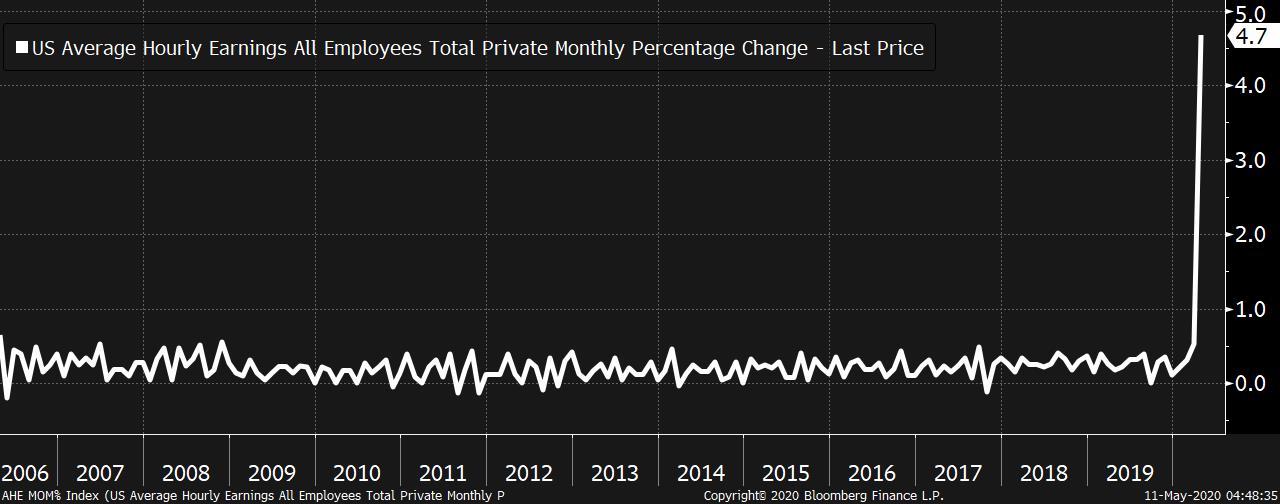 Like Bloomberg's Five Things? Subscribe for unlimited access to trusted, data-based journalism in 120 countries around the world and gain expert analysis from exclusive daily newsletters, The Bloomberg Open and The Bloomberg Close. | 


Post a Comment