There's nothing like a recession to reveal the haves and have-nots. Some big corporations are assuring U.S. workers that they won't lose their jobs in the next three months, but many businesses have already delivered the bad news: A record 6.6 million Americans just applied for unemployment benefits after 3.3 million filed the week before. The retail and service industries are being hit especially hard by social-distancing guidance tied to the pandemic, which has shuttered bars and restaurants. Some 50,000 U.S. stores have closed, and a massive government rescue package intended to help small entrepreneurs can't arrive fast enough to stanch the bleeding. America's already shrinking, struggling middle class is ill prepared for this economic crisis, according to the Federal Reserve. Households have slightly more cash than they did going into the last recession, but income losses are hitting faster this time around. Many will run out of money and credit before the virus recedes. Some already have. —Philip Gray Did you see this? Laws intended to keep people home and limit the spread of contagion are leading to the abuse of the most vulnerable around the world, including in India, South Africa and the Philippines. Hoarding leads to unnecessary disparities. In the U.S., there's plenty of food for everyone—unless people buy more than they need. "I'm not hoarding, I'm just stocking up before the hoarders get here." Small businesses say big corporations won far more aid in Washington's $2 trillion bailout package. Parents working from home aren't going to be their usual productive selves, experts warn. They're trying to teach reading and math with one hand while typing with the other. New York's governor warned people in rural areas not to feel a false sense of safety as his state is ravaged by the coronavrius. Living in suburbs and outside city limits comes with risks as well. We love chartsThe American middle class is going into this pandemic with a smaller slice of the nation's wealth than ever before. 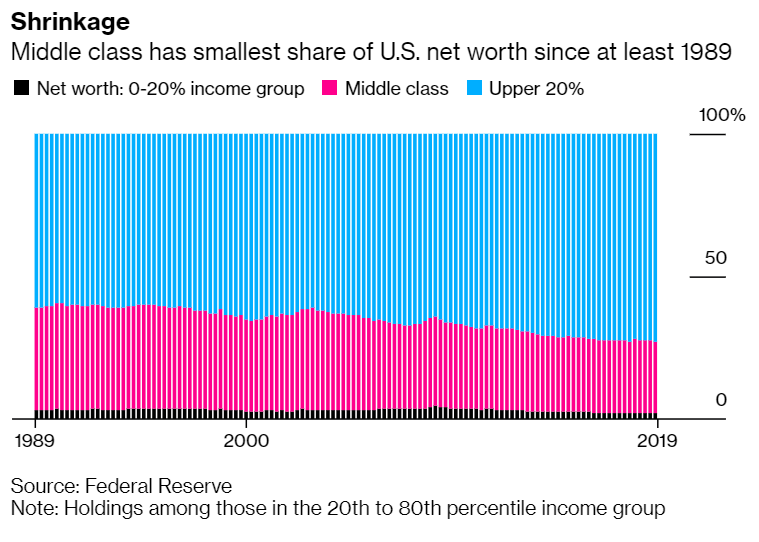 The other health crisisHealth care systems almost everywhere have their hands full with the influx of Covid-19 patients, but infection isn't the only threat. Almost everyone is under a new kind of stress: There's a change in routine, isolation and loneliness, lack of exercise and fresh air. People fear becoming seriously ill, worry about sick acquaintances and grieve for friends and family members who have died. Everyone it seems could make use of some mental health care these days, without taking a trip to a therapist's office. Bloomberg Businessweeek reports that in the U.S., regulators have relaxed some privacy rules to help providers connect with more patients via familiar platforms like Skype, and insurers are now under pressure to pay for telepsychiatry just as they would for in-person care. | 


Post a Comment