| This is Bloomberg Opinion Today, a Greatest Generation of Bloomberg Opinion's opinions. Sign up here. Today's Agenda  A new way of life. Photographer: JOSE JORDAN/AFP/Getty Images It's Covid-19's World; We Just Live in It Now We've been writing about the novel coronavirus for months, but only in the past couple of weeks has this gone from feeling like a merely terrifying news story to something truly epochal. Abruptly halting much of the global economy will do that. Businesses, schools and travel are being shut down across the U.S., Europe and elsewhere to fight the spread of Covid-19, and markets are collapsing in ways not seen for at least a generation. More important, the lives of potentially millions are at stake. These could be world-changing events on par with, say, the Sept. 11 attacks, to make one recent comparison. Just as ominously, they also have much in common with upheavals that gripped the world a century ago, writes Pankaj Mishra. It still seems unlikely we'll endure another Great Depression or world wars — KNOCKING FURIOUSLY ON WOOD — but the realignment of global politics and economics caused by this pandemic could be just as stark. At the very least, the globalization that has characterized the economy for much of the past century is in real danger now, writes A. Gary Shilling. Of course, 20th century crises also brought out the best in many people and institutions. Leadership from the White House has been spotty and unreliable so far, but fortunately others in government and elsewhere are filling the void. They'll need to keep doing that. For example, though President Donald Trump has not called for it, manufacturers should take it on themselves to produce the ventilators, masks and other equipment hospitals need, writes Brooke Sutherland. They did this sort of thing back in World War II, and companies in China and elsewhere are already doing it today. And while Trump has mostly downplayed the pandemic's risks until today, other authorities have been better at communicating how the nation should respond, writes Jonathan Bernstein. These officials and celebrities must keep sending messages the president has been slow to deliver. The U.S. military, meanwhile, is already displaying its pandemic-fighting expertise, notes James Stavridis, and troops should start prepping for the next one right now. They also serve those who are trapped at home with out-of-school kids trying to break into their laundry room/home office. The nation responded to early 20th century calamities with a flourishing of arts and entertainment, and now bored, quarantined American families have a chance to repeat that experience, writes Tyler Cowen. And spare a thought for the Class of 2020, writes Francis Wilkinson, about to be shoved from school into a world beset by disasters, with little more than student-loan debt to their names. But the generation that endured such things in the previous century wasn't called the Greatest Generation for nothing. Maybe this group, tempered by hardship, will give us better leadership than we've had recently. Further Life in the Time of Coronavirus Reading: Fed Empties Magazine Into Raging Hurricane The Fed hardly eased the sense of things spiraling out of control by slashing interest rates to zero on a Sunday night, two days ahead of a scheduled meeting. Sure enough, stocks responded by crashing again at the open, triggering circuit breakers for the third time in the past two weeks. Still, the Fed did what it felt it had to do to keep a mere market crisis from turning into a credit crisis, writes Brian Chappatta. To succeed, the Fed must overcome several hurdles, writes Mohamed El-Erian. These include the fact that its moves won't help the economy in the short term and may not help distressed corporations at all. It also raises the odds of having to resort to such possibly counterproductive measures as negative rates. Most important, the Fed still doesn't seem to have figured out this whole communication thingy. For now, that may not matter as much as speed, as Dan Moss writes. But in the long run, effective Fed communication will be key to helping end the panic, Mohamed El-Erian writes in a second column. Further Coronavirus Economics Reading: Closing Europe's economy will hurt, but at least it may open up the door to fiscal help. — Lionel Laurent Treatments for Maximum Market Anxiety Although it's easy to call the stock market repeatedly crashing a "panic," the selling is not illogical these days. Huge formations of economic activity are evaporating before our eyes, taking corporate profits with them. Market circuit breakers are designed to stop panics and encourage cooler heads to buy the dips, but when they've been triggered in the past couple of weeks, they haven't stopped the selling. That's because, in this case, the panic is perfectly rational, writes Matt Levine. If we really want to stop and clear our heads, this may be one of those rare situations when it's better just to stop trading for several days until we regain some confidence and clarity, writes John Authers. Similarly, though short-selling bans are rarely a good idea, they can work when conventional methods of fighting pessimism fail, writes Shuli Ren. Telltale Charts Trump's dream of energy dominance is exposed as hollow when frackers beg for bailouts, writes Liam Denning. The paradigm is still more energy interdependence than anything. 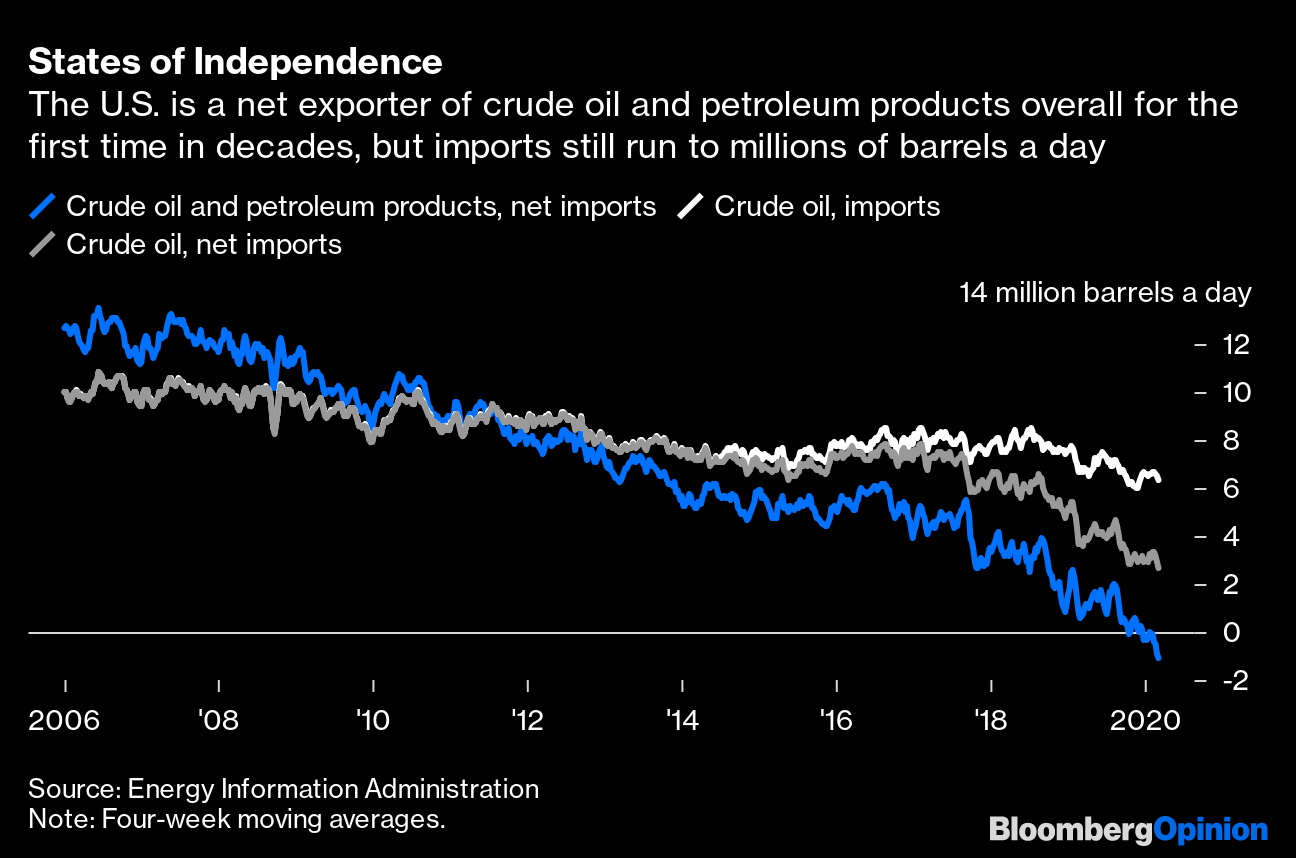 The Saudis flooding the market with oil every few years to crush rivals may not hurt production much in the short term but will hurt supply in the long run, writes Julian Lee. 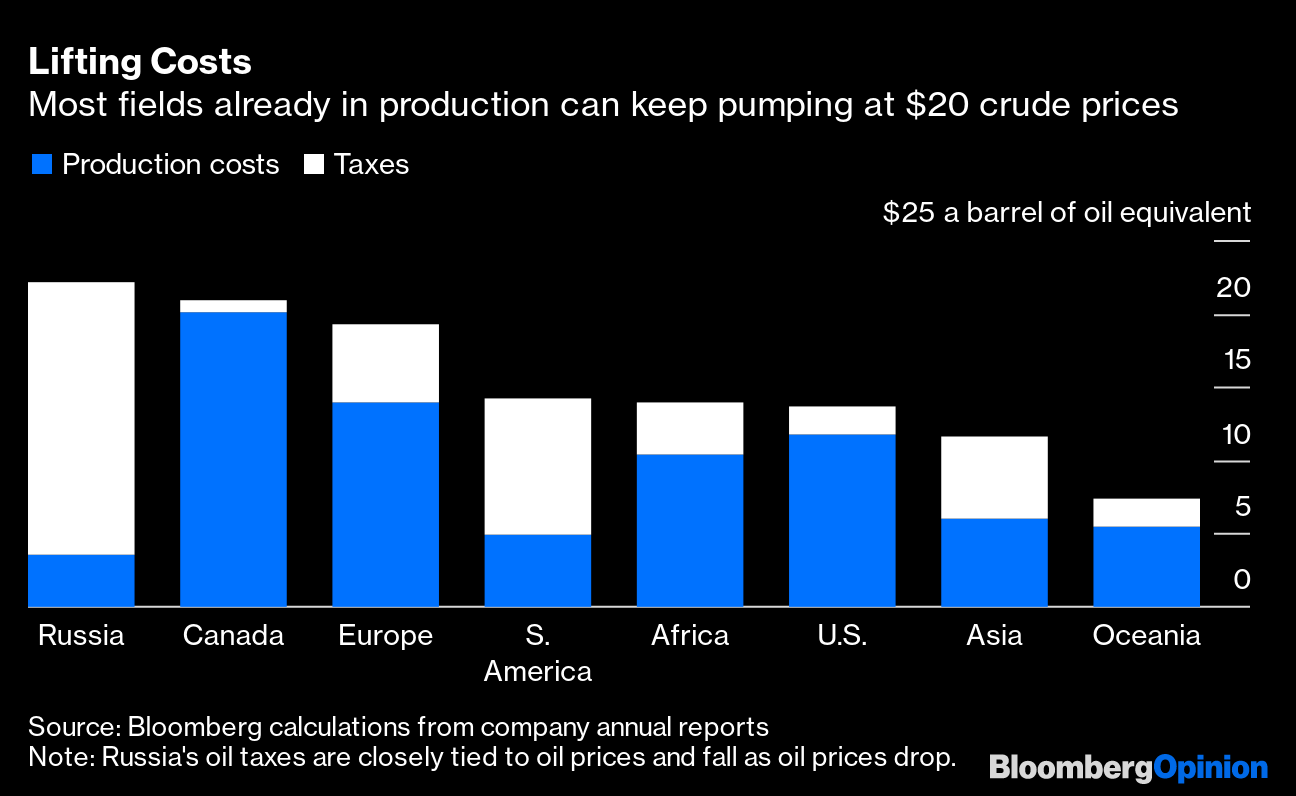 Further Reading Joe Biden put Bernie Sanders away in this weekend's debate. — Jonathan Bernstein Bernie's supporters can put their energy to use into rebuilding civic institutions. — Noah Smith Saudi Aramco's earnings call reminded investors they're really investing in the Saudi government, not a normal oil company. — Liam Denning ICYMI HHS suffered a cyberattack targeting pandemic response. A $1, 10-minute coronavirus test is possible. Plastics are back in favor thanks to the virus. Kickers Miss March Madness? Try this virtual NIT. (h/t Jamie Ellis) Dead Sea scrolls at the Museum of the Bible are forgeries. (h/t Scott Kominers) Penguin checks out the fish at an empty Shedd Aquarium. We could get energy from giant seaweed farms. Note: Please send seaweed and complaints to Mark Gongloff at mgongloff1@bloomberg.net. Sign up here and follow us on Twitter and Facebook. | 


Post a Comment