| Welcome to your morning markets update, delivered every weekday before the European open. Good morning. Coronavirus cases near 100,000, OPEC takes a big gamble and U.K.-European Union talks started with some "argy bargy." Here's what's moving markets. 100,000 U.S. stocks were crushed on Thursday, erasing nearly all the gains made the day prior, as markets remain gripped by the volatility sparked by the coronavirus outbreak. The updates of the spread continue to come thick and fast, with cases globally now close to the 100,000 mark. The U.K. reported its first death from the virus, the number of cases increased from New York to Seattle and Italy doubled the stimulus allocated to fight the problem. All of which provides a good opportunity to step back and study the numbers on an outbreak dominating conversation across the globe. Planes and Movies The virus outbreak has hit stocks across the board but a few sectors are more battered and bruised than others. The airline industry is facing significant pressure, creating concerns about the health of carriers and with the stress starting to seep into a safe haven of the bond market. Look also at the battering being taken by cinema stocks, already contending with the virus outbreak threatening that patrons will stay away and now having to process that blockbuster releases set for earlier in the year could be pushed back, pointing to a potentially fallow period for the industry until the virus is brought under control. Crude Gamble OPEC is taking a significant gamble. At the end of the first day of its meeting in Vienna, the cartel recommended a larger oil output cut than had been initially discussed and for a longer period of time, all before securing the backing of Russia. If Russia doesn't agree to the cut, OPEC will scrap the plan to trim output altogether, a move that would almost certainly cause crude prices to crash. It's a high-stakes move in an oil market battered by virus-sapped demand, and one that caused Saudi Aramco to delay announcing its monthly crude pricing with the market in limbo. Divergences The first week of talks between the European Union and the U.K. on their future relationship ended with four key issues responsible for the "serious divergences" described by Michel Barnier, the EU's chief negotiator. The disagreements are around competition, justice policy, fishing and the overall structure of a deal, while Barnier also rebuffed a push by British negotiators for a speedy agreement on giving U.K. banks access to the single market. EU Trade Commissioner Phil Hogan, however, said he was optimistic on the talks once the "argy bargy" which characterized the first exchanges was out of the way. Coming Up… Stocks in Asia followed the U.S. lower and European stock futures indicate it will be another big selloff when trading starts. Pay close attention to sovereign bonds, where yields keep hitting record lows in an indication that the world has re-entered crisis mode. Another safe haven, gold, continues to rally too. It is much quieter in terms of earnings but the closely scrutinized U.S. payrolls report for February is on the slate later in the day, before which German factory orders will be reported. What We've Been Reading This is what's caught our eye over the past 24 hours. And finally, here's what Cormac Mullen is interested in this morning With complete uncertainty as to the economic impact of the coronavirus, a good gauge for investors is tracking sentiment linked to one of the most prominent concerns in financial markets — the trillion-dollar powder keg of BBB bonds at risk of ratings downgrades. Fears of mass downgrades of the lowest level of investment grade debt to junk — which could freeze credit markets by prompting waves of forced selling — predate the virus. But the outbreak could be the perfect catalyst as corporates face a combination of demand, supply chain and earnings collapses. Both the Federal Reserve and the OECD saw fit to remind investors of the risks last month. The heightened worries suggest the spread between BBB debt and its highest-rated Aaa counterparts is an ideal gauge of investor concern about the coronavirus impact — it reached the widest in over a year on Thursday, according to Bloomberg Barclays indexes. It remained elevated after Tuesday's emergency Fed rate cut, suggesting Wednesday's surge in U.S. shares was just a head fake, and equities duly slumped again on Thursday, leaving room to fall further to match year-to-date lows. Risk bulls will point to the spread remaining well below its peak at the beginning of last year, which stemmed from the December 2018 near-bear market in U.S. stocks. But the global economy is in a much more perilous state now and that means the spread could soon blow wider, signaling even more downside for risk assets. 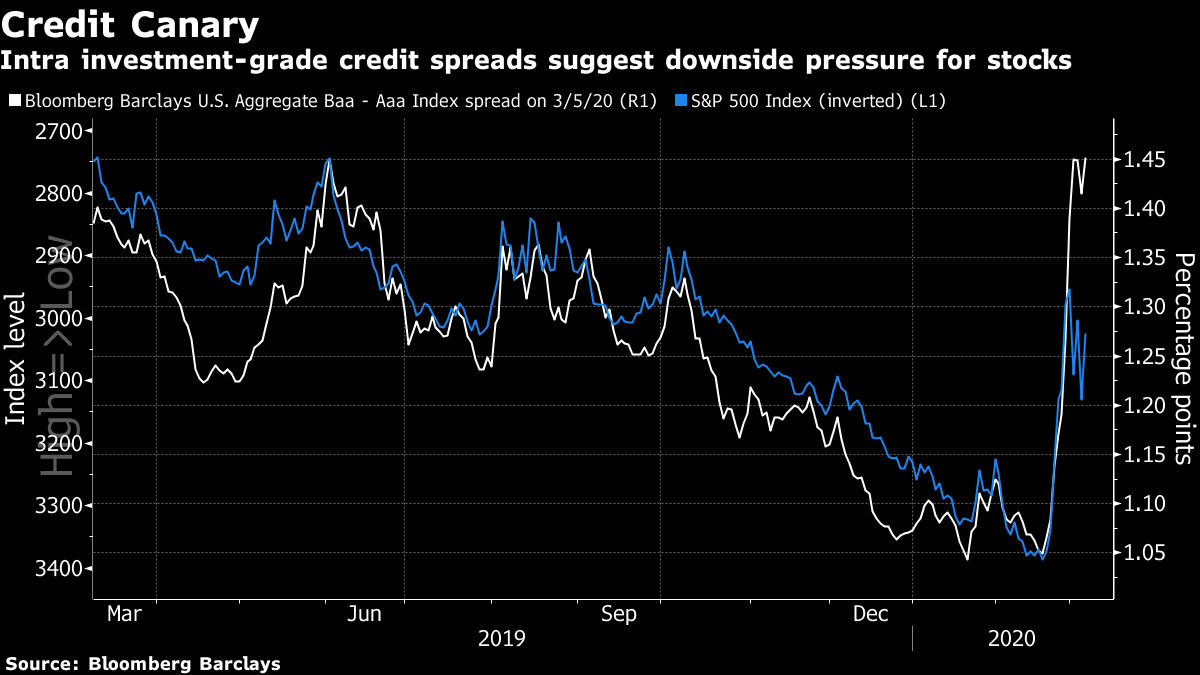 Cormac Mullen is a cross-asset reporter and editor for Bloomberg News in Tokyo. Like Bloomberg's Five Things? Subscribe for unlimited access to trusted, data-based journalism in 120 countries around the world and gain expert analysis from exclusive daily newsletters, The Bloomberg Open and The Bloomberg Close. | 


Post a Comment