| This is Bloomberg Opinion Today, a megamerger of Bloomberg Opinion's opinions. Sign up here. Today's Agenda 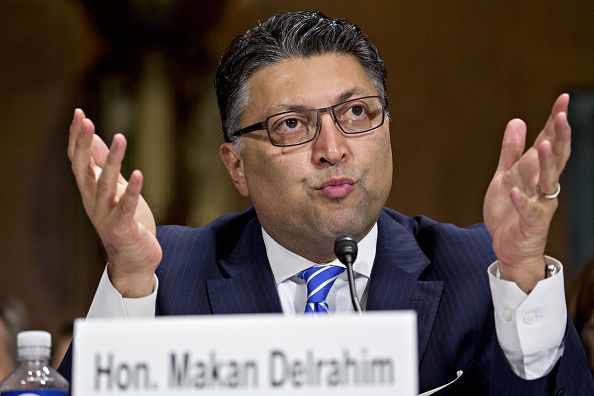 Whose side is he on? Photographer: Bloomberg/Bloomberg The Corporate Consolidation Will Continue Until Morale Improves This newsletter is not proficient in mathematics, economics, business or anything else besides raw newsletter wizardry. But it does know: - Three is less than four;
- Reducing the supply of a thing people demand will often raise the price of that thing; and
- Companies that can get away with raising prices will usually do that.
What we're saying is the merger between T-Mobile US Inc. and Sprint Corp. is bad for consumers. As Tara Lachapelle has written, it will reduce the number of U.S. wireless carriers from four to three, leading to higher prices and other bad things. Until today, it seemed we might be spared such outcomes. A bunch of state attorneys general sued to stop the deal, and the stock market expected them to win. Funny story: They didn't. A judge unexpectedly approved the merger. Now we can only hope Dish Network Corp. — which gets some T-Mobile and Sprint assets as part of the deal — can build a viable competitor at some point in the next decade. Until then, Tara Lachapelle writes in a new column, consumers will suffer. President Donald Trump was apparently swayed by T-Mobile's voodoo-based argument that devouring Sprint's essence would give it the magical power to roll out 5G networks better. His antitrust chief at the Justice Department, Makan Delrahim, moved heaven and earth to make his boss's dream come true, notes Joe Nocera. He brought the big players together for negotiations and helped them fight the states in court. That's not how any of this is supposed to work. The man whose ONE JOB is protecting consumers is "just another Trump lackey putting the president before the people he's supposed to serve," Joe writes. It just so happens that same man today announced an antitrust probe of America's tech giants. Big Tech certainly has it coming, but Tara Lachapelle notes this action also happens to suit Trump's particular biases. Given the mixed signals out of this Justice Department, how can we believe it has consumers' best interests at heart? Europe Has 99 Problems Once upon a time, Europe was always wrestling with a thing called "The German Question," which was not "Sprechen Sie Deutsch?" but the question of whether Germany was too big or too small for its neighbors to handle. Then World War II and the European Union happened, and Germany settled into its role as a big-but-not-too-big European leader. But Brexit reopens the German Question, writes Andreas Kluth. The nation is once again stuck in the middle between France and Eastern Europe and other competing systems, without Britain as a counterweight. The coronavirus is an even more immediate headache for Europe, writes Ferdinando Giugliano. The virtual shutdown of business in China is another blow to Europe's trade-driven economy, which was already reeling from the trade war. Even worse, policy makers don't seem willing yet to do much about it. Between political turmoil and a weak economy, the euro's recent hammering could last a while, writes John Authers. Daimler Needs a Pit Stop Climate change is splitting the automaking and energy industries into "haves" and "have-nots." On the latter side is Daimler AG, maker of Mercedes-Benz, which is beset by legal woes, production delays and shrinking margins, and today gutted its dividend by 72%. Daimler is also putting former CEO Dieter Zetsche in charge of its supervisory board next year, which is kind of an odd look, writes Chris Bryant, given "Dr. Z" was in charge when so many of its problems began. Many of those problems are rooted in climate change. Daimler has been too slow to electrify, too slow to adopt European emissions standards and allegedly deceptive about its diesel emissions. All of that helps explain, writes Liam Denning, why the stock market gives Daimler the stinkeye, while showering Tesla Inc. with embarrassing amounts of love any time it merely finger-paints something that looks like a profit. Oil companies are learning the same lesson, Liam writes: Embrace the new reality of lower demand or pay a heavy price in the market. Further Climate Change Reading: Trump's FERC wants to subsidize coal at the expense of rate payers. — Senator Martin Heinrich Seriously, Take the Coronavirus Seriously Any time China has a crisis — financial meltdown, trade war, coronavirus, whatever — the world's collective response is that its enormous foreign reserves — $3 trillion at last count — will save the day. The trouble for China and other Asian exporters, which have an additional $2 trillion in reserves of their own, is that money isn't just lying around in a vault somewhere, writes Satyajit Das. It is balanced in the ledger by obligations to foreign investors. China can't just buy its way out of trouble. Longtime readers know we keep railing about traders' complacency about coronavirus, which has now taken more than 1,000 lives. Normal people aren't taking the disease seriously enough either, writes Faye Flam. It's still spreading and still somewhat mysterious. There's no need to panic, but everybody should know what to do if things get worse. Telltale Charts Americans tell pollsters they're wildly happy and optimistic, notes Justin Fox, who is a little skeptical. 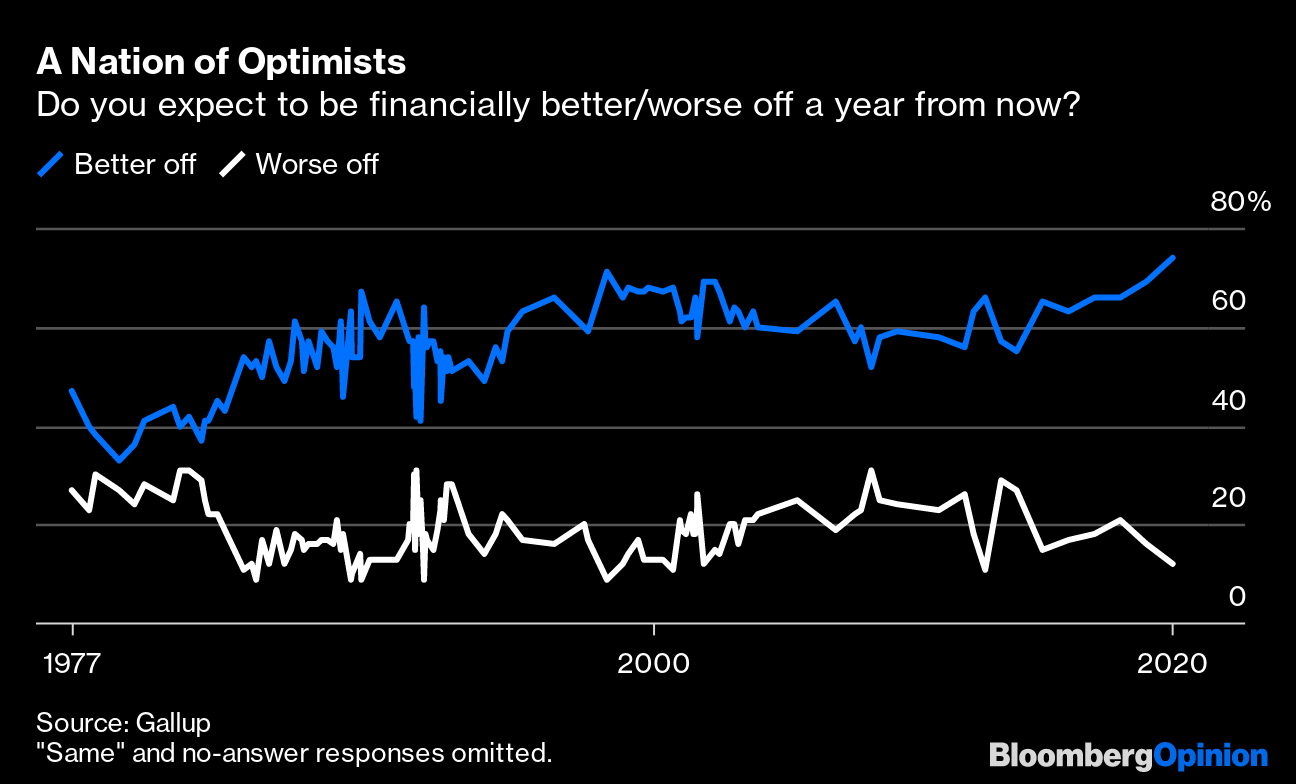 Further Reading It's not a problem that Iowa and New Hampshire hold the first nominating contests. — Jonathan Bernstein Many misbehaving tech startups do so because they're struggling, which suggests they shouldn't exist anyway. — Barry Ritholtz Puerto Rico's junior bondholders just got a nasty shock but probably can't expect much better. — Brian Chappatta Vladimir Putin has put himself in an impossible position in Syria, trying to be all things to all players. — Seth Frantzman Nine years after the Arab Spring, Egyptians are as bad off as ever. — Timothy Kaldas Economists are still trying to untangle the morality of taking from the rich and giving to the poor. — Noah Smith Trump's "Making Federal Buildings Beautiful Again" order rejects art and forces one aesthetic on everyone. — Virginia Postrel ICYMI Three of Roger Stone's Justice Department prosecutors quit the case after Trump appeared to interfere with sentencing. Joe Biden has already left New Hampshire for South Carolina. A Carnival cruise ship in the Pacific keeps getting denied a port. Kickers Your broom can stand on its own any day of the year. Jules Verne's most famous books were part of a lavishly illustrated 54-volume series. You can now download 150,000 illustrations of the natural world. Why your toddler keeps taking selfies. Note: Please send brooms and complaints to Mark Gongloff at mgongloff1@bloomberg.net. Sign up here and follow us on Twitter and Facebook. | 


Post a Comment