| Alibaba warns sales growth will be hit by the coronavirus, the U.S. ups the ante in its legal battle with Huawei, and Tesla sells about $2 billion of stock weeks after Elon Musk said raising capital didn't make sense. Here are some of the things people in markets are talking about today. Alibaba is starting to feel the heat from the deadly coronavirus outbreak. The firm warned that the virus responsible for killing more than 1,300 people in China is exerting a fundamental impact on the country's consumers and merchants, and will hurt its revenue growth in the current quarter. Alibaba, the first major Chinese technology corporation to report results since the epidemic emerged in January, said the virus is undermining production in the economy because many workers can't get to or perform their jobs. It has also changed buying patterns with consumers pulling back on discretionary spending, including travel and restaurants. The Chinese e-commerce giant made the comments after reporting strong financial results for the quarter that ended in December. Alibaba's U.S.-listed shares closed 1.8% lower on Thursday. Asian stocks looked set for a mixed start to trading Friday as investors mulled the latest coronavirus developments and news that the Federal Reserve will dial back its liquidity injections. Treasuries nudged higher, and futures were flat in Hong Kong and Australia, while they fell in Japan. The S&P 500 Index closed lower for the first time this week as the Federal Reserve Bank of New York said it will shrink its repurchase-agreement operations more than analysts expected. Earlier, the World Health Organization said a surge in coronavirus diagnoses didn't necessarily indicate a spike in infections, boosting risk appetite. The pound gained after Sajid Javid quit as the U.K.'s Chancellor of the Exchequer. Elsewhere, oil rose for a third session, the longest winning streak since early January. Gold pushed higher. The U.S. raised the stakes in its battle with Huawei, using a law historically associated with prosecuting mafia figures to claim the Chinese company engaged in decades of intellectual property theft. The fresh allegations up the ante by including racketeering conspiracy, increasing the potential punishment. Huawei broke the law "to drastically cut its research and development costs and associated delays, giving the company a significant and unfair competitive advantage," the Justice Department said in a statement. The company even launched a bonus program to reward employees who got their hands on confidential information from competitors, prosecutors said. The new charges depict a company that won international standing by stealing trade secrets, evading U.S sanctions and lying to authorities. A lawyer for Huawei had no comment on the new charges. Tesla is selling about $2 billion of common stock, taking advantage of its surging shares just two weeks after Elon Musk said raising capital didn't make sense. Assuming underwriters exercise their option to purchase additional securities, the offering could bring in about $2.3 billion in proceeds, Tesla said in a statement. That will help fund as much as $3.5 billion in capital expenditures this year, a plan the company disclosed less than an hour earlier in a regulatory filing. Tesla shares climbed 4.8% on Thursday after analysts said the offering will both shore up the company's balance sheet and support Musk's plans for growth. The stock has more than tripled since the company released the first of two straight positive earnings reports in October. The offering is a sudden turnabout for Musk, 48, who said during an earnings call two weeks ago that Tesla could fund itself without Wall Street's help. The company had been spending sensibly and not holding back on expenditures in ways that would limit progress, he said. Asia-based hedge funds are bracing for a lean quarter of capital raising as the spread of the coronavirus leads to the postponement and cancellation of key events that have historically drawn Western investors to the region. London-headquartered Albourne Partners Ltd., a consultancy that advises pensions, university endowments and foundations that invest a combined $550 billion in alternative investments, said it's seen at least 10 of its clients cancel trips to Asia in coming weeks, according to Asia head Richard Johnston. Investors are canceling visits as the number of new cases and deaths from the outbreak in China surges. The U.S. has restricted travel to China and raised the alert level for Hong Kong, the largest hedge fund hub in Asia. "You'll hardly see a visitor at least until well into April," Johnston said. "There's a big issue for a lot of people, which has caused a holdup in allocations." Late February and March are among the peak months for international allocators to visit the region. What We've Been Reading This is what's caught our eye over the past 24 hours. And finally, here's what Tracy's interested in this morning I've been thinking a lot about ESG lately. Environmental, social, and governance (ESG) related investments are the hot new thing in finance. Investors get to feel like they're doing something great for the world and the financial industry gets a whole new suite of products to sell. For instance, on Thursday IFR's Chris Whittall reported on moves to create ESG-linked derivatives ,which immediately brings to mind a whole host of questions (like could a hedge fund manipulate the payout by burning a vast swathe of the Amazon rainforest?). On Friday, Bloomberg reports that MSCI thinks its forthcoming suite of ESG indices will be more popular with investors than traditional benchmarks. It seems everywhere you look there is a new ESG initiative or product being created. 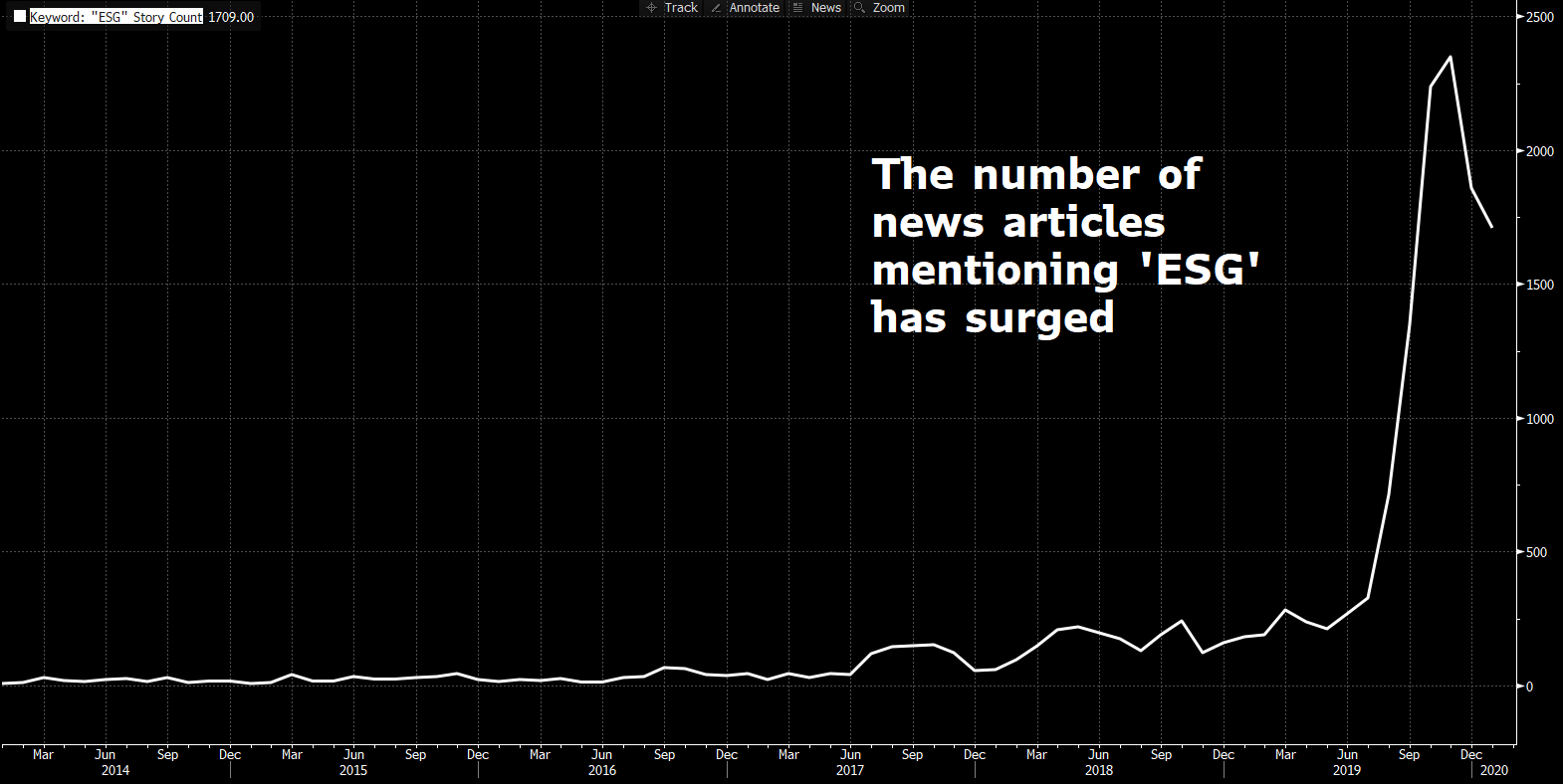 One of the reasons I've been thinking about ESG has to do with the coronavirus outbreak. Back in 2017, the World Bank issued the world's first pandemic bonds. The principal of those bonds will help the World Bank fund containment efforts if a pandemic meets certain criteria. But, as Bloomberg reported last year, the triggers don't seem to be very well-calibrated to the goals of stopping a global outbreak as early as possible. For instance, they only trigger if deaths happen in multiple countries. It's easy to see why the bonds are structured this way, as debt with "low" trigger points wouldn't be that attractive to investors. But one thing I didn't realize until speaking with Olga Jonas is that it's not entirely clear why the well-funded World Bank needs this kind of extra money to fight outbreaks at all. Olga is currently at the Harvard Global Health Institute and is a former economist at the World Bank with significant pandemic experience. Her argument is well-worth listening to when it comes out on Odd Lots on Monday. Public-private partnerships can be a wonderful thing but the takeaway for me from the pandemic bond example is that it's worth asking if preferable funding options already exist. Lots of people will argue that ESG is going through an awkward development stage as investors and financiers figure out how to best structure these deals. But there's a real danger that poorly-structured ESG investments, rolled out in a frenzy, end up doing permanent harm, first by damaging the credibility of the entire industry so that people won't want to invest in it in the future, and secondly by taking the onus away from public institutions and governments to fix major problems in the world. You can follow Bloomberg's Tracy Alloway at @tracyalloway. | 


Post a Comment