| Wuhan sits at the crossroads of China. The Yangtze River megacity is also where the forces challenging President Xi Jinping's top-down management style now intersect, which is why he has appointed a loyalist to run the landlocked province that surrounds it, Hubei, as part of an urgent government shake-up. Ying Yong has the immediate job of bringing order to the epic mess that resulted from Wuhan's botched initial response to the coronavirus that's killed almost 1,400 people across the country. In the longer term, his effort to arrest the spread of the pathogen (magnified below), reassure a public seething with anger over a suspected early cover-up, and restore the local economy could cement or break Xi's hold on power.  This week in the New Economy As a first step, authorities have dramatically revised up the number of people infected with the virus, getting bad news out of the way so that Ying, the former mayor of Shanghai, can begin rebuilding public confidence, not just in Wuhan but nationwide. When he took power in 2012, Xi undertook a top-to-bottom overhaul of the Communist Party-state he feared could follow the Soviet Union into oblivion. In the political realm, he reintroduced ideological controls from the Mao era, reversing a trend toward greater freedom for journalists, lawyers and civil society activists. In economic policy, he stressed the role of state enterprises and industrial planning over the emerging power of free markets and entrepreneurs. Overseas, he discarded caution, more aggressively asserting China's historical claims in the South China Sea and over islands disputed with Japan. Those measures were facing significant domestic and international pushback even before the coronavirus hit, forcing Xi to ease up in some areas. With Hubei in lockdown, and travel around much of the rest of the country restricted, the authoritarian system Xi engineered now faces challenges on multiple fronts. In a scathing essay entitled "When Fury Overcomes Fear," Tsinghua University professor Xu Zhangrun writes that the epidemic has "revealed the rotten core of Chinese governance." 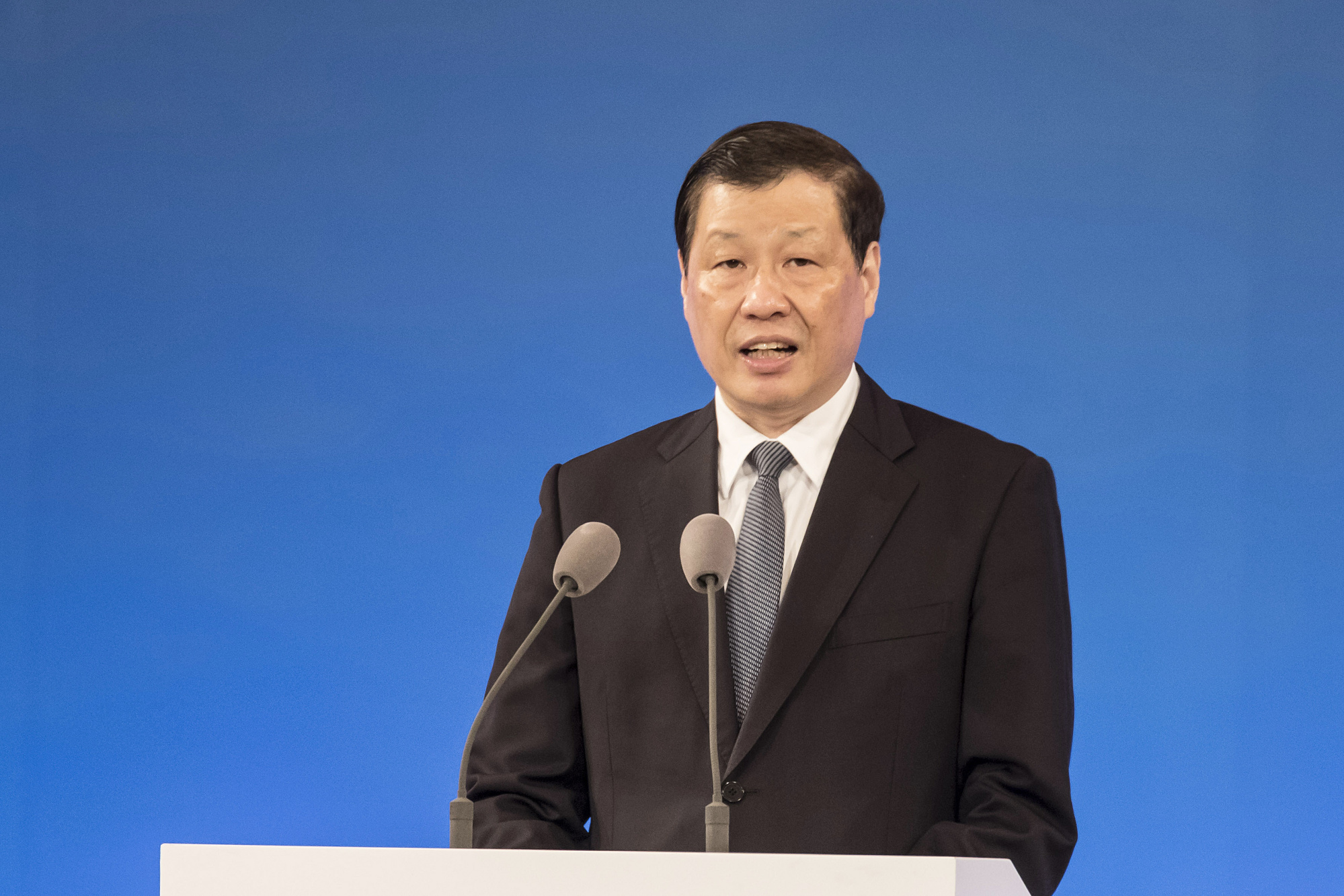 Ying Yong. Photographer: Qilai Shen/Bloomberg "This viral outbreak, which has been exacerbated into a national calamity by the power-holders, is more perilous perhaps than total war itself, for everything is being caught up by the struggle—the nation's ethical fabric, its politics, our society, as well as the economy," writes Xu, who has been banned from teaching. The death of 34-year-old doctor Li Wenliang has super-charged this dynamic. Punished for trying to raise the alarm when the disease first struck, Li is now seen as a martyr. His treatment has unleashed a wave of fury from citizens questioning the competence of the Communist Party. Simultaneously, an already sharply slowing Chinese economy has seized up. Car showrooms are empty. The government's usual method of stimulating growth—pouring concrete to build roads, bridges and other infrastructure—won't deliver this time around unless workers can reach the construction sites. Many are trapped in sealed-off villages, and in any case they don't want to risk exposure to the virus in big cities, where large-scale projects—the ones that can move the needle on GDP growth—are clustered. 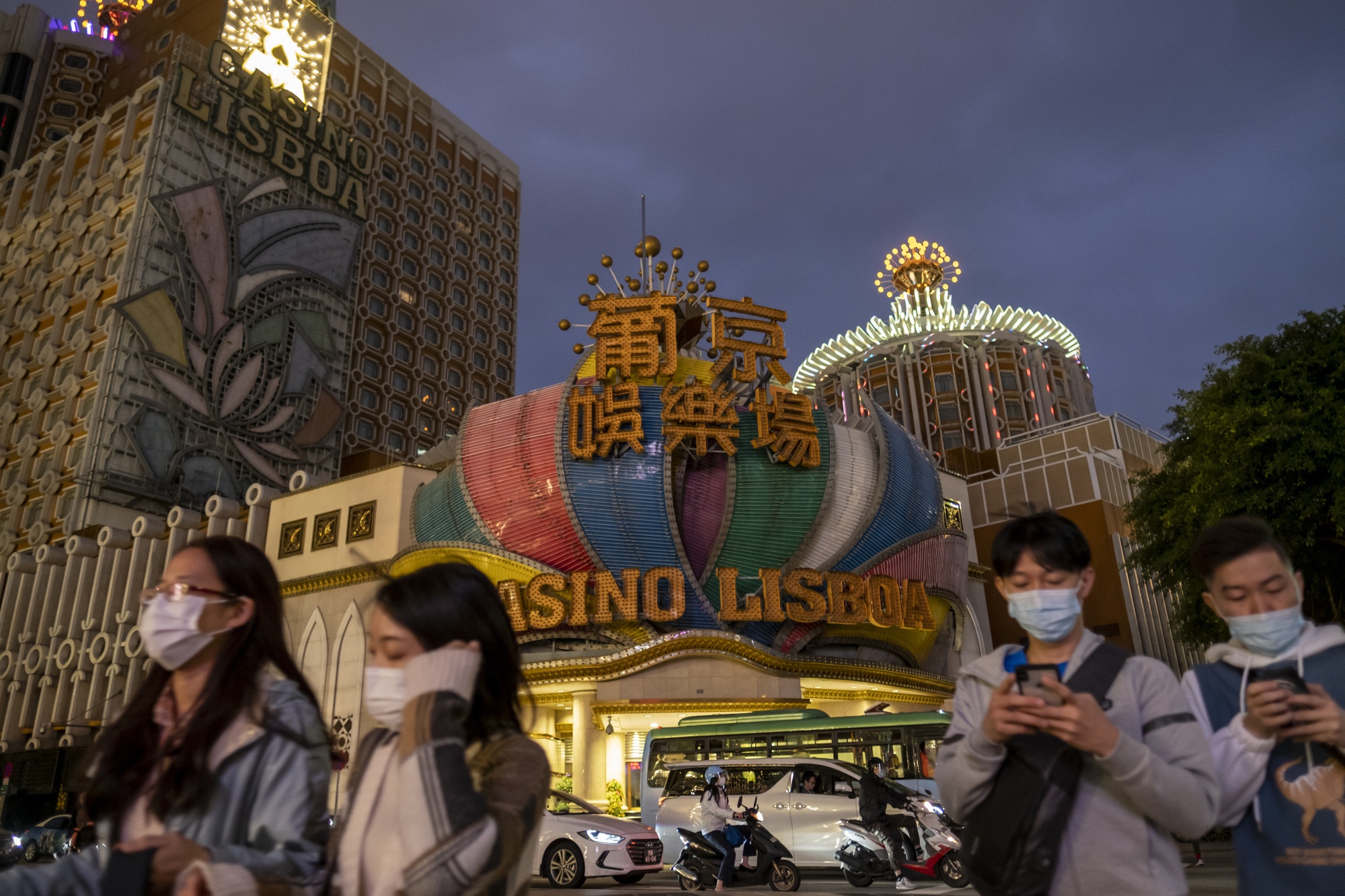 Pedestrians wearing face masks pass the Casino Lisboa in Macau. Photographer: Justin Chin/Bloomberg Weeks into the epidemic, so much about the virus remains unknown that scientists don't rule out the possibility that two-thirds of the global population eventually could become infected. Much of the world is already feeling the economic effects. Macau casinos have closed their doors, and as Chinese travelers stay home, revenues are falling at New York hotels, Australian wineries and Fendi stores in Milan. The worst may be yet to come, as the full effects of supply chain disruption start to kick in. Some of this economic activity will bounce back later in the year. Richard Haas, the president of the Council on Foreign Relations in New York, sees a more lasting impact, however, on Chinese politics. Political legitimacy in China, he notes, is predicated largely on economic performance. In return for rising living standards, citizens give up personal and political freedoms. That bargain is now fraying. "Desperate people," writes Haas, "can do desperate things." _____________________________________________________
Like Turning Points? Subscribe to Bloomberg All Access and get much, much more. You'll receive our unmatched global news coverage and two in-depth daily newsletters, The Bloomberg Open and The Bloomberg Close. Leap ahead of the competition: Get the news and ideas shaping global markets every morning with Bloomberg Surveillance. Bloomberg's Jon Ferro, Tom Keene, and Paul Sweeney are your go-to source for the latest on the economy, finance and international relations. Subscribe now via Apple Podcasts, Spotify or wherever else you listen. Download the Bloomberg app: It's available for iOS and Android. Before it's here, it's on the Bloomberg Terminal. Find out more about how the Terminal delivers information and analysis that financial professionals can't find anywhere else. Learn more. | 


Post a Comment