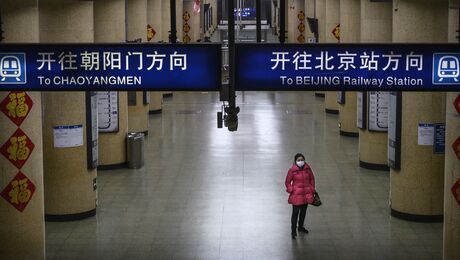
Keen to preserve social stability, and with it the Communist Party's control, China's leaders have moved swiftly at home to change the narrative on the coronavirus from "slow to respond" to "we are fighting this together."
Rallying songs are populating state media. Officials speak in terms of a great battle and China's history of triumphing over adversity. They've cordoned off a chunk of the country to contain the virus (nearly 25,000 confirmed cases, 490 deaths), building hospitals from scratch and sending in vast medical crews.
It's not just the internal politics that China has to get on top of. There's defusing the narrative overseas that its early reactions were slow, suspicious, and lacking transparency. Because it must limit the damage to its economy.
While China needs to keep large parts of itself closed, it needs the rest of the world to stay somewhat open. It has been leaning on smaller states to limit their travel bans and keep goods moving.
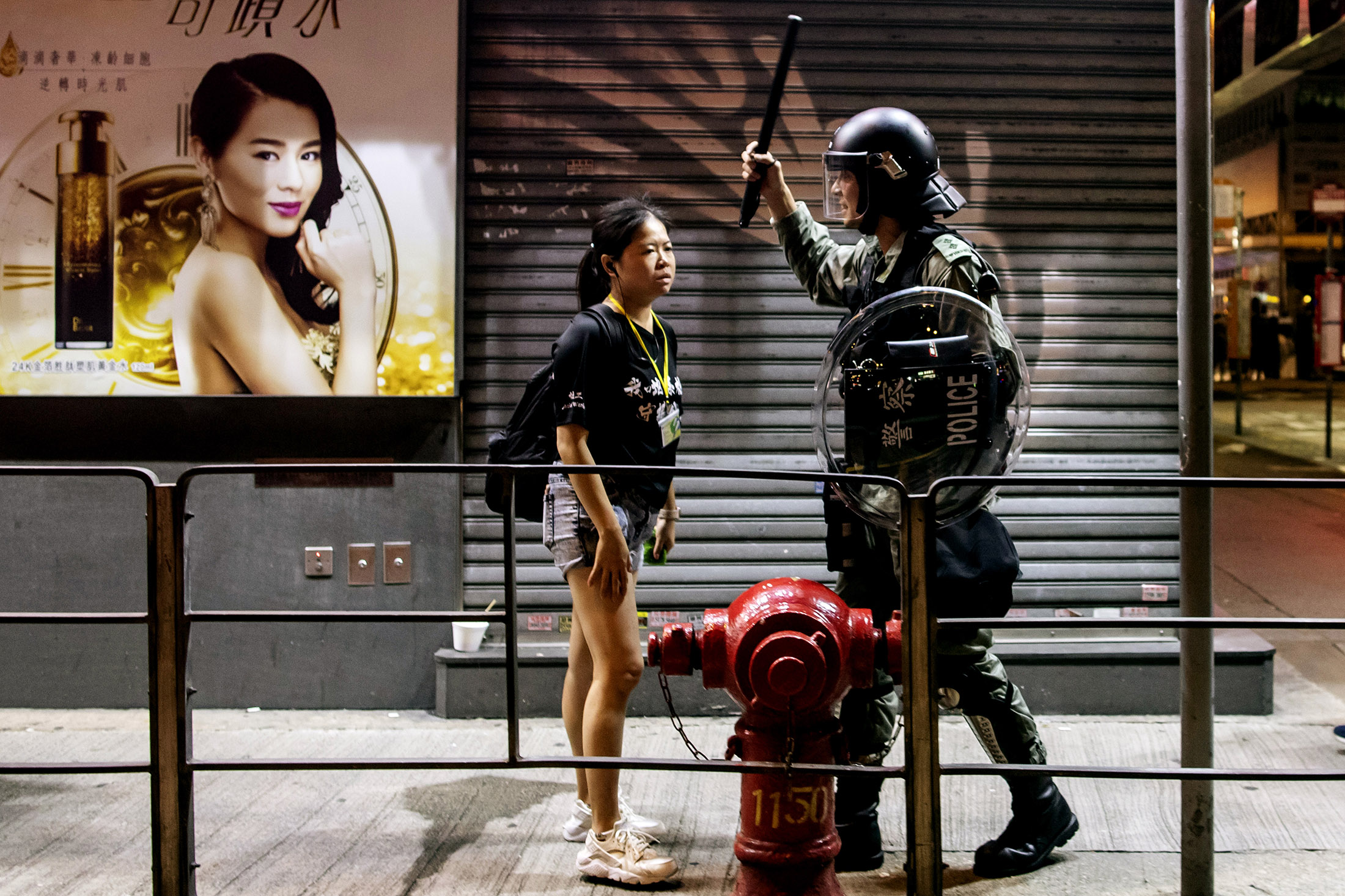
We see Indonesia hastily scrapping a plan to halt Chinese food imports. Pakistan cancels but then quickly resumes flights to China. Hong Kong is keeping some border traffic open despite big protests.
And Cambodian Prime Minister Hun Sen is going today to China, investment from which has benefited his country. He even wanted to visit Wuhan (Beijing politely pointed out that would be too risky).
Even so, Beijing has struggled to get bigger Western economies to ease travel curbs. Convincing the public at home may be easier than convincing skeptical governments abroad.
— Rosalind Mathieson




Post a Comment