| The U.S. says China continues to exclude top health experts from joining the WHO delegation studying the coronavirus, a number of Chinese companies are issuing bonds to fighting the virus outbreak and BP pledged to be carbon neutral by 2050. Here are some of the things people in markets are talking about today. Top U.S. health experts are keen to join in when it comes to helping curb the coronavirus outbreak in China. But the group says they still have no answer on whether they'll be allowed into the country, even after offering for weeks to send in the front-line disease experts. "We haven't been invited yet," Nancy Messonnier, director of the CDC's National Center for Immunization and Respiratory Diseases, told reporters Wednesday. U.S. officials have repeatedly raised the Chinese non-response, pleading to get access on the ground. This latest offer by the U.S. would have experts from the CDC and the National Institutes of Health join an international delegation led by the World Health Organization, which saw an advance team arrive in China on Monday, with more members scheduled to arrive in the coming days. A spokesperson for the WHO declined to comment on the status of the U.S. experts. Meanwhile, China is rushing a flurry of patient studies to identify the most effective life-saving treatments for people sickened by the novel coronavirus. Here's the latest on the virus developments as they break. Asian stocks were primed to add to gains for global equities as optimism grew the world economy can recover from the impact of the coronavirus, which showed signs of a slowdown in the rate of spreading. Treasuries retreated, and futures were higher in Tokyo, Sydney and Hong Kong, indicating regional shares could be heading for a third day of gains. The S&P 500 Index earlier rose to an all-time high as China's Hubei province reported the lowest number of new virus cases this month and suspected infections on the mainland declined. Crude oil advanced, and the euro tumbled to the lowest since 2017. Meantime, Greek bonds rose, pushing the yield on 10-year debt below 1% for the first time. Chinese companies are flocking to issue new bonds in the name of fighting the coronavirus, taking advantage of a policy easing by Beijing to mobilize financial resources to contain the nation's worst public health crisis in 17 years. But a closer look at the latest boom of the so-called "anti-epidemic bonds" shows that the borrowers will use the bulk of the proceeds for rolling over old debt, instead of directly funding efforts to get the epidemic under control. The frenzied rush to raise funds betrays the huge pressure on Chinese firms to secure refinancing as a weakening economy, now hit further by the epidemic, heightens the risk from an expanding pile of corporate debt. Since late last month, top regulators from China's central bank to the country's securities watchdog and economic planning agency have rolled out schemes collectively known as the "green passage" that encourages bond financing for the fight against the deadly virus. Companies either hit by the epidemic or those involved in the campaign to contain it qualify for applying for such bond sales, with regulators pledging to expedite and streamline the approval process. On the non-corporate side, some of the world's major bond funds are rekindling their love for Chinese government debt, as an unexpected rally in recent weeks took the 10-year yield to the lowest level since late 2016. Hong Kong's biggest landlords have begun to slash rents for their commercial tenants as retailers struggle amid the spreading coronavirus. Sun Hung Kai Properties, the city's largest developer by market value, will reduce rents for February by 30% to as much as 50% for some of its mall tenants to help them ride out the impact from the disease, the company said in a statement Wednesday. Wharf Real Estate Investment announced a similar move for its Harbour City shopping center, dropping this month's rents by half, Apple Daily reported. Retailers in Hong Kong have been under immense pressure since last year's anti-government protests, which oftentimes turned violent and brought the city to a halt. Retail sales slumped 19% in December, the 11th straight monthly decline, latest data from the government show. The increasing number of confirmed coronavirus cases is keeping most people off the streets, resulting in greatly reduced foot traffic. All eyes are on Exxon and Chevron, after BP pledged to be carbon neutral by 2050. The decision deepens the divide between major European and American oil producers on climate change, increasing the pressure for others to do more. The U.S. supermajors have only committed to reducing greenhouse gases from their own operations. BP on Wednesday followed Royal Dutch Shell and Equinor in pledging to offset the impact from the fuels they sell. Known as Scope 3, the emissions from cars, homes and factories are responsible for 90% of fossil fuel pollution. The growing outcry against human-made global warming is increasingly making its way into mainstream business and investment strategies. As for Exxon and Chevron, they both agree with the goals of the Paris Agreement, support a carbon tax and are committed to cleaning up emissions from their vast network of wells, refineries and pipelines. They joined the Oil and Gas Climate Initiative, and they even lobbied against President Trump's plan to roll back Obama-era emission standards. But the fundamental difference with European peers is that neither has any plan to allocate a chunk of their multibillion-dollar capital budgets toward proven low-carbon energy sources where they have no competitive advantage. What We've Been Reading This is what's caught our eye over the past 24 hours. And finally, here's what Tracy's interested in this morning There's long been an element of mistrust in China's official economic numbers. That's one of the reasons people like looking at alternative Chinese data (another reason being that alternative data can come out much more frequently than official numbers). With the coronavirus outbreak, those alternative numbers are getting more and more attention. 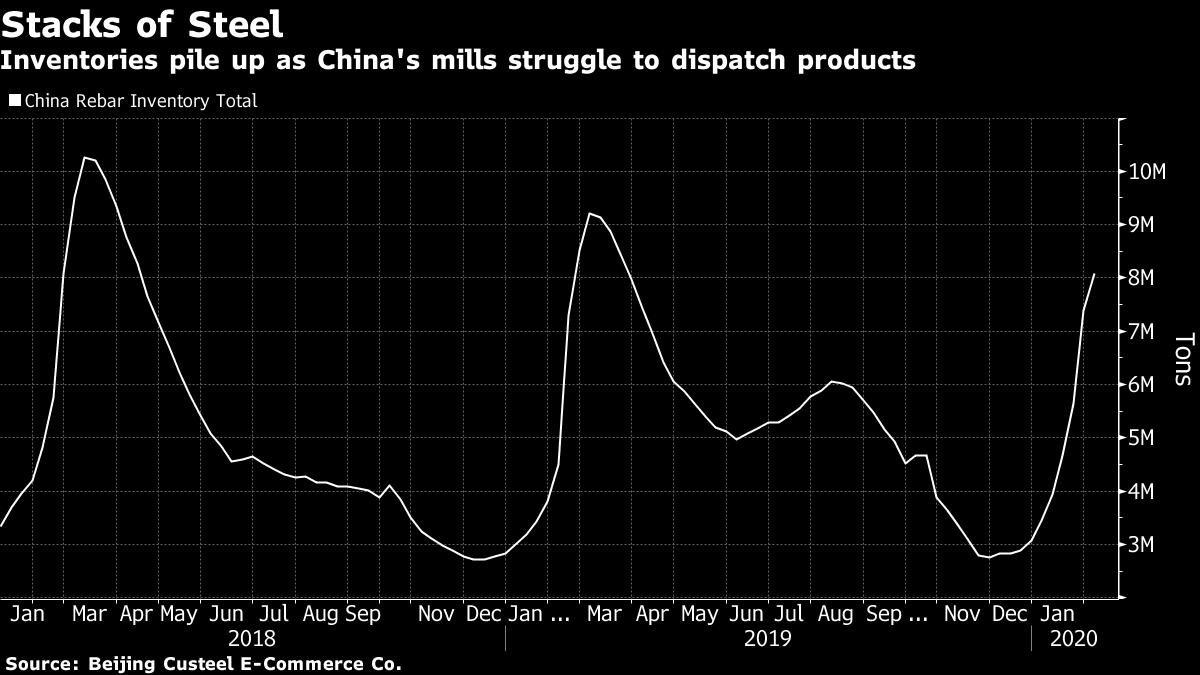 For example, analysts at Morgan Stanley have been trying to gauge the hit to production by tracking pollution levels in city centers. You can look at commodities stockpiles, like China's inventories of rebar (now at the highest level for early February since 2012). Some analysts have been looking at Tom Tom's traffic data, which shows current congestion levels against a baseline for cities including Shanghai, Beijing and Wuhan (unsurprisingly, congestion looks to have been quite light -- even as businesses supposedly got back to work this week). Standard Chartered has been looking at the Baidu Migration Index, which shows less than a third of migrant workers have returned to their work places as of Feb. 10. Most of these indicators show some sort of deviation from the norm for this time of year, which isn't unexpected given the disruption caused by the epidemic. But it will be really interesting to compare these alternative data sources as China releases more official economic numbers for the virus-affected period. You can follow Bloomberg's Tracy Alloway at @tracyalloway. The best in-depth reporting from Asia Pacific and beyond, delivered to your inbox every Friday. Sign up here for The Reading List, a new weekly email coming soon. | 


Post a Comment