| Welcome to your morning markets update, delivered every weekday before the European open. Good morning. China makes more moves to shore up its economy, virus fears are showing few signs of abating and the U.K. will set out its aims for its future ties with the EU. Here's what's moving markets. China's Response China has pledged the roll-out of more effective monetary stimulus policies to counter the impact of the new coronavirus on its economy, including a move to cut rates on one-year loans to support the banking sector. The stimulus measures China pursues will be essential for the direction of monetary policy across the world and for the fortunes of all the economies and industries that have been bruised globally by the hit the virus has dealt to factories, tourism, shipping and commodities. Emerging-market traders, too, will be crossing their fingers that China's steps are indeed effective. Virus Fear Fears about the virus itself are showing few signs of abating. Travelers who have been trapped on cruise ships for the past couple of weeks are starting to head home and, as has to be expected in the midst of this kind of outbreak, are fueling fears of potential further contagion in all the countries where they're bound. There's a similar level of fear in markets. Traders are sufficiently fixated on the virus that they are piling into hedges to guard against potential Federal Reserve rate cuts later in the year, the attraction of Treasuries is undimmed and the euro's vulnerability to global shocks was made abundantly clear. The dollar, by the way, has started the year in rude health. Negotiations The U.K.'s chief Brexit negotiator is ready to outline the goals the country has for its future relationship with the European Union on Monday. Prime Minister Boris Johnson's office has said the U.K. doesn't want special treatment but a deal similar to those the EU has struck with other countries. The red lines set by both sides will be closely monitored. Trade deal or not, British consumers are going to face higher prices for any goods coming from the EU, according to a retail industry group. And this all starts at a time when Johnson's government faces a stern test domestically with a new chancellor and very high interest in whether that's going to lead to the spending taps being turned on. IPO Surge This could be Europe's busiest week for initial public offerings this year, as five companies start trading. If the floats go according to plan, they could raise as much as $686 million between them. Norwegian oil firm BW Energy Ltd., due to list on Wednesday, had to slash its IPO price and offer size and extend its bookbuilding period twice. Two investment trusts will come to market in London, but the most interesting deal comes from Paris with the debut of Paulic Meunerie SA, which makes wheat flours not just for human consumption, but also to feed insects raised for protein. Coming Up… Asian stocks had a mixed start to the week, with China's steps to shore up its economy boosting domestic stocks and the yuan, while shares in Japan's market slipped on weak GDP figures. European stock futures are pointing to a positive open. Eurozone finance ministers will meet to discuss economic growth targets and, though Monday will be light on data, this week will get busier with a raft of hard numbers in the U.K. that will make clear whether a post-election bounce occurred, as well as a meeting of G-20 finance chiefs in Saudi Arabia. The U.S. is shut on Monday for Presidents' Day. What We've Been Reading This is what's caught our eye over the past 24 hours. And finally, here's what Cormac Mullen is interested in this morning Institutional fund managers seem content to double down on their bullish euro bets and are shrugging off its slide to a near three-year low against the greenback. Net long positions from asset managers in the euro-dollar hit a record high last week just as the currency slumped to its lowest since April 2017, according to the latest Commodity Futures Trading Commission data. The euro bulls have been fighting a losing battle so far this year thanks to growing concern over Germany's economy, worries about who will succeed Chancellor Angela Merkel and increasingly dovish expectations about European Central Bank policy. The fact that the dollar has been attracting haven flows amid the spreading coronavirus hasn't helped either. At least the same batch of positioning data shows one positive on that front — hedge funds are turning ever more skeptical of U.S. dollar strength. With the Bloomberg Dollar Spot Index up almost 2% so far this year, leveraged funds' net-long positioning for the greenback has fallen to its lowest since May 2018. 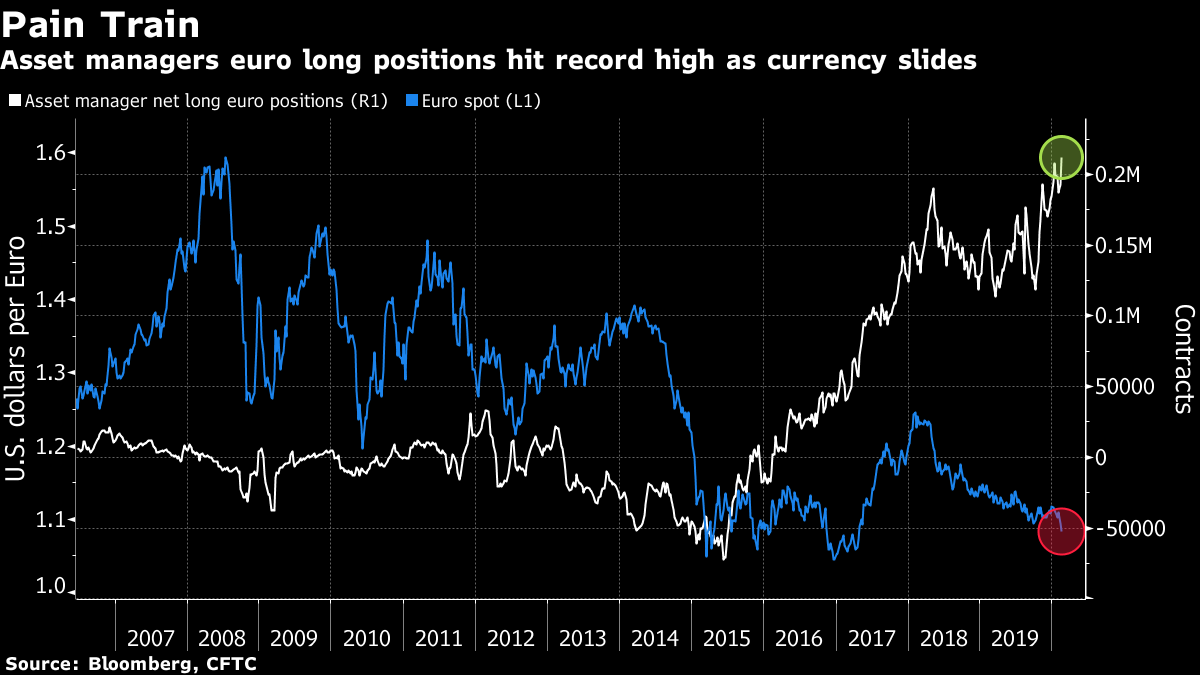 Cormac Mullen is a cross-asset reporter and editor for Bloomberg News in Tokyo Like Bloomberg's Five Things? Subscribe for unlimited access to trusted, data-based journalism in 120 countries around the world and gain expert analysis from exclusive daily newsletters, The Bloomberg Open and The Bloomberg Close. | 


Post a Comment