| Welcome to your morning markets update, delivered every weekday before the European open. Good morning. Coronavirus cases surge, the euro is testing lows and the U.K. government is set for a reshuffle. Here's what's moving markets. Cases Surge Asian stocks dipped on Thursday as traders digested the news that the number of coronavirus cases is much higher than originally reported after patients tested using a different method are included. After much supposition in recent days that authorities were getting the virus under control, this surge in diagnoses could darken sentiment. China has removed officials heading the province and city at the center of the outbreak and markets will have to reset their expectations around how long the process of getting control of the disease will take. Euro Lows The clearest indicator yet of the concern investors have about the health of the European economy emerged as the euro fell to its weakest level against the dollar since 2017. Jitters are growing that Germany is headed for recession due to the lingering impact the coronavirus looks set to have on the health of global economy, with Deutsche Bank now expecting contraction in the fourth quarter of 2019 and little to be excited about in the first quarter of 2020. A slump in euro area industrial output, a lingering succession battle at the top of Germany's government and fears on the health of Italy's economy are unlikely to brighten that picture. Oil Demand Oil prices have been recovering in recent days but the surge in new cases of coronavirus reported in China has caused that rally to run into some turbulence. Even beyond that, risks remain. OPEC has slashed its demand forecast in its monthly report on the oil market, primarily due to the shutdowns caused by the virus outbreak hitting demand for fuel in China. The market is still awaiting a full response from its main producers, though Russia's biggest oil companies voiced support for the idea of an output cut to prop up crude prices, so the prospect of OPEC and its partners reaching a deal seems to have been boosted. Reshuffle It promises to be another closely scrutinized day in British politics, with the outcome of a wide cabinet reshuffle due to be announced. There is an expectation of a number of changes, though most of those with the top briefs are set to remain, including chancellor, foreign secretary and, following confirmation that the huge HS2 high-speed rail project will proceed, transport secretary. Those watching will be looking at whether Prime Minister Boris Johnson will use the reshuffle to promote pro-EU ministers in order to heal the divisions that have plagued the country's politics in recent years. Coming Up… On the earnings front, we've already had numbers from plane manufacturer Airbus SE, which beat earnings expectations, and Swiss lender Credit Suisse Group AG, which posted a fourth-quarter beat on net revenue but a miss on net income. Later we'll get an update from Barclays Plc, the first of the U.K.'s big lenders to report on the state of play following the December election. U.S. inflation data will arrive in the European afternoon, more European Central Bank policymakers are scheduled to speak and South African President Cyril Ramaphosa is to give his state of the nation address. What We've Been Reading This is what's caught our eye over the past 24 hours. And finally, here's what Cormac Mullen is interested in this morning This year's slide in the euro is sending former bulls running for cover. The common currency fell to the weakest since 2017 versus the dollar Wednesday, and to levels last seen in 2016 against the Swiss franc. Three-month risk reversals for the euro-dollar — a gauge of bullish versus bearish expectations — have slumped from a two-year high reached at the beginning of February, according to data compiled by Bloomberg. This suggests traders are switching from making bets on a rebound and are looking instead for protection against further declines. Growing concern that Germany could be headed for recession amid the coronavirus outbreak, worries about a successor to Chancellor Angela Merkel and a dovish European Central Bank have all weighed on the currency. Money markets are now pricing in around a six-basis-point rate cut by the end of the year, versus a zero chance of easing a month earlier. Still, despite traders running for the hills, economists seem to be sticking with their positive view on the euro at least for now. Their median estimate in a Bloomberg survey is for the common currency to rise to $1.14 by the end of the year, a gain of almost 5%. 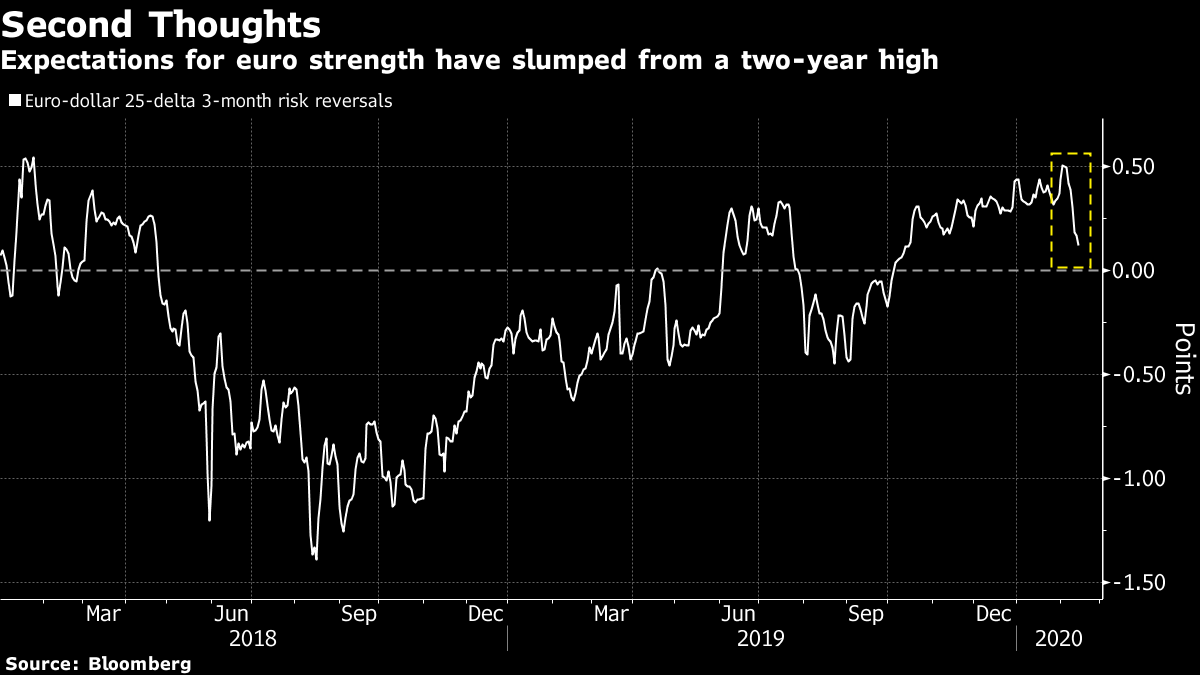 Cormac Mullen is a cross-asset reporter and editor for Bloomberg News in Tokyo. Like Bloomberg's Five Things? Subscribe for unlimited access to trusted, data-based journalism in 120 countries around the world and gain expert analysis from exclusive daily newsletters, The Bloomberg Open and The Bloomberg Close. | 


Post a Comment