| Until about six months ago, Taiwan President Tsai Ing-wen's electoral prospects looked bleak. As a result of policy missteps, she squandered much of the support of the island's restless youth, its disaffected middle classes and struggling small business owners who handed her a landslide in 2016. That coalition, as I wrote in a dispatch from Taichung, a southern city favored by graffiti artists and rap singers with anti-mainland agendas, was animated by economic worry and suspicion of Beijing. Then mass demonstrations erupted in Hong Kong. The hard-line response by local authorities and their Beijing masters has contributed to a remarkable turn in political fortunes for Tsai (below) ahead of this weekend's elections for the presidency and national legislature. 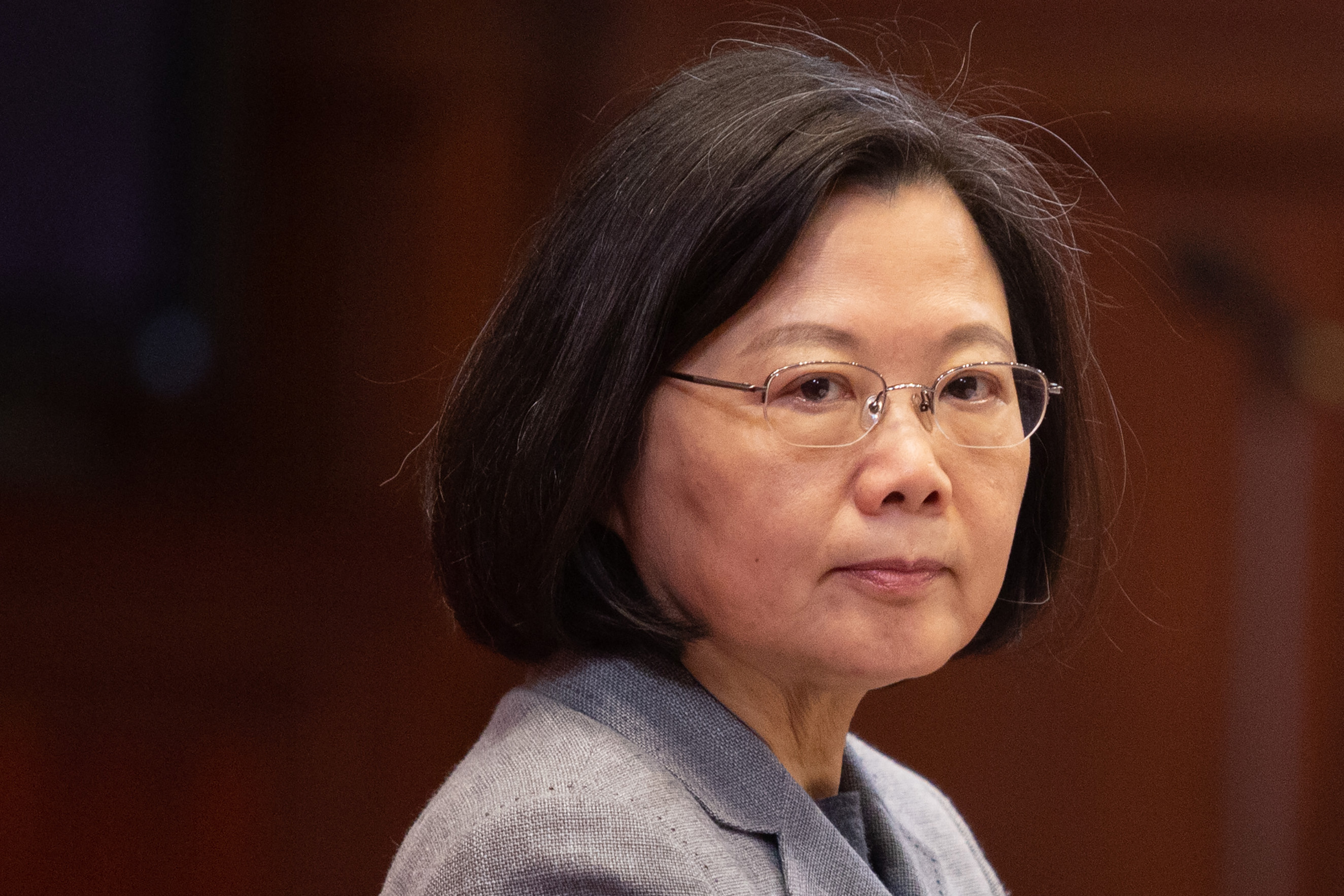 This week in the New Economy Tsai's campaign played up the chaos in Hong Kong. The crisis allowed her Democratic Progressive Party to portray itself as defender of the island's representative government against a Kuomintang party that is supposedly ready to cut deals with Beijing. Tsai's Kuomintang predecessor, Ma Ying-jeou, made himself unpopular by ramming through cross-strait trade deals and allegedly hollowing out Taiwan's economy. Tsai's prospects have also been bolstered by surprisingly vigorous economic growth despite the U.S.-China trade war. In fact, trade uncertainty has persuaded some Taiwan electronics makers to move production back home from the mainland. Meanwhile, Tsai's Kuomintang challenger, Han Kuo-yu (below), has been modulating his pro-Beijing stances as the election campaign proceeded. 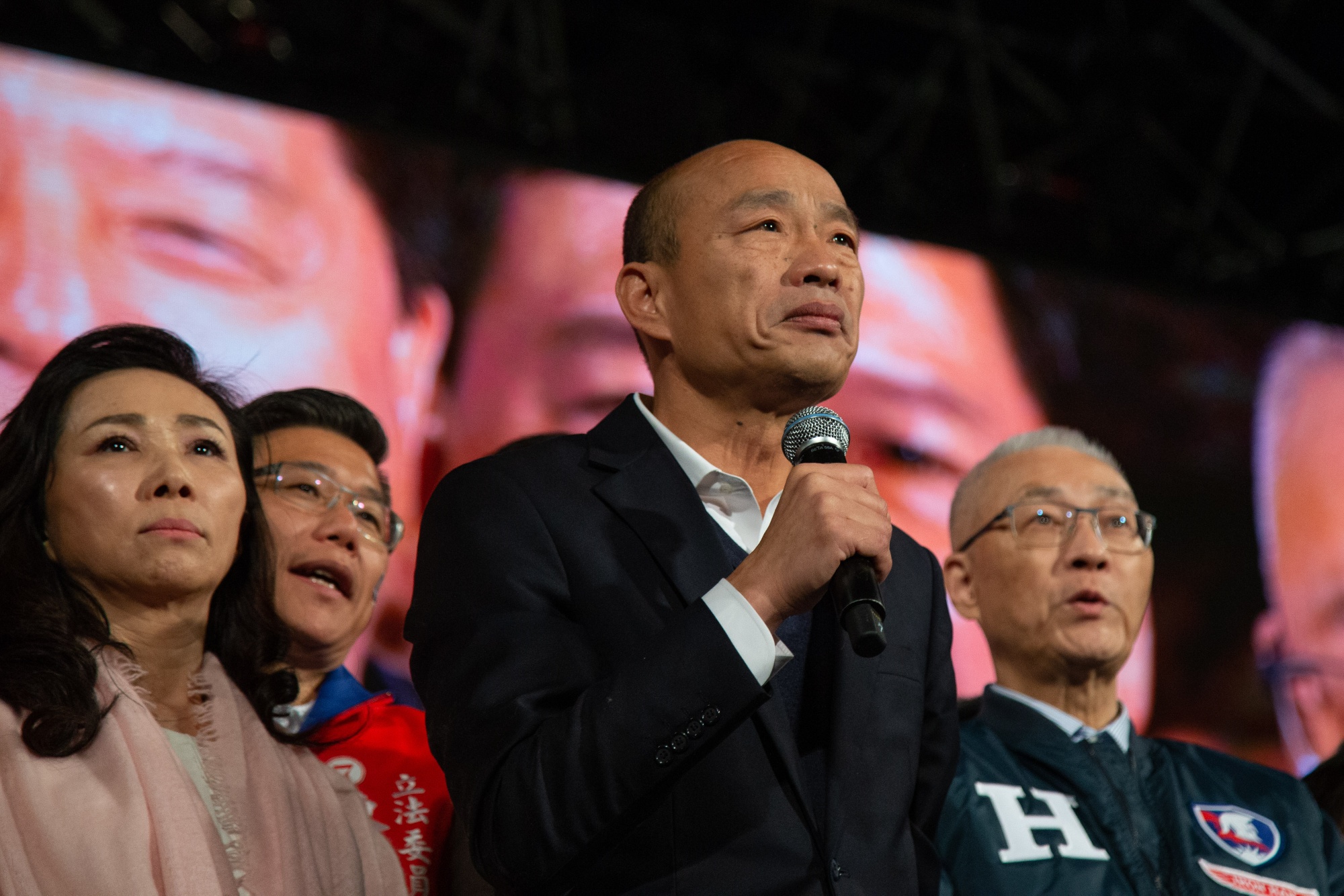 An election win for Tsai would expose the utter failure of the mainland's pressure tactics during Tsai's presidency (and may trigger a Beijing backlash). For the past four years, China has been poaching Taiwan's diplomatic partners, blocking tour groups from the mainland, conducting military exercises on the island's doorstep and engaging in political influence operations. Last year, Chinese President Xi Jinping made clear Beijing saw no future for Taiwan outside of the "one country, two systems" framework it used to retake Hong Kong from the British. That formula, however, is a non-starter in Taiwan. While Xi could choose to respond to pro-democracy protests in Hong Kong and pro-independence agitation in Taiwan with more flexible policies, don't count on it. A more likely scenario is that he turns the screws even harder. That outcome could further ratchet up tensions between Beijing and Washington. The Trump administration has demonstrated its support for Taiwan through arms sales, by easing restrictions on high-level official contacts and by giving Tsai freedom to travel in America on stopovers. The biggest risk for the new economy in 2020 may well be tensions over Taiwan. China's slow walk What should we make of China's reluctance to announce details of the "phase one" trade deal with the U.S.? China confirmed that Vice Premier Liu He will travel to Washington to sign the deal next week. But a Chinese government spokesperson said nothing of the $200 billion worth of U.S. goods and services Beijing supposedly agreed to import. Washington's perennial complaint is that China rarely follows through on trade commitments. But as Turning Points has been arguing, there's less to this partial deal than meets the eye. It will do nothing to rectify America's yawning current account deficit, which is the ostensible reason why Trump launched the trade war in the first place. Economist Stephen Roach points out that chronic U.S. trade deficits have very little to do with the terms on which goods and services are exchanged. "What US politicians don't admit (or understand) is that the overall trade deficit is an outgrowth of America's chronically low net domestic saving rate of just 2.4% of GDP in 2018—well below the 6.3% average in the final three decades of the twentieth century. Lacking in savings and wanting to invest and grow, the U.S. must import surplus savings from abroad, running a chronic current-account deficit to attract foreign capital." Smaller U.S. trade deficits with China will result in larger deficits with other trading partners. U.S. President Donald Trump hasn't fixed the problem; he has merely shifted it elsewhere. Scaling back tensions At the recent New Economy Forum in Beijing, a well-connected Chinese business executive set out an optimistic scenario for scaling back tensions in Hong Kong. It began with Beijing appointing a hard-liner to manage Hong Kong affairs. Such an individual would be expected to launch an even harsher assault on pro-democracy protesters. Instead, this official would have the political latitude to reach compromise, including on political reform. It's too early to say how China's new man in Hong Kong, Luo Huining (below), will approach his mission. Certainly, Luo has a reputation as a tough enforcer. He cleaned up a corruption mess in Shanxi province and, earlier, cracked down on Tibetans in Qinghai province. 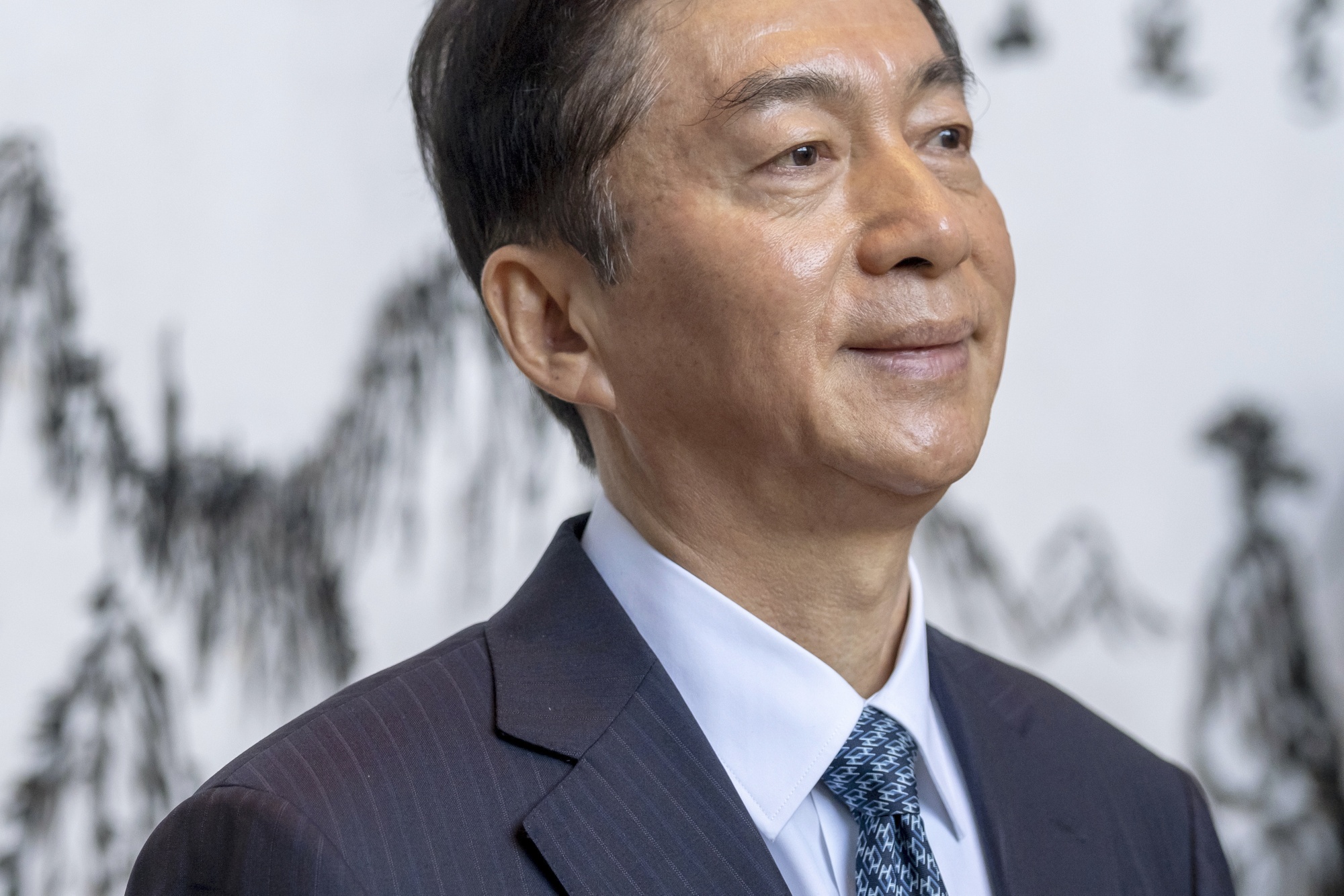 Some fear he will precipitate an even bigger crisis by insisting that Hong Kong authorities force through a controversial national security law. Others see hope in Hong Kong's limited local democracy, which produced a big victory for pro-democracy candidates in recent district council elections, and the recent flourishing of civil society groups. The political scientist Sebastian Veg, writing in his blog, said "there is still an expectation that the narrow path opened up by universal suffrage can offer a way toward further de-escalation, even though a full return to civil peace may not yet be within reach." ______________________________________________________
Like Turning Points? Subscribe to Bloomberg All Access and get much, much more. You'll receive our unmatched global news coverage and two in-depth daily newsletters, The Bloomberg Open and The Bloomberg Close. The Bloomberg Power Players Summit, held on professional football's biggest weekend, will feature CEOs, dealmakers and world-class athletes discussing the future of the multibillion dollar global sports industry. Business leaders from the Miami Dolphins, San Francisco 49ers, Dallas Mavericks and Boston Bruins will join executives from companies including Pepsico and DAZN at Soho Studios in Miami on Friday, Jan. 31. Register here. Download the Bloomberg app: It's available for iOS and Android. Before it's here, it's on the Bloomberg Terminal. Find out more about how the Terminal delivers information and analysis that financial professionals can't find anywhere else. Learn more. | 


If I see a good post, you will not go without praising me, because every word written in the post you have written is very thoughtful, your way of writing is very beautiful and your views are also very good. This is a commendable post, as much as this post is praised, it is less, you should keep writing more beautiful posts in your life.
ReplyDeleteGurugram Call Girls
Manesar Escorts Service
Guurgram Call Girls