A twist in the Mideast drama, investors brace for a busy week, and corporate headlines roll in. SimmeringThe situation in the Middle East took an unexpected turn this weekend when Iran admitted it mistakenly shot down a Ukrainian passenger jet carrying 176 people. The country has since witnessed two nights of protests as its leadership is put on the back foot again after only recently quelling nationwide protests. Videos posted on social media, which couldn't immediately be verified by Bloomberg News, showed clashes between protesters and riot police, trails of blood on a main street, chants in opposition to Supreme Leader Ayatollah Ali Khamenei and calls to rid the country of the Islamic Revolutionary Guards Corps. Oil was steady after the biggest weekly drop since July. Busy weekWith events in the Middle East proving so difficult to second-guess, investors will be glad of some distractions this week, and there will be plenty. The U.S. and China remain on course to sign an initial trade accord on Wednesday, and since that is apparently a done deal, thoughts are starting to turn to boring stuff like enforcement. More interesting will be fourth-quarter earnings season, which gets under way in the coming days starting with the big banks. Corporate profits overall likely dropped for a second straight quarter at the end of 2019, dragging down annual earnings growth to the smallest in three years. But a lot of investors are fine with that. Other items this week: Brexit legislation meanders through U.K. Parliament and there will be another Dems debate. Yay. Corporate headlines galoreA host of corporate headlines have greeted the week, concentrated especially in the automaker segment. Porsche AG shrugged off widespread industry malaise, reporting record deliveries for last year and predicting that its first all-electric model Taycan will foster further growth in 2020. Speaking of which, shares of Chinese electric-vehicle makers jumped after the government signaled it won't continue reducing subsidies for the industry at the same pace this year. Aston Martin Lagonda Global Holdings Plc is making a last-ditch effort to bring in fresh funding, with billionaire Lawrence Stroll closest to committing. Nissan Motor Co. executives have stepped up contingency planning for a possible split from Renault SA after the whole Ghosn thing, the FT reported. Beyond cars, Woodward Inc. will combine its operations with Hexcel Corp. in an all-stock transaction that gives it a controlling stake in the merged entity, creating one of the world's biggest aerospace and defense suppliers. U.K. regional airline Flybe Group Plc is in crunch talks with the British government for emergency financing. Bullish marketsOvernight, the MSCI Asia Pacific ex-Japan Index climbed 0.9%, with Tokyo closed for a holiday. In Europe, the Stoxx 600 Index had gained 0.1% by 6:00 a.m. Eastern Time as investors showed mild optimism ahead of both the beginning of earnings season and the signing of a partial China trade deal. S&P 500 futures pointed to a higher open, the 10-year Treasury yield was at 1.84% and gold fell. Coming up…A busy week it may be, but Monday will get us off to a slow start. The only data event is the Treasury's monthly budget statement at 2:00 p.m. Eastern Time. We get two talking Fed heads, with Boston Fed President Eric Rosengren speaking at an event at 10:00 a.m., and Atlanta Fed President Raphael Bostic discussing the economic outlook and monetary policy at 12:40 p.m. If you see anything else please give us a call. What we've been readingThis is what's caught our eye over the last 24 hours. And finally, here's what Joe's interested in this morningThese days, there isn't a lot of legwork involved in investing. If I want to invest in the S&P 500, I can log into a brokerage account, type out the letters S-P-Y, and click BUY and that's it. If I want to invest in Brazil, I do the exact same thing, except I type out the letter E-W-Z (the ticker for the iShares MSCI Brazil ETF). I thought about this fact while Tracy Alloway and I were recording the latest Odd Lots podcast, interviewing the one European fund manager who is focused on the Tehran Stock Exchange. Our guest, Maciej Wojtal of Amtelon Capital, talked about all the difficulties involved as a foreign investor (he's based in London). First there's all kinds of sanctions laws to comply with (so that automatically means no U.S.-based investors in his fund). Then you have to figure out how to get money in and out of the country (some banks are sanctioned, others are not). Then of course there's the challenge of getting good data, talking with the companies and so forth. The point is, to invest in Iran takes WORK. Incidentally -- and I had no idea about this -- according to Wojtal, the Tehran Stock Exchange was the best-performing stock market in the world last year, rising nearly 100% in U.S. dollar terms. Wojtal remains incredibly bullish on the market (and you should listen to the episode to hear why), in part because the whole market has a PE ratio of 4, and there's virtually zero foreign money in it. But the point is, it's not just that it's extremely risky (for obvious reasons) but that to achieve those returns requires real effort that goes beyond clicking a different three letter code. Some people have a naive assumption that in markets there's some sort of natural connection between risk and reward. But if there were, an investor could get superior returns just from buying frontier markets and microcap stocks and call it a day. Obviously that's not the case. But Wojtal's experience suggests that risk + work is where the returns may be. 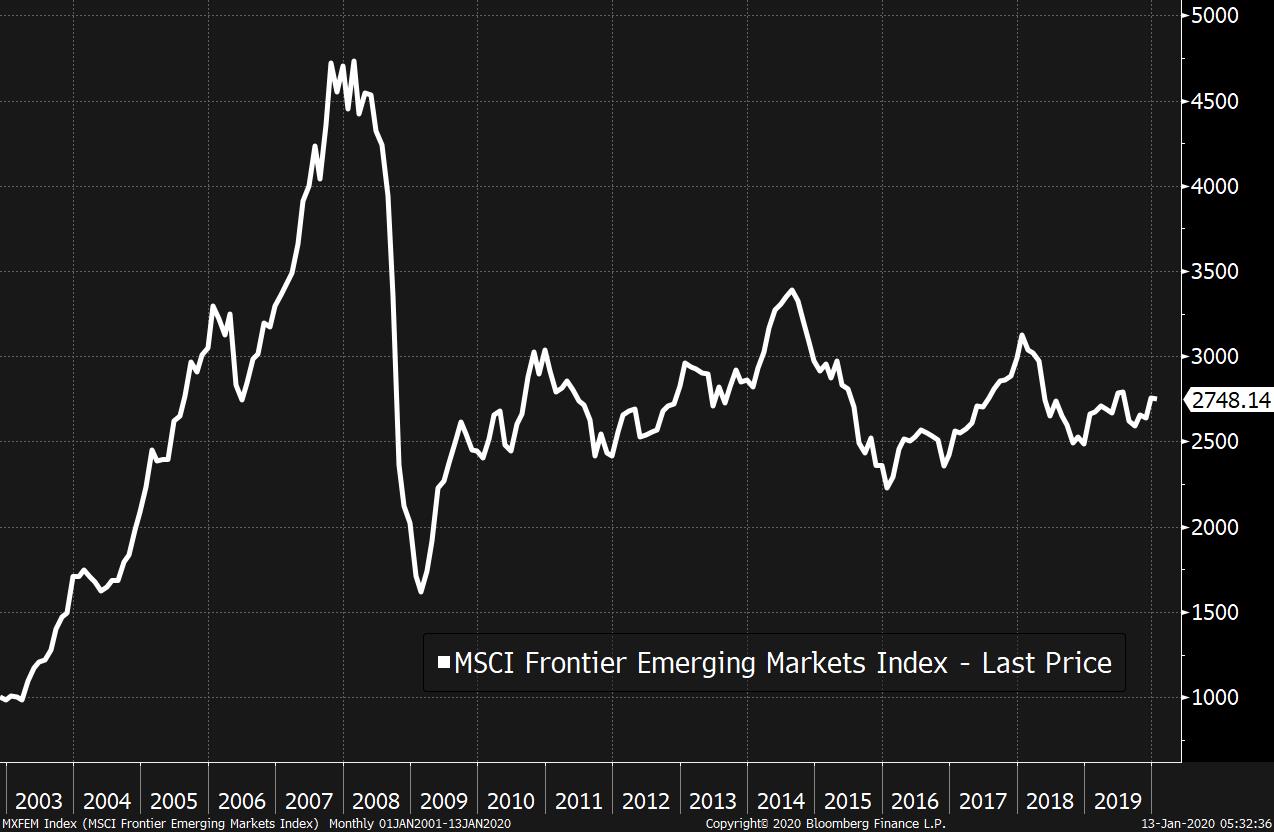 Like Bloomberg's Five Things? Subscribe for unlimited access to trusted, data-based journalism in 120 countries around the world and gain expert analysis from exclusive daily newsletters, The Bloomberg Open and The Bloomberg Close. | 


Post a Comment