This is Bloomberg Opinion Today, a novelization of Bloomberg Opinion's opinions. Sign up here. Today's Agenda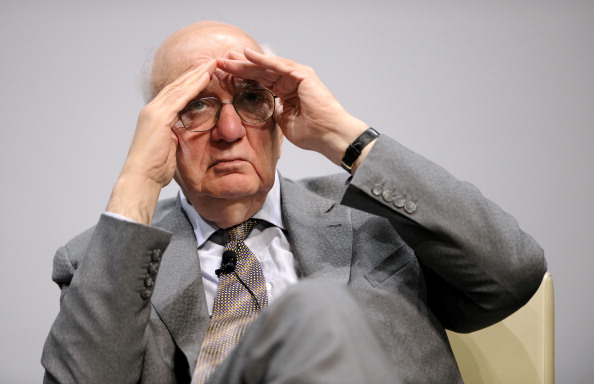 Solutions in Search of ProblemsAs a person whose full-time job is repackaging the work of my betters, I relate to the need to feel useful. But doing something, anything, is not the same as doing the right thing. Some "solutions" are worse than their problems. Take the desire that still exists in many circles to destroy Fannie Mae and Freddie Mac. These government-backed mortgage companies once got misplaced blame for the housing crisis, but they were more victims than perpetrators. And they paid back their government bailout, plus a profit to the taxpayer. Since then, they have quietly gone about their business of helping Americans buy houses at reasonable rates, notes Joe Nocera. And yet for some reason people on both sides of the political aisle still want to wind down or privatize them. Their existence helps make the 30-year mortgage possible, Joe notes, and driving them into the private-company wilderness risks bringing back the profit-chasing that sank them during the bubble. Unlike Fannie and Freddie's general existence, student-loan debt is a real problem. Senator Rand Paul deserves some credit for trying to solve it, but his proposal — letting people take money out of their retirement accounts to pay down debt — has garnered mostly mockery (trigger warning for many, many swears). And it's not a great plan! But its biggest problem is that it accomplishes too little, writes Brian Chappatta. Most importantly, it doesn't touch the affordability crisis that made the debt mountain accrue in the first place. And then there are the necessary solutions that still bring unintended consequences. For example, banks unquestionably needed to be made safer after the financial crisis. But one answer to that problem, a requirement that banks hold more Treasury debt, is now fueling the liquidity problem in the repo market, which greases the skids of the economy, writes Marcus Ashworth. Regulators should maybe rethink this rule, while remembering how solutions can go horribly wrong. No pressure!Paul Volcker, Larger Than LifePaul Volcker, the legendary former Federal Reserve chairman, died Sunday at the age of 92. Everything about him was larger than life: He stood 6'7", chomped huge cigars, and jacked interest rates to unheard-of heights to murder inflation. For all these reasons and more, he became our first rock-star Fed chairman, writes Dan Moss. His recent successors have shied away from that role, and with good reason; it's generally unhealthy to put too much stock in any one policy maker. In his day, though, Volcker certainly earned his star power. It's easy to forget his superpower was making people temporarily very angry for the right reasons. That inflation-cide involved a long, painful recession. His post-financial-crisis regulatory proposals launched an armada of furious bank lobbyists. But these actions bolstered his stature and proved he was the quintessential public servant, writes former Bank of England Governor Mervyn King — even if Volcker once bounced a check to him. Protests Aren't Hong Kong's Biggest ProblemIn case anybody thought pro-democracy protests in Hong Kong might be losing steam, hundreds of thousands took the streets on Sunday to counter that notion. This is not great news for retail and tourism in the city, but these protests aren't Hong Kong's biggest problem, writes Simon Cartledge. Instead, the city's ossified political and economic structures are causing it to rapidly fall behind neighbor and rival Shenzhen. Fixing those will require lengthy and difficult reforms. In the short term, though, there are things Hong Kong can do to boost its economy and cut reliance on wealthy tourists from the mainland, writes Nisha Gopalan. The government could afford some fiscal stimulus, for starters. Further Hong Kong Reading: China's response to U.S. support for Hong Kong protesters exposes its key vulnerability. — Eli Lake Saudi ProblemsAt the end of last week's OPEC+ meeting of oil producers, Saudi Arabia tried to make clear it's serious about punishing nations that violate the group's new agreement to cut oil production. But its chosen method of punishment — pumping more oil to hurt prices — will basically be punishing itself, writes Julian Lee. This is especially true as the kingdom tries to sell the IPO of its state-owned oil company, Saudi Aramco. Saudi Arabia's ambitions for that IPO shrank dramatically after it confronted the reality that investors aren't jazzed about owning a sliver of an oil major run by an authoritarian regime during a climate-change crisis. But the kingdom still clings to the dream of a $2 trillion valuation for Aramco, notes Liam Denning. Given the smaller and narrower float, which relies mainly on local investors, it may soon get its wish. But its meaning will be diminished. Telltale ChartsNew data suggests the manufacturing job market may not be as bad as we first thought in swing states President Donald Trump barely won in 2016, writes Karl Smith. 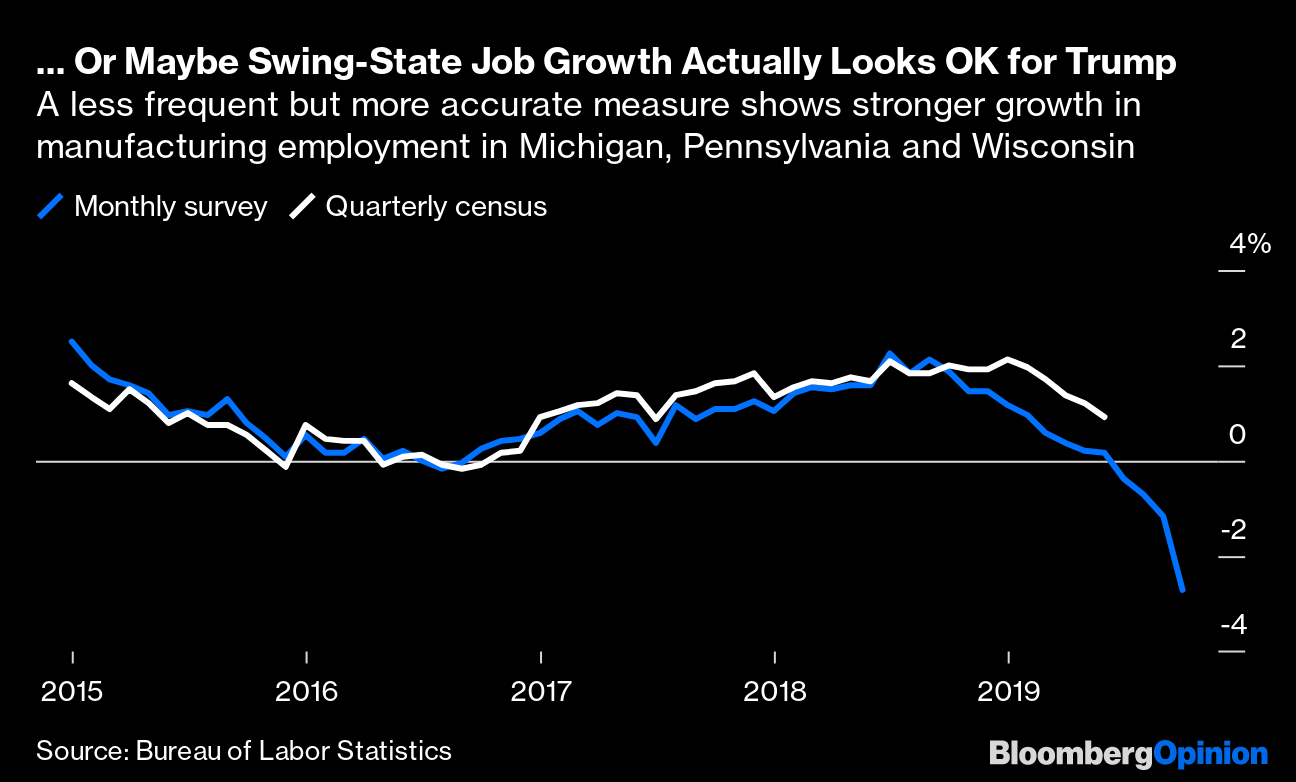 A boom in CEO departures usually coincides with a boom in the economy, writes Stephen Mihm, though it could also signal the top. 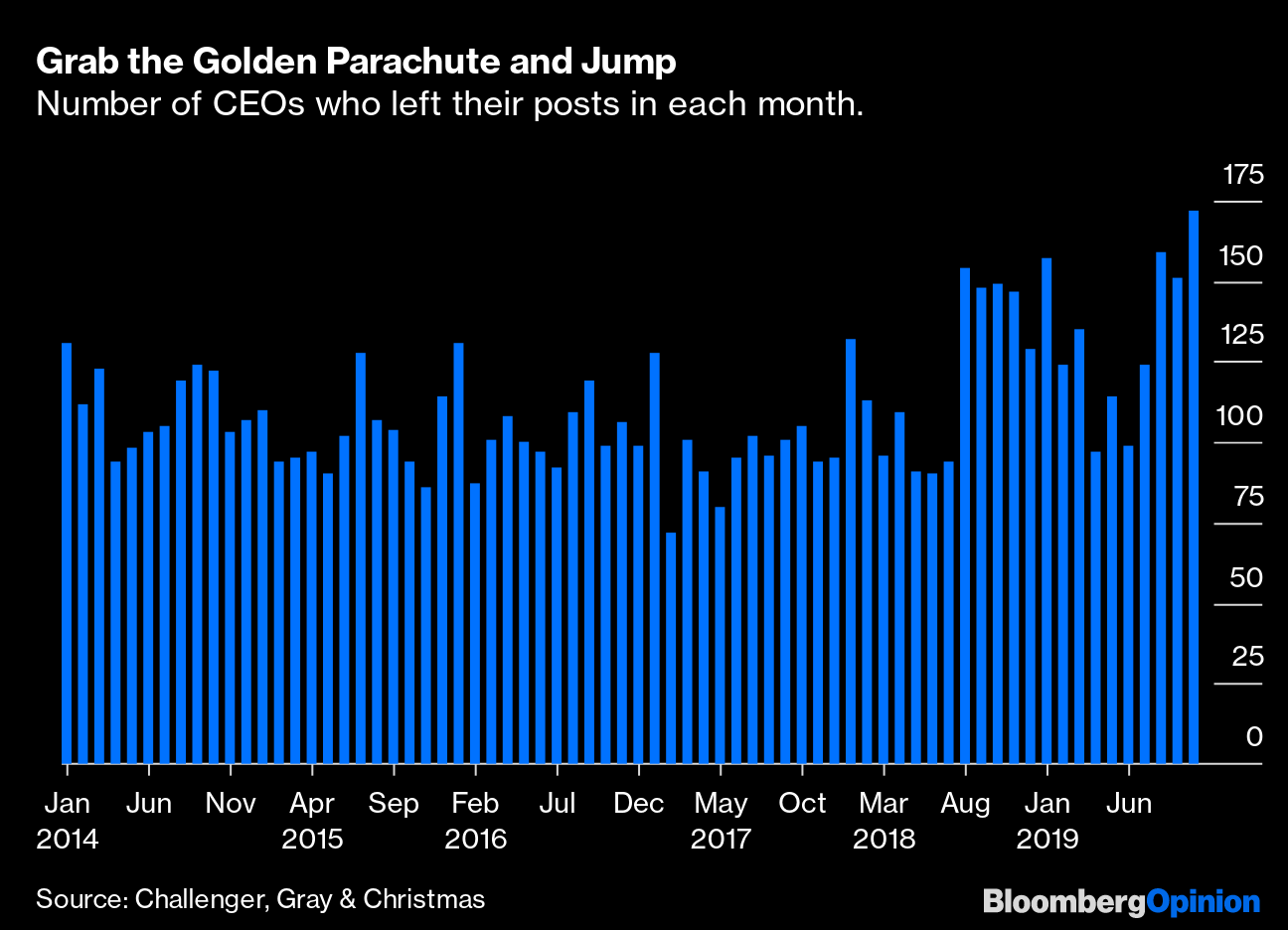 The world's ability to dodge even more catastrophic warming depends on whether China's new power plants will run on coal or renewables, writes David Fickling. 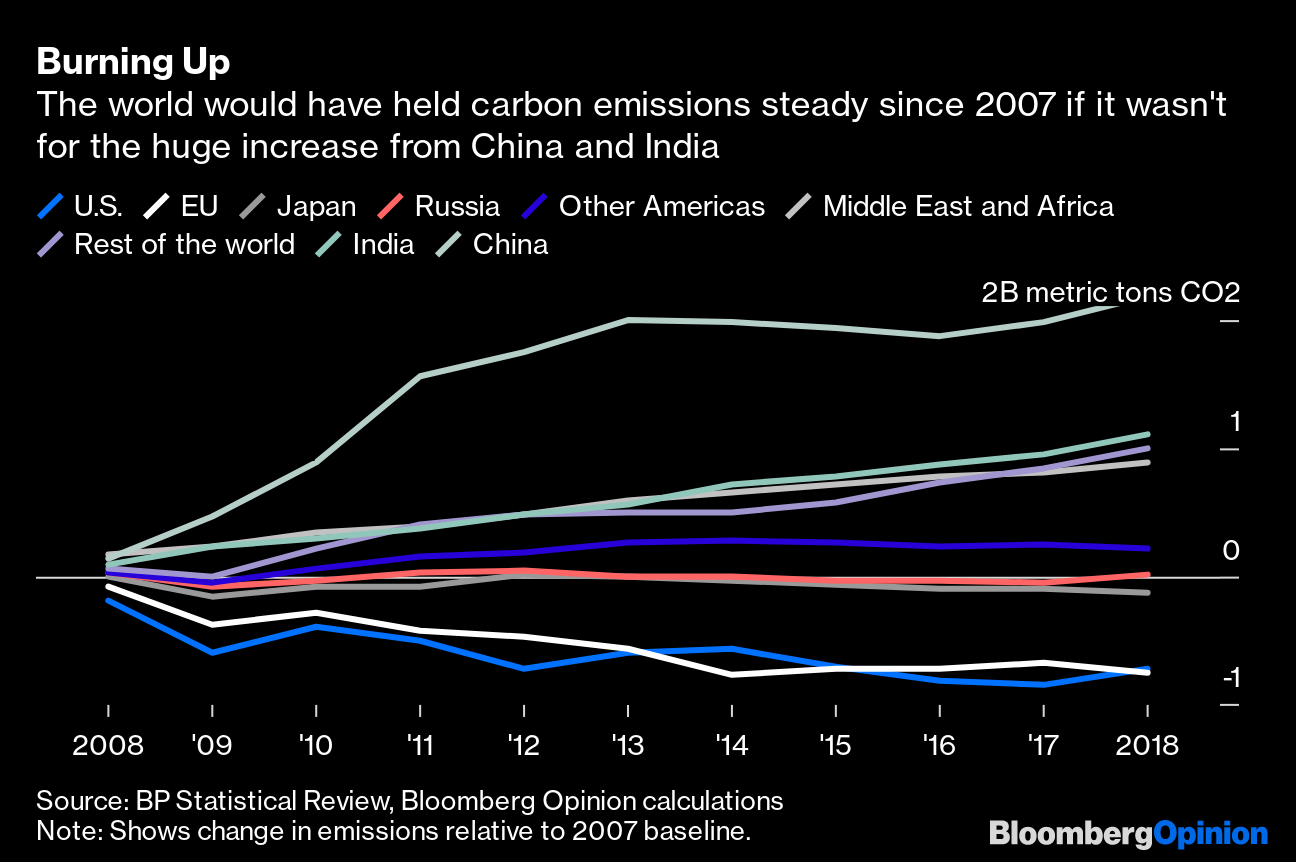 Further ReadingThe Founding Fathers' impeachment views still matter, and we have a very good idea what they were. — Noah Feldman Narendra Modi is just the symptom, not the cause, of India's many problems. — Pankaj Mishra Government intervention helped soybeans become ubiquitous in the U.S.; now it's payback time. — Justin Fox Vladimir Putin's response to Russia's latest doping scandal is telling; he'll sacrifice anyone to avoid admitting wrongdoing. — Leonid Bershidsky Satellites will soon crowd out our view of the stars. — Faye Flam ICYMIThe FBI's probe of Trump was justified, the inspector general found. All-male smoking klatches leave women executives behind. Finland will have the world's youngest prime minister. KickersIn hindsight, the cocaine-Santa sweater was a mistake. Area performance artist eats $120,000 banana. (h/t Scott Kominers for the first two kickers) Artificial glaciers could help farmers weather climate change. The 100 best songs of 2019, according to Pitchfork. Note: Please send bananas and complaints to Mark Gongloff at mgongloff1@bloomberg.net. Sign up here and follow us on Twitter and Facebook. | 


Post a Comment