| Phase one deal near completion apparently, impeachment inquiry calls on Trump, and central bank policy worries central banks. Progress President Donald Trump said yesterday that talks on a phase one trade deal with China were near completion, saying he is holding up the agreement to ensure the U.S. does better out of it. His comments follow developments this week showing progress in the talks, with Chinese officials saying consensus had been reached on properly resolving relevant issues. The impact from the delay in reaching an accord can be seen in the latest U.S. goods trade data, and early indicators showing a continued slowdown in China's economy in November. Impeachment articles The House impeachment inquiry moves on to a new phase next week, with a public hearing scheduled for Dec. 4 where Trump will be invited to present his defense. The move comes as the role of Rudy Giuliani remains in focus, with the president's former personal lawyer saying he went to Ukraine to defend his client and Trump denying he directed the trip. Meanwhile, more transcripts released by the inquiry showed a White House budget official questioned the legality of withholding security assistance for Ukraine. Getting worried It's that magical time of year when the world's big investment banks come out with their predictions for the next 12 months. However, it may be just as worthwhile listening to what central banks are saying, as they start to increasingly flag the risks from the behavior their low-interest policies are driving. With stocks hitting record highs as Treasuries also rally, 2019 is looking like the year there was "bull market in everything." The obvious problem central banks have is that right now it seems they can do little more than warn of the dangers, as continued low inflation has already forced further easing. Markets gain The positive trade noises are helping push global stocks higher. Overnight, the MSCI Asia Pacific Index gained 0.3% while Japan's Topix index closed 0.3% higher with the yen weakening for a sixth day. In Europe, the Stoxx 600 Index was 0.4% higher at 5:50 a.m. Eastern Time, with all but one industry component rising. S&P 500 futures pointed to another session of record highs, the 10-year Treasury yield was at 1.743% and gold was lower. Coming up… With tomorrow's Thanksgiving holiday, there's a lot crammed into today's eco calendar. At 8:30 a.m. the second reading of third-quarter GDP will be accompanied by personal consumption, core PCE, and durable goods orders. Weekly initial jobless claims data is at the same time. At 10:00 a.m. personal income and spending numbers are published, with the PCE deflator update expected to show the core reading held at 1.7%. Pending home sales for October are also released at that time. The latest Fed beige book is due at 2:00 p.m. What we've been reading This is what's caught our eye over the last 24 hours. And finally, here's what Sid's interested in this morning Another year, another setback for the conventional wisdom on Wall Street that the bond "bubble" is set to burst. Limited net supply and relentless demand are keeping debt markets around the world on an even keel, with 2020 outlooks projecting basically more of the same in a world short of safe assets. So it's no surprise that smart people offer plenty of reasons bonds can't be in a "bubble" -- including the fact debt investors aren't clouded by over-exuberance, or that people also buy bonds to hedge and to finance speculative positions for other stuff. All this has got me wondering how to define "bubbles," and these papers touted by Stefanie Schulte, a smart thinker on banking and finance, are instructive. For example an IMF study notes that before the crisis there were big bubbles in Chinese put warrants with long maturities, which were set to expire worthless but traded with high volumes and inflated prices throughout the contracts' lifecycle. It's a nice demonstration of rational actors bidding up assets with finite maturities irrationally, since they knew prices would eventually converge to the fundamental value at expiration. Another paper tweeted by Schulte talks about quiet bubbles (credit) versus loud bubbles (equity) and how that distinction helps explain why it was difficult for banks and regulators to detect speculative excesses in the run-up to the financial crisis. The basic point: 'Bubbles' come in many different shapes and sizes depending on the era and asset class, so it's worth revisiting history to think about any that are appearing in fixed income today. 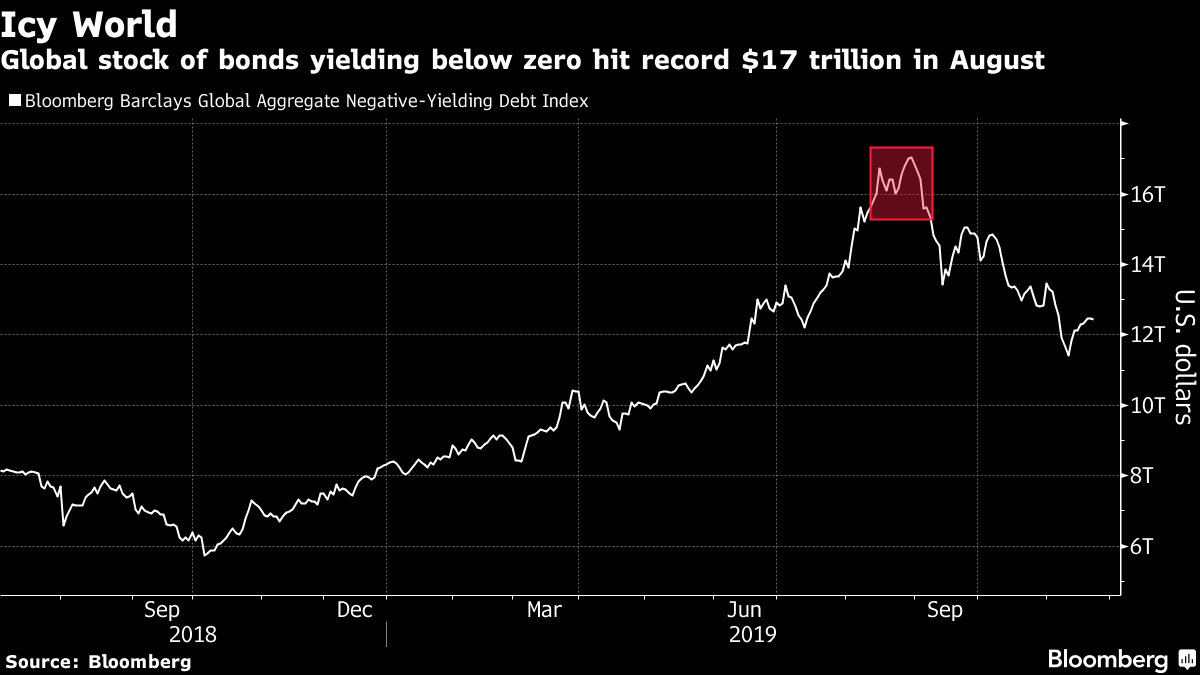 Like Bloomberg's Five Things? Subscribe for unlimited access to trusted, data-based journalism in 120 countries around the world and gain expert analysis from exclusive daily newsletters, The Bloomberg Open and The Bloomberg Close. Before it's here, it's on the Bloomberg Terminal. Find out more about how the Terminal delivers information and analysis that financial professionals can't find anywhere else. Learn more. | 


Post a Comment