| China offers another olive branch to the U.S., pro-democracy candidates win big in Hong Kong election, and big M&A news. IP rules, ok? Intellectual property has been one of the major sticking points in trade talks between the U.S. and China, so markets are taking a positive view of moves over the weekend by authorities in Beijing to address some of those issues. The country will raise penalties on violations of intellectual property rights and examine lowering the thresholds for criminal punishment for rule breakers. Chinese government-controlled media say both countries are "very close to the phase one trade deal." There is also no sign of China's appetite for dollar debt waning, with the country planning a record sale of bonds denominated in the U.S. currency. There was less good news for U.S. farmers, as delays at China's ports meant October saw the lowest level of soybean imports in three months. Democratically electing democrats Pro-democracy forces in Hong Kong won a landslide victory in local elections over the weekend, taking control of 85% of the 452 district council seats up for grabs. Investors welcomed the result, pushing the Hang Seng Index 1.5% higher for the session on hopes that the city's authorities may now take a less heavy-handed approach to protester demands. There were doubts among the city's residents as to whether that would be the case, with comments from Beijing also proving less than encouraging about an end to the standoff. LVMH, Novartis and Uber LVMH agreed to buy Tiffany & Co. for $16 billion after raising their original offer for the U.S. jewelry retailer to $135 a share. The all-cash deal is expected to close in the middle of next year. Charles Schwab agreed to acquire TD Ameritrade in an all-stock transaction valued at about $26 billion. Novartis AG agreed to buy Medicines Co. for $9.7 billion, giving the Swiss drugmaker a new promising cholesterol drug. For Uber Technologies Inc., today looks more like a divestiture, with London's transit authority refusing to grant the ride hailing giant a new license to operate in the city. The company has 21 days to appeal the decision. Markets rise Fresh signs that China is willing to accommodate U.S. trade demands is lifting global stocks. Overnight the MSCI Asia Pacific Index added 0.6% while Japan's Topix index closed 0.7% higher. In Europe the Stoxx 600 Index had risen 0.7% by 5:50 a.m. Eastern Time with every industry sector posting gains. S&P 500 futures pointed to a higher open, the 10-year Treasury yield was at 1.788% and gold was lower. Coming up… It's a fairly quiet day on the eco data front with just the Chicago Fed National Activity Index at 8:30 a.m. and Dallas Fed Manufacturing Activity at 10:30 a.m. Fed Chairman Jerome Powell is due to speak in Rhode Island this evening. Hewlett Packard Enterprise Co. and Jacobs Engineering Group Inc. are among the companies reporting results. What we've been reading This is what's caught our eye over the weekend. And finally, here's what Joe's interested in this morning Back in the day, it used to be a trendy thing to say (while sitting on some conference panel or TV set) that while Bitcoin was a speculative bubble, there was a lot of potential in blockchain technology. Superficially it made sense to draw a distinction, and theoretically the technology -- if it genuinely has value -- should succeed regardless of what Bitcoin or any other cryptocurrency was doing. But in the real world, there's not much evidence of that happening. Last week the WSJ reported that a venture fund based in NYC would no longer invest in blockchain startups because it didn't see any momentum towards adoption of the technology. And if you look at a chart of interest in blockchain on Google, it's been falling non-stop ever since the 2017 crypto bubble burst. At this point, blockchain mostly looks like it was a way for other people to try to ride Bitcoin's coattails and sell something to enterprises hoping to be cool and with it. There's a lot of FOMO in the world of corporate technology. At some point (you never know) that might turn around. But if interest in blockchain keeps plunging along with the price of Bitcoin -- which has been doing horribly lately -- then it's safe to conclude that it was not about separating the technology from the price of the speculative asset. It was an attempt to ride the same bubble. 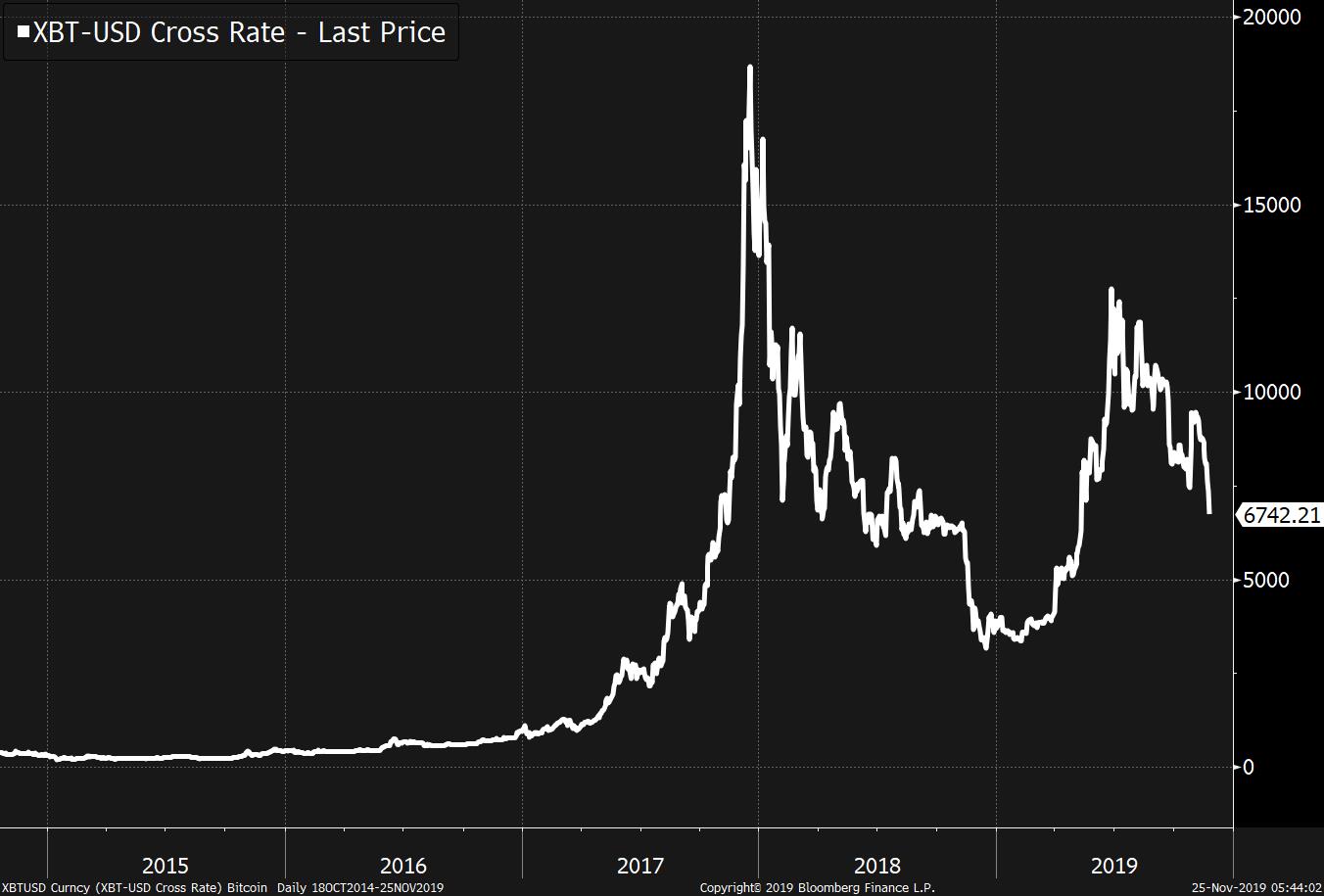 Like Bloomberg's Five Things? Subscribe for unlimited access to trusted, data-based journalism in 120 countries around the world and gain expert analysis from exclusive daily newsletters, The Bloomberg Open and The Bloomberg Close. Before it's here, it's on the Bloomberg Terminal. Find out more about how the Terminal delivers information and analysis that financial professionals can't find anywhere else. Learn more. | 


Post a Comment