| This is Bloomberg Opinion Today, a daily capsule of Bloomberg Opinion's opinions. Sign up here. Today's Agenda 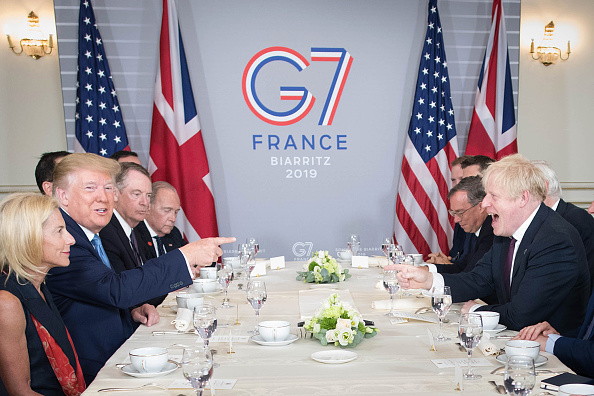 Plenty of Blame for What's Coming President Donald Trump's trade war gets well-earned blame for the global economy's slowdown, which keeps deepening, according to new IMF forecasts. But his critics can't be too smug: Their poor leadership could make a global downturn even worse, writes Bloomberg's editorial board. Take Europe, for example. It still lacks a unified budget or banking system. Britain, meanwhile, is purposefully making its economic life more difficult by leaving the EU. And China, Trump's nemesis in the trade war, has nagging credit problems that could balloon into a financial crisis. These are just some of the biggest examples. Central bankers are doing their part, but the unintended consequences of easy money are rising, writes John Authers. And companies aren't investing the way policymakers hoped, signaling anxiety about the economy. A growing sense of monetary policy's limits could explain why interest rates have recently returned to normal-ish, after a long stretch in which long-term rates were lower than short-term rates, writes Mohamed El-Erian. That "inversion" was a recession signal. The recent reverse of the inversion (reversion?) could be pricing in central-bank retreat, not a signal we've dodged a recession. Another IMF warning this weekend was about the estimated $19 trillion in corporate debt that could default in a severe slowdown, writes Elisa Martinuzzi. We need better regulation of bank and non-bank financing ASAP. Whether we'll get it depends again on that whole "leadership" thing. Palate-Cleansing Economic Reading: Tight labor markets are giving fresh power to unions. — Conor Sen Johnson's Brexit Deal Isn't Dead Yet It was another day of frustration for U.K. Prime Minister Boris Johnson. Commons Speaker John Bercow refused to let Johnson try again for a vote to ratify his Brexit deal, calling it an affront to ORDER! So Johnson is trying to ram more complicated legislation through Parliament that would deliver Brexit by Halloween and keep Johnson from ending up in a ditch. He has a couple of strong assets on his side, writes Therese Raphael: sheer momentum and the chance at a general election that could give him a parliamentary majority. Because even if he fails in parliament in the coming days, he now has a clear argument for that election campaign, Therese Raphael writes in a second column, one that would almost fit on a red baseball cap: "Get Brexit Done, With My Deal." Meanwhile, though, the patience of Europe's leaders — which, as mentioned above, have plenty of non-Brexit problems to get on with — is starting to wear thin, notes Lionel Laurent. Palate-Cleansing Brexit Reading: Chances of a disastrous no-deal Brexit have receded dramatically, which is good news for the pound no matter what happens to Johnson this week. — Marcus Ashworth Saudi Aramco Lowers Its IPO Expectations Saudi Aramco recently saw its hoped-for valuation tumble from $2 trillion (yes, with a "t") to a mere $1.5 trillion, so it's holding off on its IPO. Readers with backgrounds in mathematics might observe that $1.5 trillion is still a lot of money. But it's all about those expectations. Then again, Saudi Aramco's expectations are probably just a wee bit detached from reality, writes David Fickling. He suggests the company is really worth more like $900 billion (similar to Liam Denning's estimate last year of $1 trillion), which is still quite a lot of money. It stinks to leave the combined market valuation of Apple Inc. and Alphabet Inc. on the table. But then that table existed entirely in Crown Prince Mohammed bin Salman's imagination anyway. Saudi Arabia must accept its oil company could be a depreciating asset in a world of ever-slowing demand, particularly with the economy slowing. Complicating this is the Saudis' three-year-long failure, along with the rest of OPEC and outside pals such as Russia, to lift oil prices by cutting production. There's still too much oil sloshing around, and any real boost to prices could encourage U.S. frackers to suck more from the ground. Julian Lee suggests Saudi Arabia's smarter play is to stop fighting the market and let its oil flow, forcing American drillers to suffer the consequences. It's probably more adaptable to lower prices than they are. But then there's that IPO valuation to consider; tumbling oil prices won't help. And frackers already seem to be getting the message that they need to cool it with the drilling for a while, Liam Denning writes. Telltale Charts Monopolistic big tech companies wring excess rent from the economy, giving them profits beyond what they deserve, writes Noah Smith. A 19th-century approach to dealing with landlords could be an answer. 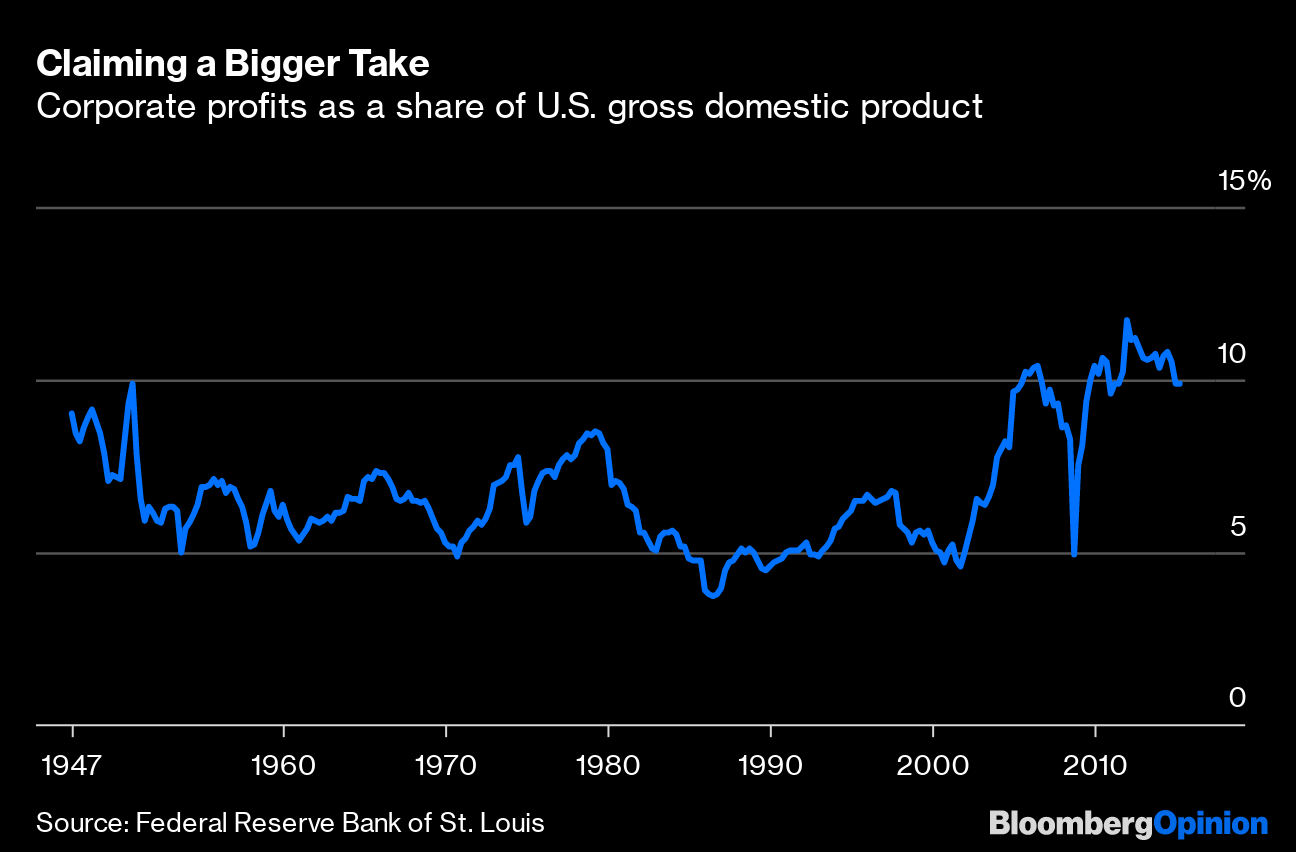 That 20-hour flight isn't going to make Qantas much money — at least not in economy class, writes David Fickling. 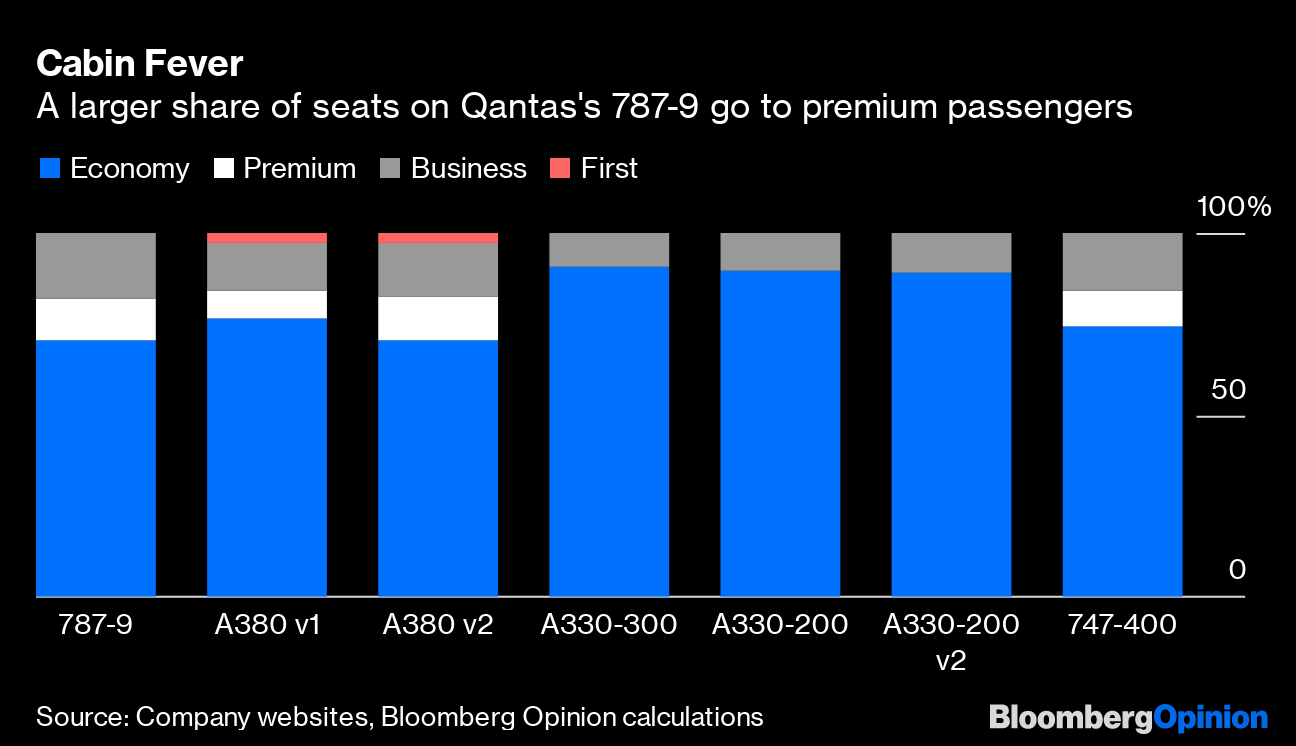 Further Reading SoftBank's WeWork rescue plan (which may become more of a takeover plan) is great for SoftBank now, bad for its reputation later. — Tim Culpan No, the Constitution doesn't let Trump extort foreign governments into helping him get reelected. — Noah Feldman A universal opioid settlement is only a matter of time. — Joe Nocera Congress is ignoring community health centers again, hurting vulnerable people in red states. — Mattie Quinn We need to talk about industrial heat's role in climate change. — Julio Friedmann Even people who fully accept that climate change is a real problem have trouble wrapping their brains around it, just as we have trouble accepting we are going to die. — Faye Flam ICYMI Mark Zuckerberg has recommended campaign hires to Pete Buttigieg. Benjamin Netanyahu failed to form an Israeli government. Here are the world's best and worst pension systems. Kickers Neanderthal and Denisovan DNA helped modern humans adapt. 480-million-year-old trilobyte fossils suggest group behavior. (h/t Scott Kominers for the first two kickers) Plane built to survive nuclear attack taken down by bird. (h/t Mike Smedley) How "Baby Shark" became the anthem of the Washington Nationals. Note: Please send fossils and complaints to Mark Gongloff at mgongloff1@bloomberg.net. Sign up here and follow us on Twitter and Facebook. | 


Post a Comment