More weak data adds to investor nerves, U.S. puts tariffs on European exports, and Johnson's Brexit plan gets some pushback. WeaknessThe tick-tock of disappointing economic indicators continued this morning, with a composite purchasing managers index for the euro area showing growth in the region is stagnating. There was an even bleaker picture for the U.K. where the critical services sector unexpectedly dropped to 49.5 for September, worse than the lowest estimate from any of the economists surveyed by Bloomberg. Markit, which compiled the survey, said there was some evidence that foreign firms were switching activity away from the U.K. ahead of Brexit. Later this morning there will be more attention than usual on the ISM non-manufacturing number, after the factory component of the survey produced such disappointing results. Tariff time If worse-than-expected data is not enough to make investors cautious, there is also a new round of U.S. tariffs to deal with this morning. The U.S. announced a range of extra duties on $7.5 billion of European exports, ranging from 10% to 25% and hitting items as diverse as whiskey, cheese and aircraft components. The move does not come as a surprise after the WTO ruled in favor of America in a very long-running dispute over EU support for its aircraft industry. There will be no new tariffs on parts shipped to the Airbus SE plant in Alabama, with European luxury goods makers breathing a sigh of relief after leather was also omitted from the list. European Trade Commissioner Cecilia Malmstrom said the bloc is ready to work with the U.S. on a "fair and balanced solution." DoubtsBritish Prime Minister Boris Johnson is already facing resistance from European leaders over his latest plan for how the U.K. could leave the European Union with a deal. The prime minister will present the plan to Parliament today, with EU ambassadors set to discuss the proposals later in the day. Early reactions from the bloc were positive on some aspects of the proposal, while pointing out that major stumbling blocks remain. Companies are not waiting around to hear the outcome as they take advantage of the pre-Brexit window to get deals done. Stocks mixedEquities in Asia overnight followed on from the U.S. lead, with the MSCI Asia Pacific Index slipping 0.8% while Japan's Topix index closed 1.7% lower for the gauge's biggest decline in two months. In Europe, the Stoxx 600 Index was broadly unchanged at 5:45 a.m. Eastern Time with Germany's equity markets closed while the U.K.'s FTSE 100 Index added to yesterday's selloff. S&P 500 futures pointed to a small rebound at the open, the 10-year Treasury yield was at 1.577% and gold was back over $1,500 an ounce. Coming up…Today's data is all going to be closely watched to see if there are more signs of a U.S. slowdown. Initial jobless claims at 8:30 a.m. will give a hint to the health of the jobs market ahead of tomorrow's payrolls data. At 9:45 a.m., Markit publishes its services and composite PMIs, and at 10:00 a.m. the ISM services measure is expected to come in at 55.0. At the same time, durable goods and factory orders numbers are released. Chicago Fed President Charles Evans, Fed Vice Chairman for Supervision Randal Quarles, Cleveland Fed President Loretta Mester, Dallas Fed President Robert Kaplan and Fed Vice Chairman Richard Clarida are today's monetary policy speakers. What we've been readingThis is what's caught our eye over the last 24 hours. And finally, here's what Joe's interested in this morningRecession fears are back after the S&P 500 tumbled around 3% over the last two days, following that dismal ISM manufacturing number. The good news is that we're going to get a ton of data today and tomorrow that will shed more light on whether that report was a blip or a harbinger for wider issues. Today's ISM non-manufacturing report will be closely watched, since the services sector plays a much larger role in the U.S. economy. In the meantime, here's some interesting stuff to chew on. Yesterday on TV, we had Cam Harvey, the economist whose dissertation 30 years ago first brought attention to the inverted yield curve as a possible harbinger for recessions. When he first noticed this phenomenon years ago, there were only four instances of the three month to 10-year spread inverting before a recession. Since then it's happened three more times. A key thing he said is that every time in the past he's seen the yield curve invert, there's been a chorus of people coming out with claims for why "it's different this time" and each time they've been proven wrong. The whole discussion was illuminating. On the more optimistic side, one thing that stood out to me yesterday amid the big selloff was the 3.8 percent gain in homebuilder Lennar Corporation, with the stock now at its highest since April 2018. It's been on an absolute tear like the sector more generally. The company saw strength throughout Q3, with its best sales in August. As Conor Sen notes for Bloomberg Opinion, we seem to have this tug-of-war emerging, where a weak international scene and weak manufacturing are going up against a rebounding real-estate market. Finally, while you wait for the data check out this good, short thread from George Pearkes of Bespoke Investment Group on the key debate right now: Are the idiosyncratic shocks we're seeing all around the world building up to something big -- or are they all noise? 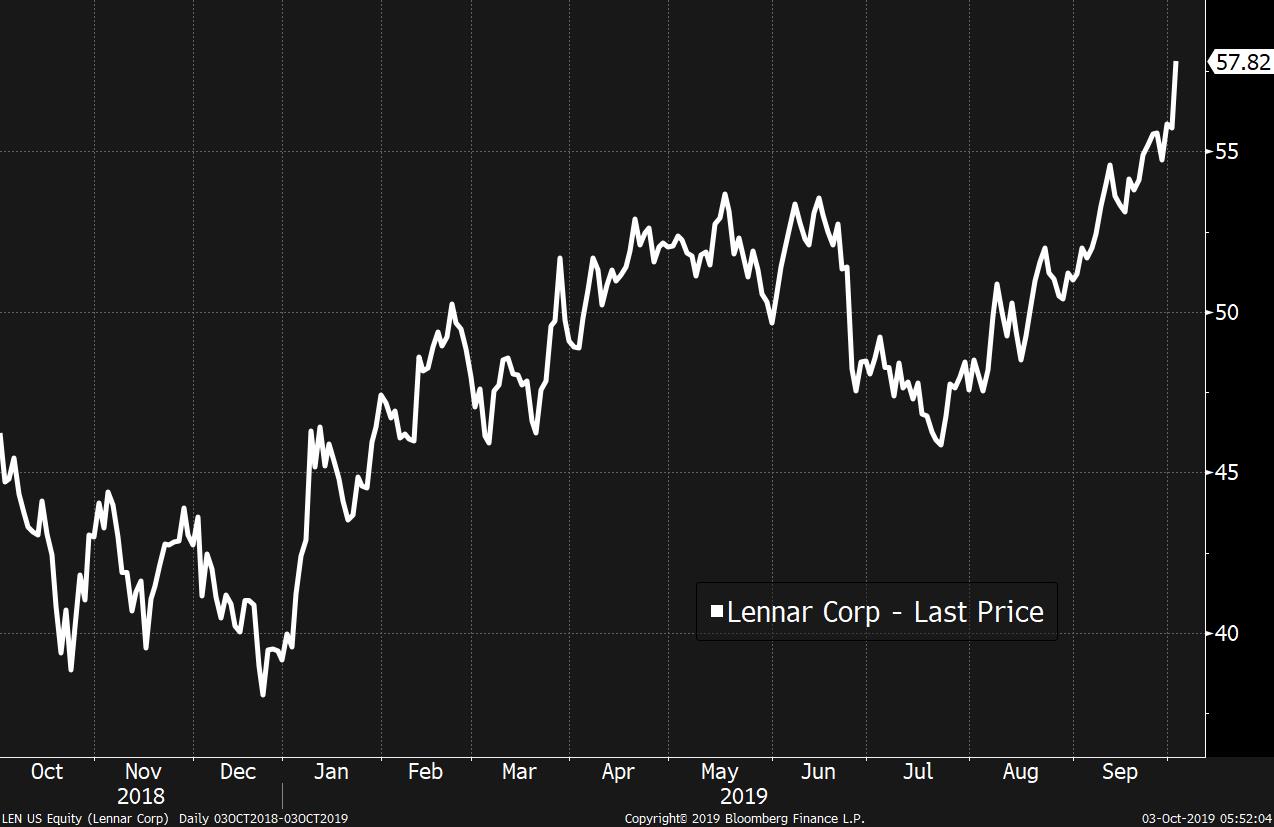 Like Bloomberg's Five Things? Subscribe for unlimited access to trusted, data-based journalism in 120 countries around the world and gain expert analysis from exclusive daily newsletters, The Bloomberg Open and The Bloomberg Close. Before it's here, it's on the Bloomberg Terminal. Find out more about how the Terminal delivers information and analysis that financial professionals can't find anywhere else. Learn more. | 


Post a Comment