Today's Agenda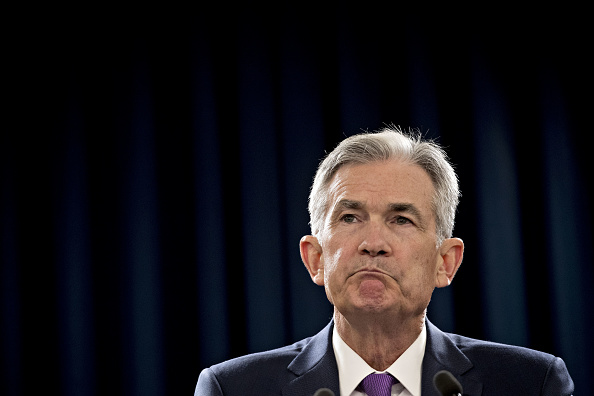 When Doves CryFederal Reserve Chairman Jerome Powell is in a pickle. Economists are warning that it's dangerous for the Fed to further cut U.S. interest rates when there are few blaring signs of U.S. economic weakness. But financial market participants — and the American president — are jawboning Powell for more rate reductions to juice economic growth. It's awkward. Jim Bianco sides with the market, and says Powell should "do nothing less than signal that a more aggressive approach to easier monetary policy is warranted." There's no use waiting for a recession, Jim says, to deploy the Fed's recession-fighting weapons. The Fed's response to itchiness for rate cuts, Brian Chappatta writes, was to release the hawks — that is, to trot out Fed officials skeptical about further rate cuts to say so OUT LOUD. These words did the trick in ratcheting back bond traders' expectations of rate cuts this year. For now. Powell's speech scheduled for Friday at a central banking conference will be closely watched. Bloomberg's editorial board writes that Powell should say less. Market analysts sometimes seem determined to misunderstand what Powell and his Fed colleagues say, but investors are also confused partly because the Fed itself seems confused about an unpredictable economy, the editorial board writes. Rather than express confidence in future rate adjustments and then backtrack, Powell may be better off waiting for the data. Related economics reading: Tony Soprano Doesn't Get Along With the Phone CompanyYou may have heard that AT&T Inc. recently bought the company behind the Bugs Bunny cartoons, HBO, the "Friends" television series, CNN, and the "Wizard of Oz." In theory, Tara Lachapelle writes, AT&T's collection of entertainment assets and its communications expertise prime it to sign up lots of people to Netflix-like streaming video services. But it turns out that the new AT&T employees aren't all getting along with their bosses, and AT&T is acting with the finesse of a phone company in rolling out a tangle of web entertainment options. All you need to know, really, is this: 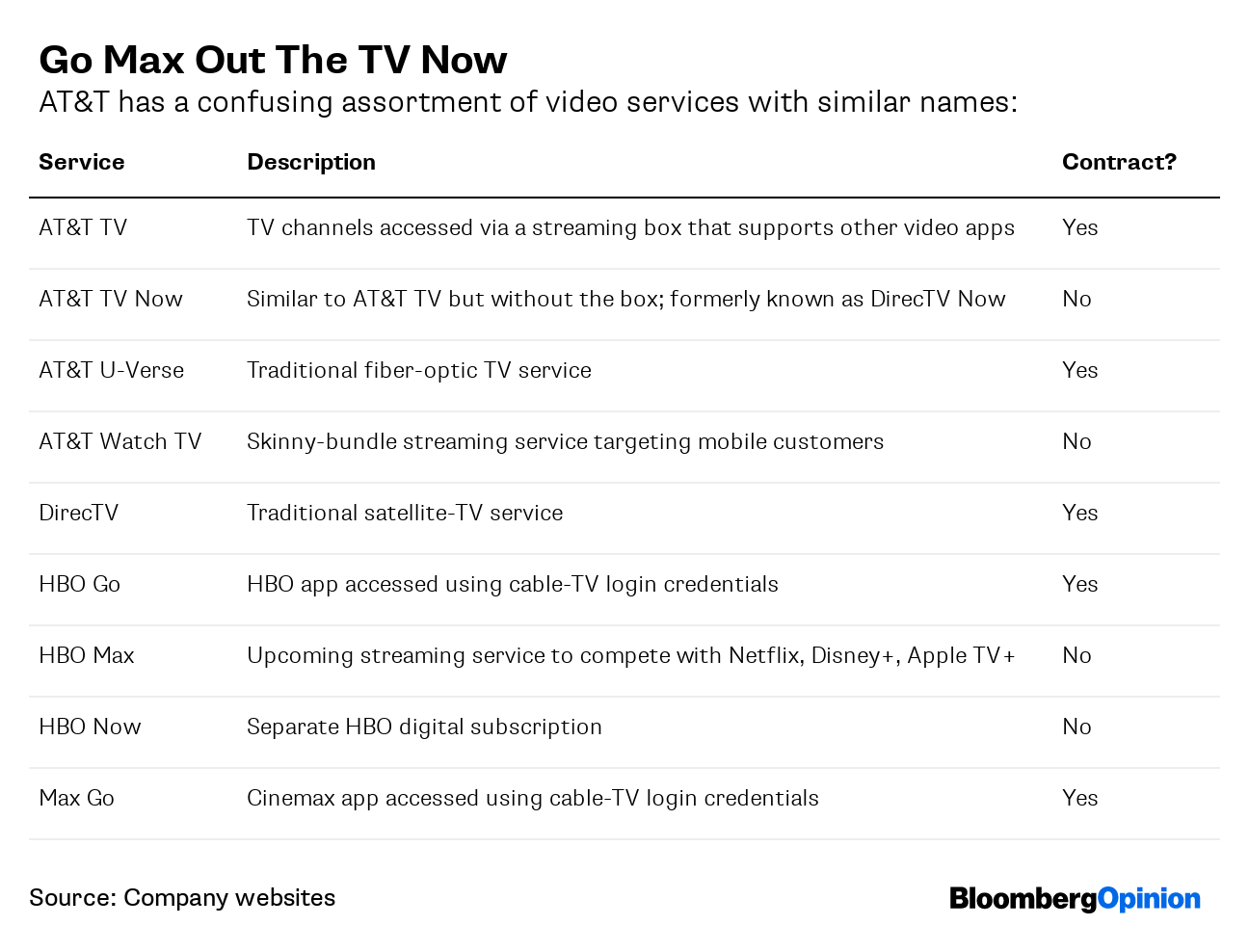 In other corporate reading: - Investors who bet against companies have an important role, but a short seller and his allies flogged a misguided narrative about the maker of a wound-graft product. —Joe Nocera, in the second of two columns
Pray. It's has been a strange week in the White House, even for a presidential administration that has taken the bar for weird and raised it to the moon. It emerged this week that Trump toyed with purchasing Greenland, flip-flopped on gun control and potential tax cuts, tweeted a conspiracy theorist's comparison of Trump to the Messiah, and briefly looked up to the heavens to declare himself the "chosen one." This behavior is not unusual, says Tim O'Brien. It's the same Trump the world has seen for decades with, Tim suspects, "a big dollop of something new blended in: unbridled and unmanageable panic." Tim's years of writing about Trump have led him to believe that the president views faith as an insurance policy and, more recently, a way to get evangelical Christians to vote for him. As the 2020 election approaches and the president's biggest selling point — the strong U.S. economy — is flashing warning signs, Tim says Trump is more and more willing to play on faith. In further reading: - Trump's recent comments that Jews who vote for Democrats display "great disloyalty" are distinct from the typical nativist claims that Jews are more aligned with Israel than the U.S. That's no excuse for questioning the loyalty of Jewish Democrats to Israel, however, and it's wrong to suggest Jewish Americans should vote as a single bloc. —Eli Lake
It's in the Genes An ambitious program from the National Institutes of Health aims to collect genetic information from at least 1 million Americans, make the data broadly available to researchers, and harness it to provide genetic counseling for participants. Such a large-scale project raises understandable privacy concerns and requires strict safeguards, Max Nisen writes, but the program's potential to improve health across a wide swath of the population makes it "an initiative worth rallying around." Telltale ChartsInvestors got excited about Nordstrom Inc. on Thursday, but Sarah Halzack says the retailer's better-than-expected earnings won't help it ward off the curse of the department store. 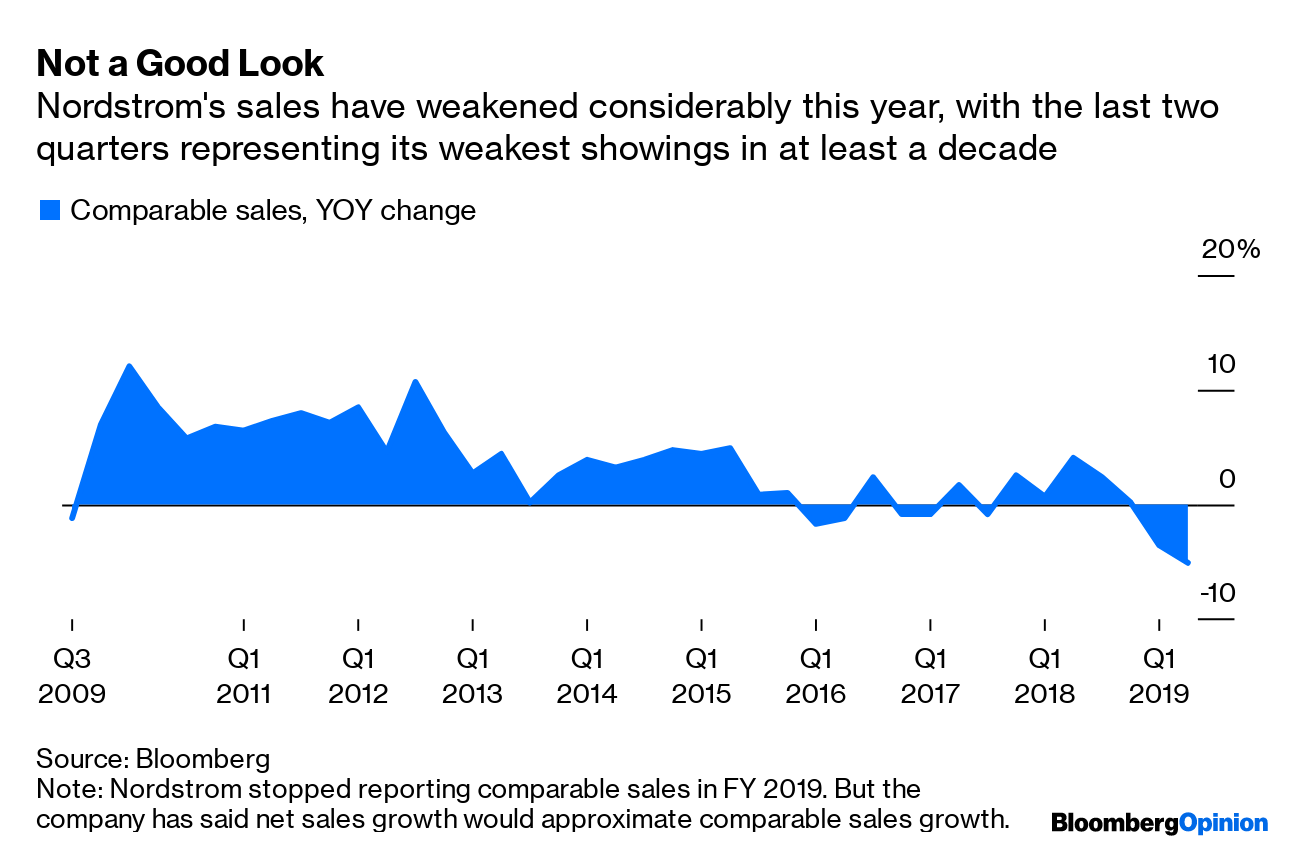 Swire Group, the parent company of Cathay Pacific Airways, is a relic of Hong Kong's colonial legacy. A shift to leaders who reflect the company's Asian future may be the best way to repair relations with Beijing, says David Fickling. 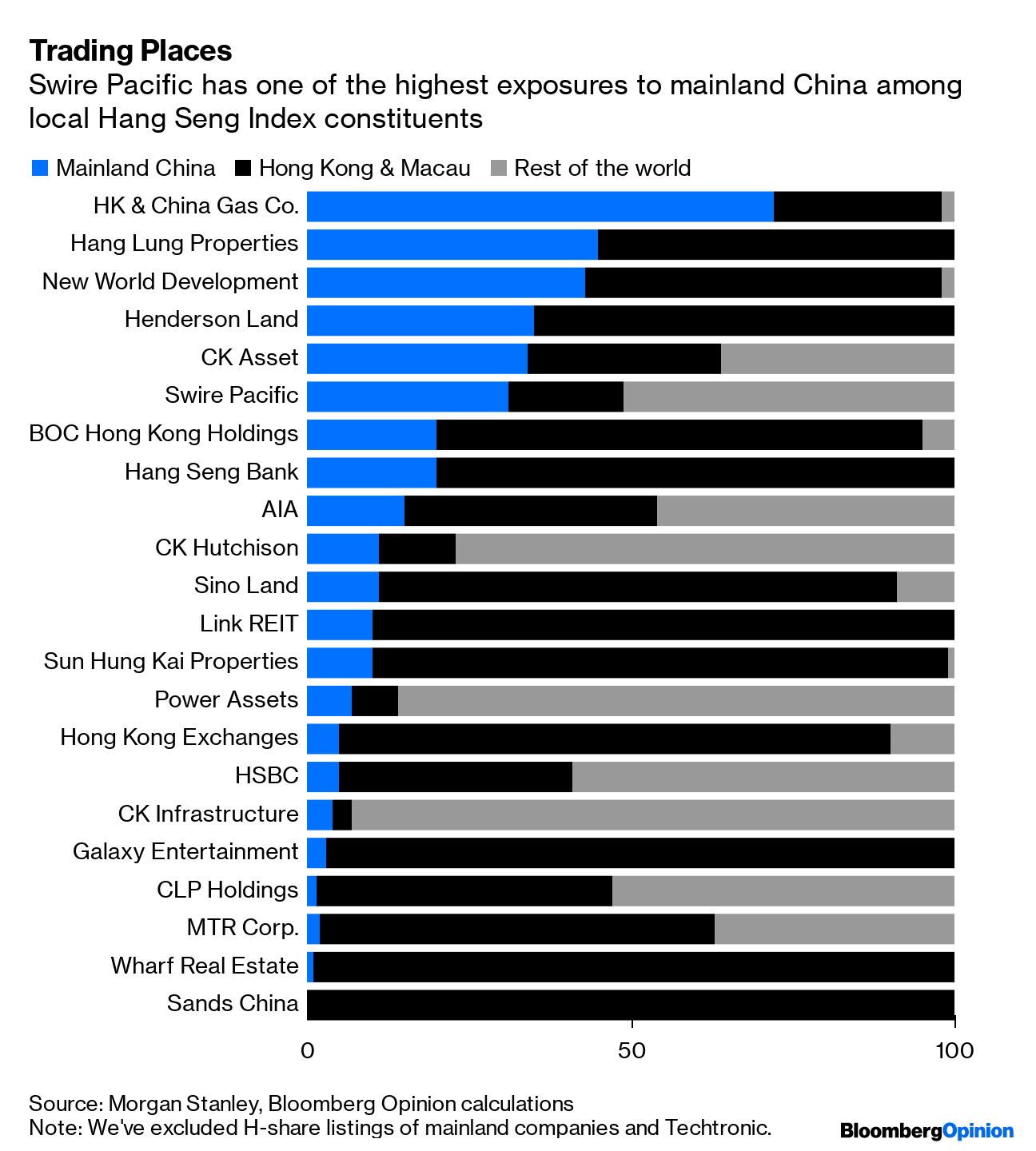 Further ReadingThe last thing Yemen needs is a second civil war. —Bobby Ghosh It's a mogul versus mogul battle to counter Netflix in southern Europe. —Alex Webb Several influential Russians have disagreed with the Putin government's harsh response to recent Moscow protests. —Leonid Bershidsky HSBC should pay up for the Asian assets of struggling insurer Aviva. —Nisha Gopalan Here are eight books or papers relevant to the revived interest in government policy to promote certain economic sectors. —Noah Smith How long can Thailand's currency defy the pull toward a slowdown? —Daniel Moss The EU's pressure to move jobs and investment out of London may spur the finance industry to find Brexit workarounds. —Lionel Laurent ICYMIA coalition tries to tackle robocalls. Overstock's CEO quits after his "deep state" talk. Can humans tolerate a 20-hour nonstop flight? KickersThis cat — which is possibly a puma? — is up for adoption. Basically, don't even LOOK at the Apple credit card. A New Hampshire time capsule was opened after 50 years, and … nothing. (h/t Scott Kominers) Is it a bird or a bunny? (Spoiler alert: bird.) Note: I'm filling in this week for Mark Gongloff. Please send photos of your cats/small lions and complaints to Shira Ovide at sovide@bloomberg.net. New to Bloomberg Opinion Today? Sign up here and follow us on Twitter and Facebook. | 


Post a Comment