Welcome to the Weekly Fix, the newsletter that's hoping along with everyone else that the fiscal lifejacket replaces the fiscal straitjacket. – Luke Kawa, Cross-Asset Reporter
The Emperor Bares Low R*
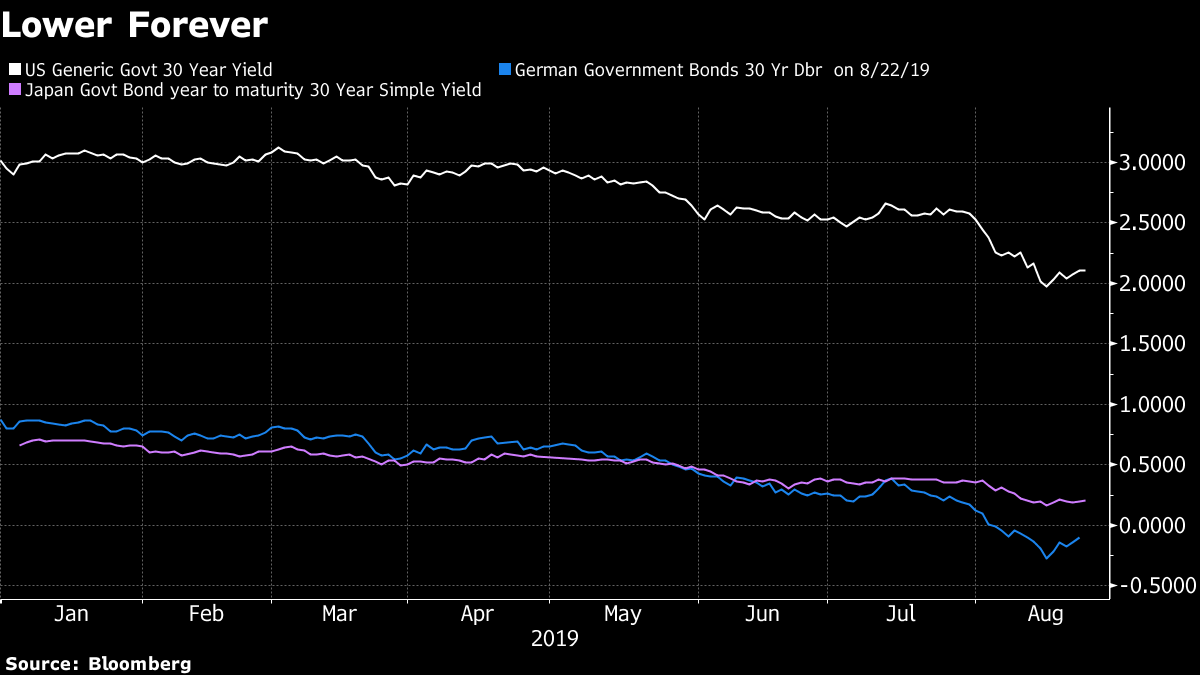
Creeping doubts within markets that central banks are unable to reverse the slowdown in global activity – as evidenced by the collapse in long-term yields over the past month – have received some high-profile endorsements.
In a Bloomberg TV appearance on Thursday, Mohamed El-Erian floated the idea of central banks admitting their relative impotence (presumably as a way of scaring fiscal policymakers into offering support).
Bloomberg's Michael McKee smartly answered, "it's a tightrope to walk, because you don't want to tell people the economy is going downhill and you're powerless to stop it…you can build in expectations that then become self-fulfilling prophecies."
In addition, none other than Larry Summers unleashed a massive tweetstorm arguing that it is "in doubt" whether central banking can be the primary tool of macroeconomic stabilization.
He goes on to note that he has come to agree with post-Keynesian economists on some matters (quite curious given the extent to which he's disparaged Modern Monetary Theory!) and also suggests rate cuts may have a contractionary effect on aggregate demand in some instances.
In the fable, it's the little boy who points out that the emperor has no clothes. What these luminaries seem to be suggesting is that the emperor himself will declare his powerlessness before the people.
That seems a high bar. Especially because the Fed minutes from the July meeting, released on Wednesday, noted that "a number of participants commented that, as many of the potential costs of the Committee's asset purchases had failed to materialize, the Federal Reserve might have been able to make use of balance sheet tools even more aggressively over the past decade in providing appropriate levels of accommodation."
That suggests that even as Jerome Powell prepares to deliver the opening remarks at a conference that will be discussing the challenges of monetary policy, Fed officials believe their ability to kick-start the economy out of a downturn isn't that constrained.
Jackson Regional Rabbit Hole
The prelude to the most important Federal Reserve speech outside of interest rate decisions has been a host of remarks from regional reserve presidents that do not appear to be a fair representation of the median voter.
I wouldn't go so far as to presume this is a coordinated strategy designed to lower the bar for Fed Chair Jerome Powell going into his Friday morning speech.
In a Bloomberg interview on Wednesday, Boston Fed chief Eric Rosengren wants to see evidence of a slowdown before easing. Another July dissenter, Kansas City Fed president Esther George, said it's not time for more cuts. Philly's Patrick Harker said he was "somewhat reluctantly" going along with the crowd in lowering the policy rate last month.
Non-voters came out after the June meeting to express discontent with the way a cut had been teed up. If you know you're losing the battle within the Fed, influencing the contours of the discussion via the public bully pulpit is a card to play. That logic applies for dissenting members, non-voters, or any officials who think they aren't in line with consensus.
It's an odd state of affairs that the Fed officials who are committing themselves to being behind the curve on adding accommodation – a disclination to ease until economic conditions visibly weaken – are, in many instances, the same ones were eager to tighten policy based on the expectation that inflation would accelerate because the unemployment rate was deemed to be unsustainably low. I must have missed the economics class where they taught that long and variable lags only apply in one direction.
The net effect has been a flatter curve (2s10s inverted once again, but this time with yields ticking higher), and the December fed funds futures contract yield more than 10 basis points higher than where it ended last week.
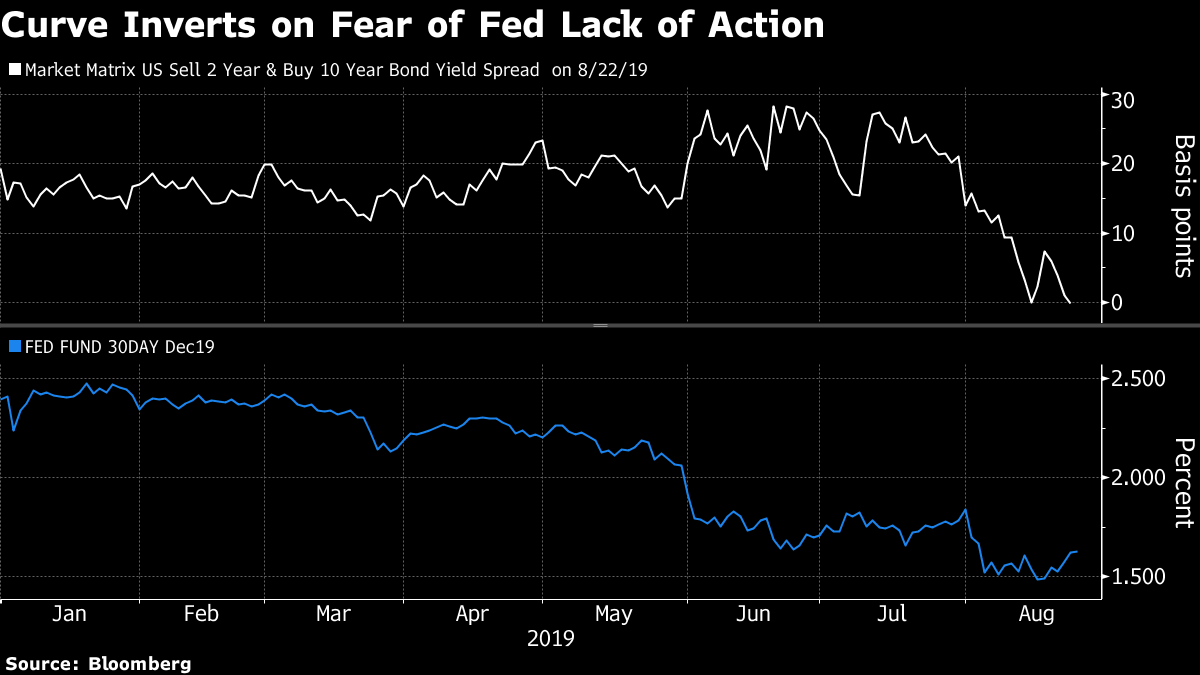
So ultimately, the effect is the same: if the Federal Reserve is a company, the past few days have been tantamount to issuing negative guidance ahead of earnings that makes it easier to exceed expectations once the big day arrives.
But too much of the focus this week has been on members who have a reluctance to act preemptively at all to mitigate the odds of a downturn. The real matter the markets should be hoping to gain clarity on at Jackson Hole remains the same: just how many ounces of prevention are a sufficiently accommodative dosage among those willing to act soon?
The Fed minutes contained a hint that a "mid-cycle adjustment" was more than just one-and-done:
"Most participants viewed a proposed quarter-point policy easing at this meeting as part of a recalibration of the stance of policy, or mid-cycle adjustment, in response to the evolution of the economic outlook over recent months."
Crucially, part of, not, the end of. It's probably too much to ask for that the Fed Chair will provide guidance more fine-tuned than that in Wyoming.



Post a Comment