Today's Agenda 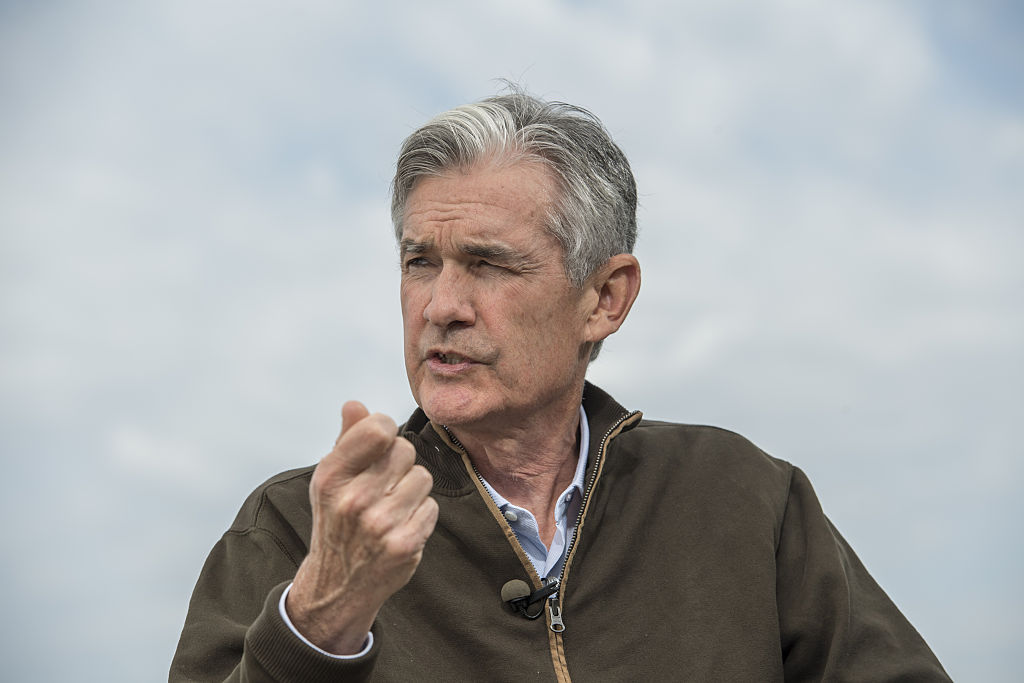 What's Fed-Speak for "Sick Burn?" For months, President Trump has been savaging his hand-picked Federal Reserve chairman — possibly to scapegoat Jerome Powell and his Fed colleagues for any future economic pain. Powell, in the mild-mannered way of central bankers, on Friday scapegoated Trump back. In a closely watched speech at an economic policy gathering, Powell signaled the Fed was willing to further cut U.S. interest rates to ward off worrying signs for the U.S. economy. He also suggested there are limits to what the Fed can do when the White House's trade policies are making businesses and markets nervous, which is a drag on economic growth. (The president's response to Powell's speech was … not positive. He rhetorically asked whether the Fed chair or China's president is the "bigger enemy" of the U.S.) Bond traders interpreted Powell's comments as the Fed's openness to as many interest-rate reductions as needed if the economic data justify it, Brian Chappatta writes. Powell will, however, need to navigate a Fed that is divided over further easing monetary policy. Powell gave off the feeling of preferring not to cut interest rates more, Brian says, but realizing that the Trump administration's trade actions may leave him little choice. Trump's tweets may not have gotten to Powell, but it seems Trump's policies did. Related reading: - The Fed's difficulty in giving a consistent message has made central bankers in emerging markets look past the Fed and instead read signals from fickle markets. —Shuli Ren
- The U.S. central bank could learn from its counterpart in Canada, which has adopted an 18-to-24-month time horizon to fulfill unemployment rate and inflation targets. —Narayana Kocherlakota
"Drill, Baby, Drill" Is Beside the Point The other thing that made Trump angry on Friday was China's announcement of fresh tariffs on $75 billion of U.S. goods. A round of over-the-top tweets in response helped spark a stock market swoon. China's new import duties include crude oil, which was notable because China needs a large supply of imported oil, and the tariff announcement doused what had been an oil-price rally. The president has boasted about removing regulations and other barriers to help America's fossil fuel industry do that "drill, baby, drill" thing. (Or mine, baby, mine. Or lay pipeline, baby, pipeline.) The coal, oil and natural gas industries might love Trump's support, but U.S. policies have been aimed at boosting an already ample fossil-fuel supply, Liam Denning writes. The White House has done little to address the meek demand side of the equation, Liam says, and Trump's trade policies undermine China and other markets best placed to take those beautiful "freedom molecules." Other parties not helped by the trade policies: Here's More Good News? "A warming world isn't decades away — it's here now," Noah Smith writes. Have a great weekend, everyone! Planet-warming emissions transcend borders, and Noah says the U.S. must spur other countries to reduce their carbon emissions— as long as the U.S. doesn't neglect its part. Noah offers several ideas. The U.S. can: directly transfer green energy technology, such as improved energy storage for wind and solar power, to less advanced nations; help finance foreign purchases of U.S. green technology and low-carbon products; pay developing countries to build green-energy infrastructure such as electric vehicle charging stations; and possibly collaborate with other rich countries to buy coal deposits around the world and leave them in the ground. Along with those carrots, the U.S. should also consider sticks, Noah suggests, such as carbon tariffs on imports and threats to cut trade with countries unless they adopt tighter conservation policies. Lastly, Noah says, the U.S. must drastically curb its own carbon emissions to have the moral authority to export climate protections. French President Emmanuel Macron essentially opted for one of Noah's sticks on Friday by saying his country wants to spike the EU's proposed trade deal with the Mercosur group of South American countries. Macron cited Brazil's failure to prevent deforestation in the Amazon. (German Chancellor Angela Merkel said she wants to move ahead with the trade deal.) Leonid Bershidsky says Macron is right, but there are ways to revise rather the bury the deal to make it work for climate goals. Among Leonid's suggested fixes is to link trade quotas on forest-risk commodities, such as beef and soybeans, to keeping the forested area steady or growing. Private jets — those C-suites in the sky — are responsible for a tiny fraction of global emissions, but Chris Bryant said their symbolism matters in our rapidly heating planet. Conservationists have been finger-wagging at prominent people such as British royal Prince Harry — dubbed the "Carbon Footprince" — who preach environmentalism while turning up at events in a Gulfstream. Chris says the industry and jet users should step up investments in hybrid and electric aircraft, and do more to urge the use of non-petroleum fuels. Telltale Charts The wild and woolly energy sector is now consistently topping the dividend yields of the dull utility sector. There are prosaic explanations for this odd development, Liam Denning and Nathaniel Bullard write, but the more intriguing one is that "what was growth is now viewed as value, and vice versa." 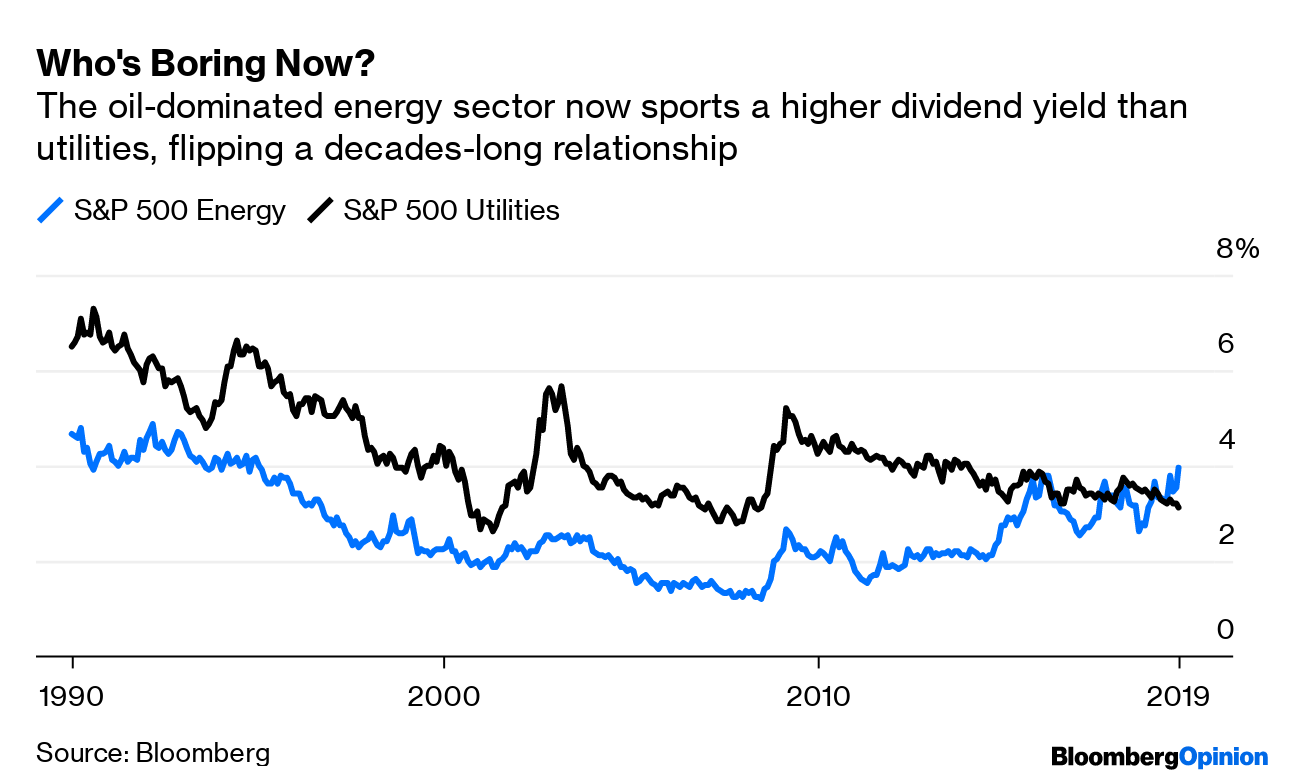 There's logic behind toymaker Hasbro Inc. offering to buy the maker of kids TV hit Peppa Pig. But Entertainment One Ltd.'s focus on high-gloss entertainment may not make it a great fit, Alex Webb writes. 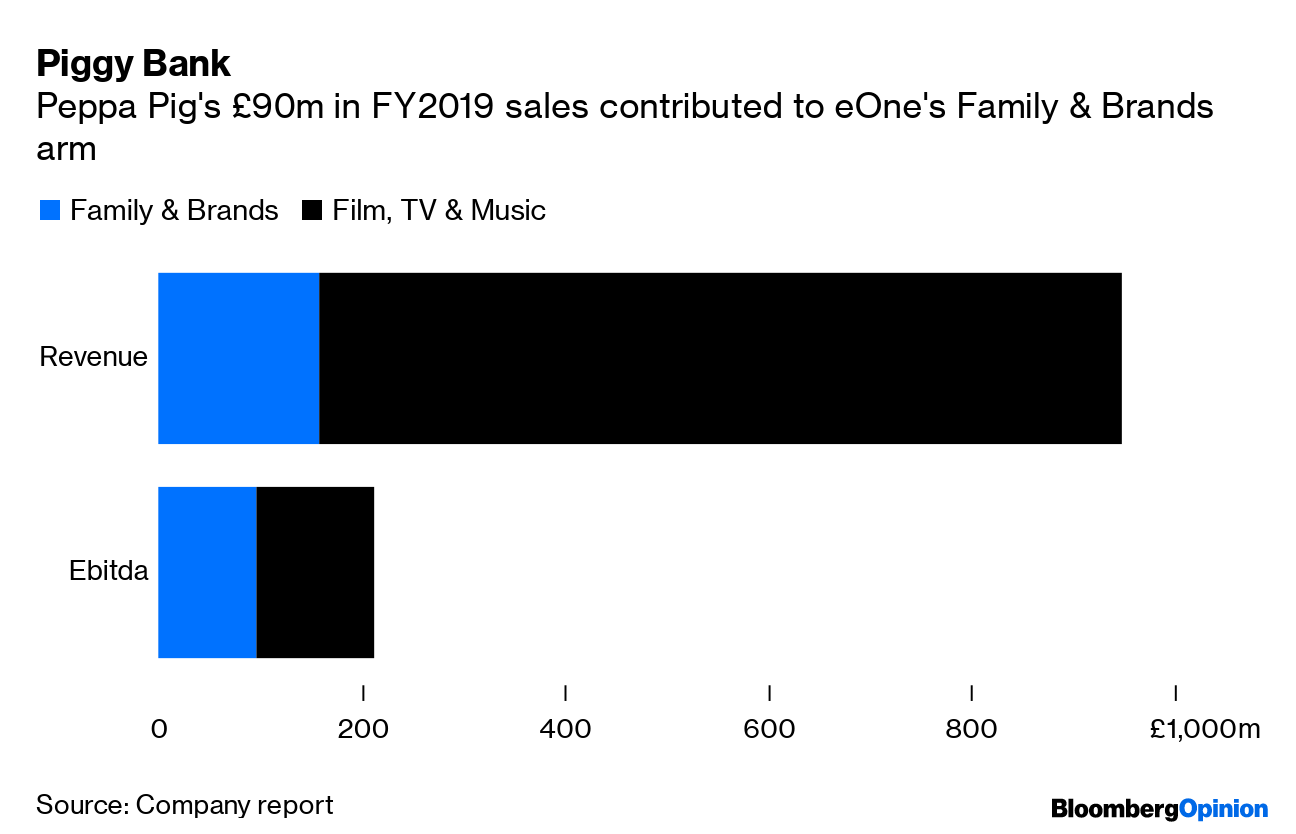 Further Reading Hong Kong's leadership must find credible solutions to the housing supply crunch that has contributed to this summer's protests. — Ronald W. Chan Negative interest rates are coming for our bank accounts, and more people might opt for the proverbial cash under the mattress. — Mark Gilbert Like big tobacco with vaping, large meat companies will face regulatory obstacles and difficulties courting consumers with plant-based meat alternatives. — Andrea Felsted Trump is less unpopular than most of his peers at the G-7 summit. — Justin Fox The antics and conspiracy theories of Overstock's CEO silenced his critics for awhile, but he couldn't keep distracting people from the company's lousy performance. — Joe Nocera Ending the U.S. legislative filibuster might be a good idea to make the Senate reflect the will of the public. — Noah Feldman It pays to bet on natural explanations for unusual phenomena such as the origins of life. — Faye Flam A European Union "sovereign wealth fund" would not be sovereign and would have no wealth. — Ferdinando Giugliano ICYMI Who is GE's mysterious short seller? David Koch dies. The G-7 prepares for a tense summit. Kickers Sturgeon used to be so plentiful that caviar was a free bar snack. The Titanic shipwreck is disintegrating into the sea. (h/t Mike Smedley) There were 60,000 bees in her ceiling. (h/t Scott Kominers) Hey, buddy, you forgot your snake. Note: I'm filling in this week for Mark Gongloff. Please send caviar and complaints to Shira Ovide at sovide@bloomberg.net. New to Bloomberg Opinion Today? Sign up here and follow us on Twitter and Facebook. | 


Post a Comment