Today's Agenda  Stop Hitting Yourself, General Electric Back in June of 2018, when General Electric Co. was tossed from the Dow Jones Industrial Average, capping a string of indignities that had gutted the former corporate American icon, this newsletter suggested it might be a blessing: "Getting tossed from that weird, exclusive club is often a sign the worst is over," we wrote. Shockingly, despite this newsletter's usually godlike powers of prognostication, this call has not aged well! The stock collapsed last fall. It rebounded this year, but then re-collapsed today, falling 15% at one point, its worst sell-off in four years. The trigger was a report from Harry Markopolos, the guy who took down Bernie Madoff, claiming GE is a big old fraud hiding $38 billion in red ink. Markopolos is working with a short-seller; GE denies his claims; and Brooke Sutherland has read his report and isn't impressed. Still, Brooke writes, GE has exposed itself to such charges with an investor-relations approach about as easy to follow as a David Lynch plotline. The company keeps having to clear up "confusion" created by errors or murky bits of its presentations, which are heavily stage-managed even on their best days. "GE has surrendered the high ground in its defense," Brooke writes. The worst will not be over for GE until this changes. More Trouble With the Yield Curve Like somebody recovering from a stomach bug, the stock market spent the day after its worst sell-off of the year on edge, feeling queasy one minute and OK the next. Interest rates drove these swings; when they swooned, stocks did too. Investors are still anxious about the implications of the "inversion" of part of the "yield curve" — two-year Treasury yields rising briefly above those of 10-year yields, a closely watched recession indicator. Some say the bond market is so wacky and bubbly that it's different this time, words known for being famous last ones. But John Authers notes it's different every time, and the differences this time aren't necessarily encouraging for the economy. Tim Duy is hopeful that, by paying attention to the yield curve and attacking it early, the Federal Reserve can make it truly different this time, by averting a downturn altogether. Otherwise, we'll have a recession on our hands, for which President Donald Trump will almost certainly fault Fed Chairman Jay Powell. But Barry Ritholtz writes Trump has only himself to blame (and not, as the Wall Street Journal claims, Peter Navarro). Presidents usually get too much criticism or credit for growth on their watch, but Trump's mismanaged trade war has hobbled an otherwise fine economy. Further Recession-Watch Reading: The Trade-War Tables Have Turned Perhaps grasping the political peril he's put himself in by tossing gasoline on the economy and waving a match at it, Trump has lately tried to dial back on trade hostilities. Last night he used Hong Kong's unrest as a chance to praise Xi Jinping, perhaps a little too enthusiastically. China responded by threatening retaliation for Trump's latest tariffs and telling him he could keep his Hong Kong advice. Early in the trade war, when China's economy was already reeling from lending curbs, Trump may have had an edge on Xi, writes Shuli Ren. Now that China has adjusted to the economic pain, it can afford to play it cool, while Trump is starting to panic. Gary Shilling disagrees; he thinks the U.S. will still win the trade war, given how desperately China needs Western investment to become a developed nation. Further China Reading: Hong Kong's wealthy are backing the government over protesters, but risk making themselves new targets of popular ire. – Nisha Gopalan No-Deal Brexit Keeps Winning Votes Most British politicians say they want to avoid a no-deal Brexit. But come voting time, they keep dismissing options to avoid it, notes Therese Raphael. Theresa May could write you a book about that. Now politicians of various stripes have trashed a Jeremy Corbyn proposal to lead a caretaker government that would delay Brexit and call a general election. This plan may have been a doomed stunt from the start, but it's another step closer to a disastrous no-deal Brexit. The U.K. is almost certainly not prepared for the disruption and pain this would cause. Several companies claim they're ready, notes Lionel Laurent; but their ability to withstand the country's broader economic pain is still in doubt. Telltale Charts American businesses have billions of reasons to favor expanding Medicare, even if it raises their taxes, writes Max Nisen. 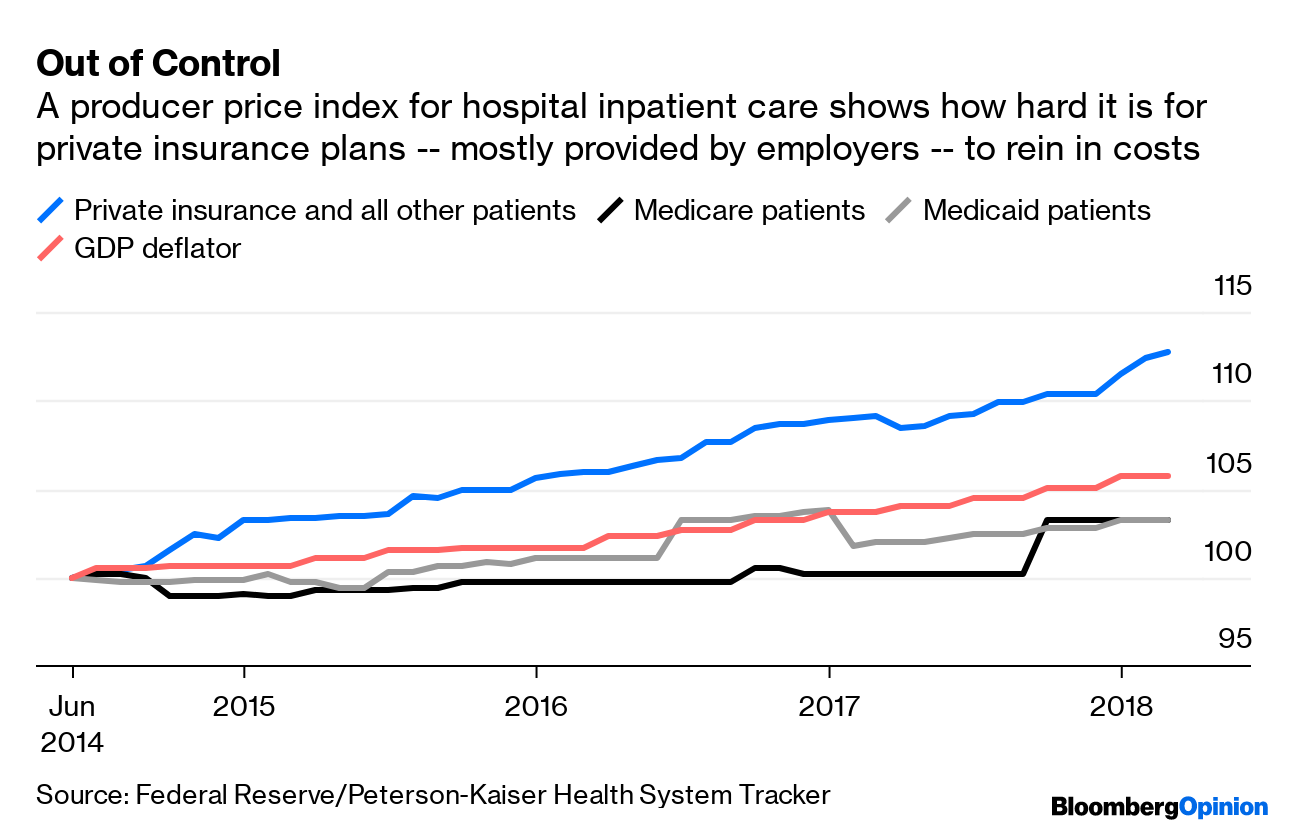 Trump is driving students, especially women, to law school and away from business school, writes Justin Fox. 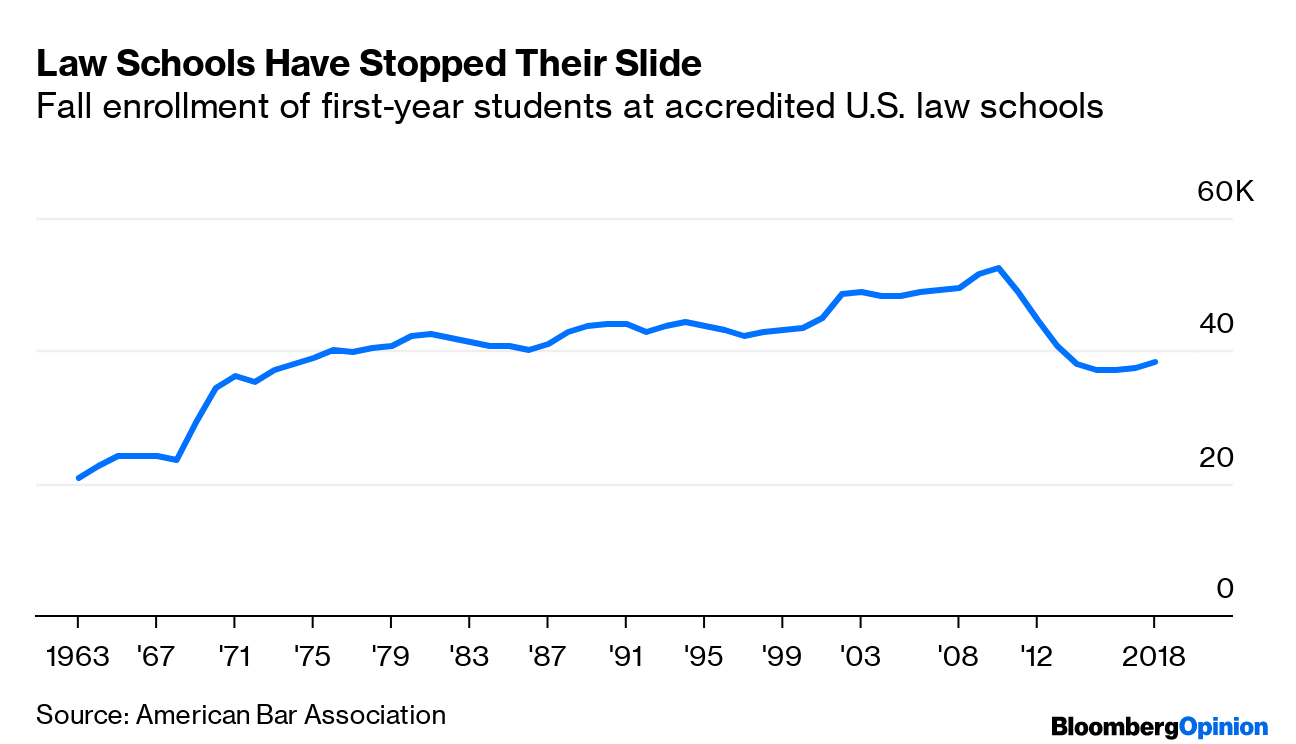 Further Reading The NRA will once again try to stop Congress from closing background-check loopholes. We can't let that happen this time. – Bloomberg's editorial board Bowing to Trump by banning Reps. Ilhan Omar and Rashida Tlaib makes Israel look weak. – Eli Lake The WeWork Cos. IPO filing makes clear this emperor has no clothes. – Chris Bryant WeWork is the reductio ad absurdum of the unicorn era. – Shira Ovide Trump seems to think Americans must either dig for coal or build computers but can't do both. – Liam Denning Nearly 30 years after Iraq's invasion of Kuwait, the two are becoming the best of friends. – Bobby Ghosh ICYMI Where is Jeffrey Epstein sidekick Ghislaine Maxwell? And what's up with the broken bones in Epstein's neck? A Russian jet safely crash-landed in a cornfield. Kickers Somebody wearing a TV on his head is giving people old TV sets. (h/t Scott Kominers) Your next San Francisco salad may have been raised entirely by robots. (h/t James Greiff) The North Atlantic ocean current, which warms Europe, may be slowing. How NASA maintains its Voyager craft from millions of miles away. Note: Please send TVs and complaints to Mark Gongloff at mgongloff1@bloomberg.net. New to Bloomberg Opinion Today? Sign up here and follow us on Twitter and Facebook. | 


Post a Comment