When Angela Merkel and Emmanuel Macron made back-to-back visits to the White House last year in a coordinated effort to sway Donald Trump, he rebuffed their approaches.
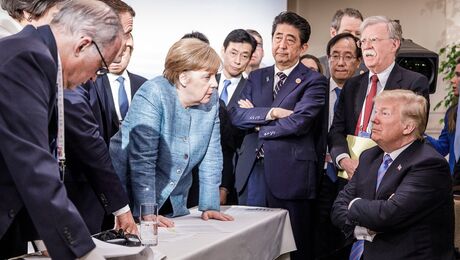
Trump's decision to pursue U.S. policy on Iran and trade regardless of his European allies' concerns was a turning point in transatlantic ties, a pivot that'll be on show this weekend at the Group of Seven summit in France.
The rupture came shortly after the German and French leaders' visits last April, when Trump introduced tariffs on European Union steel and quit the Iran nuclear deal, later to threaten sanctions on any company from the bloc doing business with the Islamic Republic. That followed his withdrawal from the Paris climate accord.
"With friends like that who needs enemies," tweeted EU President Donald Tusk.
As Trump steps up his bid for a second term in 2020, Europe isn't waiting for the outcome. As our graphics show, the EU is already examining how it can loosen its dependence on the U.S. that emerged after World War Two.
Still, France and Germany also have their differences and Trump, who likes to exploit rivalries among his would-be adversaries, is working to prise them apart, Gregory Viscusi reports.
It threatens to make for a torrid G-7.
— Alan Crawford




Post a Comment