Today's Agenda  Someone Cancel This Bad Show The U.S. financial markets are like a soap opera with only two plot lines repeated over and over. On some days, including Monday, the world's two largest economies seem to be getting along, stock and bond markets are reasonably calm and recession talk recedes. On days featuring the other plot line of "As Our Terrible World Turns," the U.S. and China are telenovela-style mortal enemies, stock and bond markets panic and investors and corporate executives wallow in dark thoughts. The maddening thing is that hardly anyone asked for this show in the first place. It has been tempting to see the U.S. trade war against China and other protectionist initiatives as clumsy tactical disruptions or empty threats, but Bloomberg's editorial board says that a new idea seems to be dawning at last: President Trump's administration wants to dismantle global economic integration and international cooperation. Conviction that these traditions are at risk could become self-fulfilling, the editorial board writes, and tip the U.S. and the world into another recession. The president and his officials can stop making matters worse, the board says, by ending their reckless aggression on trade, and Congress should claim back the trade powers it has delegated to the White House. When Money Isn't 100% the Point A group of leading U.S. companies has ditched its longstanding principle that corporations should serve shareholders' interests ahead of those of employees, customers, taxpayers and other stakeholders. The document signed by nearly 200 top chief executives had the feel of a hell-freezing-over moment, but it was a non-binding commitment that doubled as virtue signaling. It's no longer cool for companies to be all about profits. Matt Levine also says that if a corporation's purpose isn't only to serve shareholders, it gets harder to evaluate a chief executive's performance by conventional yardsticks such as profits and stock price. And, Matt notes — tongue mostly not in cheek — that CEOs and boards gain an advantage if they can say a lagging share price and weak profits are consequences of looking out for constituencies other than stock owners. Maybe that $5 billion loss is very good for the planet. A Tricky Task for China's Central Bank Markets believe a recent policy measure by China's central bank is a broad effort to slash borrowing costs. Instead, Shuli Ren writes, it is a tweak that shows China is wary of flooding the country with cheap money, and that officials believe sweeping monetary measures won't necessarily get affordable financing to smaller businesses. Bonus China reading: More in monetary policy: This Ride Is Making Me Sick The "doom loop" sounds like a roller coaster at the local theme park, but it most definitely is not. John Authers explains that investor sentiment about Germany is more negative than it has been in years, in part because of the country's dependence on uncertain global trade (see the first item in this newsletter). Germany's central bank on Monday also warned of a looming recession. Europe's largest economy is flashing hallmarks of growth-challenged Japan, John says, and sour sentiment can hurt the economy and cascade into the rest of Europe and the U.S. The struggling German economy has spurred the government to consider ditching its commitment to a balanced budget to spend more on infrastructure and other items to jolt the economy. Leonid Bershidsky says no one should bet on it. Telltale Charts The U.S. healthcare industry tends to do fine in good times and bad, but investing in the industry now is a risky bet that no significant policy changes will reshape American health care, Max Nisen writes. 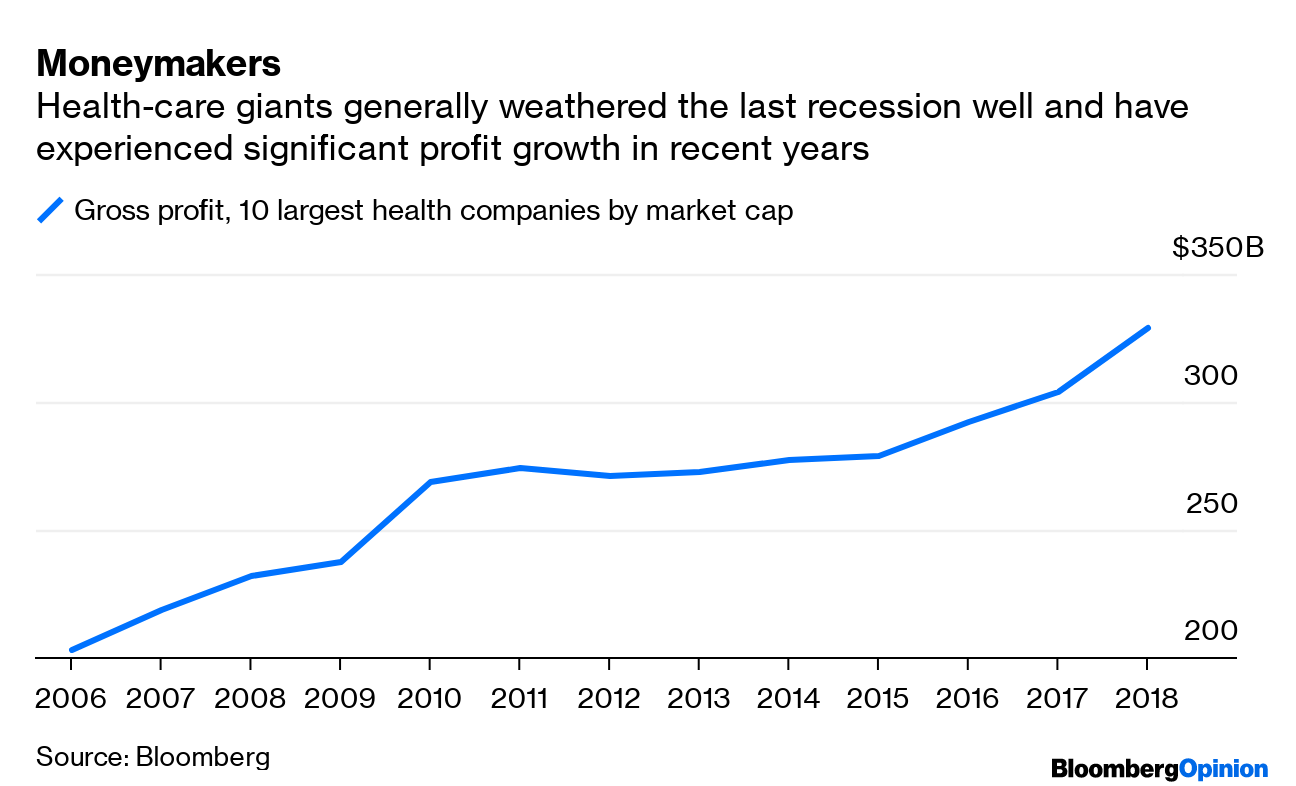 Younger Americans should have investment exposure to the more promising stocks and bonds outside the U.S., Nir Kaissar argues. 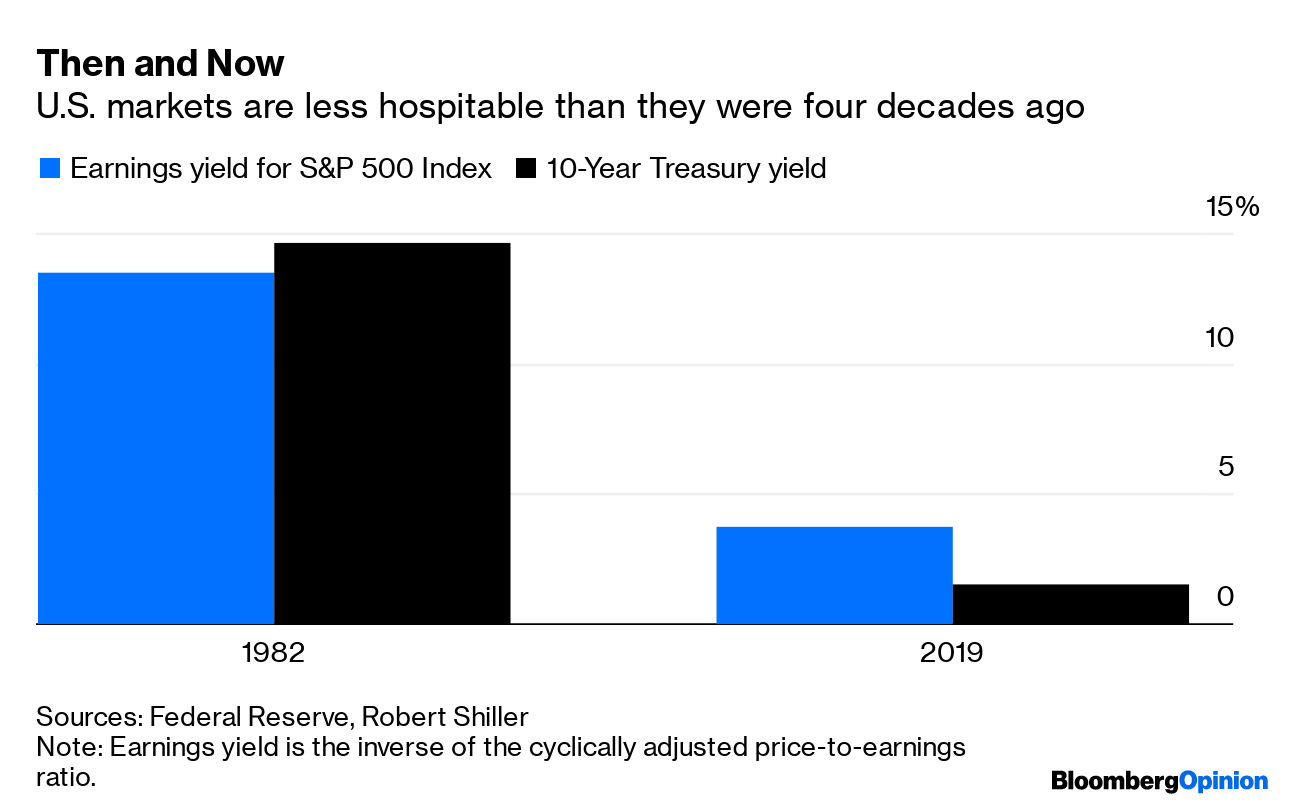 Solar energy, cheap shale gas and the shuttering of older power plants may end Vegas-like electricity prices in Texas, Liam Denning writes. 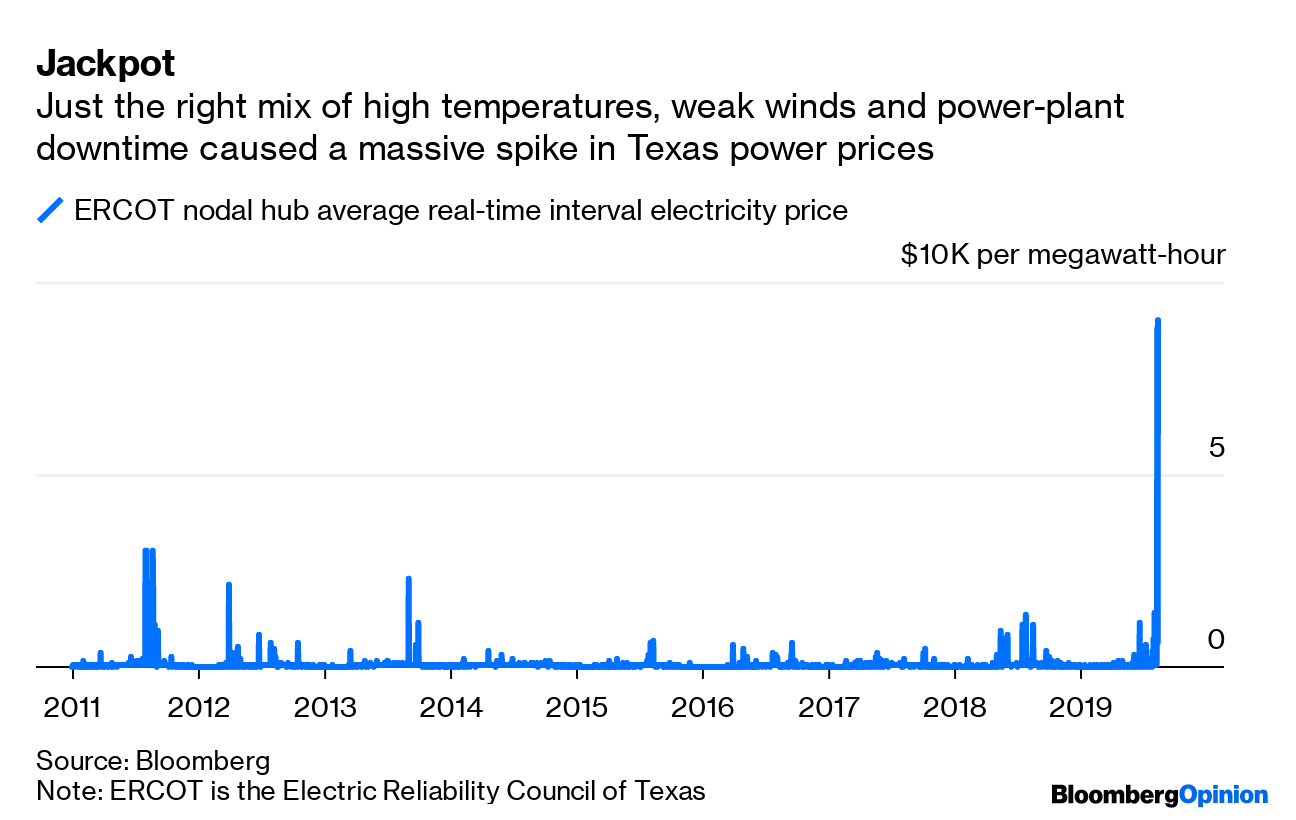 Further Reading Giant clams are contributing to military tensions in the South China Sea. –Tobin Harshaw A short seller took his campaign against a biotechnology company too far. –Joe Nocera Brexit won't make Brits stop drinking beer and eating pies. –Chris Hughes Saudi Arabia won't further cut production and prop up oil prices. –Julian Lee SoftBank's boss is looking desperate. –Tim Culpan The U.S. has never welcomed immigrants with open arms. –Stephen L. Carter ICYMI Facebook and Twitter said Chinese state-backed accounts spread disinformation about the Hong Kong protests. Huawei got another 90-day reprieve from U.S. sanctions. Wildfire claims stalk PG&E. Kickers It's hard to tell the differences among the 175 bed-in-a-box companies. I am both curious about and terrified of these mysterious repeating radio bursts from space. (h/t Scott Kominers) Staring at seagulls can stop them from stealing food. This insect is very photogenic. Note: I'm filling in this week for Mark Gongloff. Please send soap opera scripts and complaints to Shira Ovide at sovide@bloomberg.net. New to Bloomberg Opinion Today? Sign up here and follow us on Twitter and Facebook. | 


Post a Comment